



Table of Contents
- Why Hair Loss Affects Your Confidence and Professional Image
- Understanding Male Pattern Baldness and Hair Loss Causes
- Common Over-the-Counter Treatments and Their Limitations
- Our Comprehensive Hair Restoration Approach at Éternité
- Advanced Technologies and Evidence-Based Treatments We Offer
- How Our Hair Loss Specialists Create Personalized Treatment Plans
- The Science Behind Our Hair Restoration Protocols
- Combining Hair Restoration with Our Longevity and Wellness Services
- Real Results: What Our Patients Achieve
- Timeline and What to Expect During Treatment
- Maintaining Your Results with Our Tiered Wellness Memberships
- Schedule Your Hair Loss Consultation Today
- Frequently Asked Questions (FAQ)
Why Hair Loss Affects Your Confidence and Professional Image
Hair loss isn’t simply a cosmetic concern. We understand that losing your hair affects how you see yourself and how others perceive you. Studies consistently show that men experiencing hair loss report decreased confidence, social withdrawal, and diminished professional presence. In a competitive business environment, appearance influences first impressions, networking opportunities, and how colleagues respond to your leadership.
The psychological impact extends beyond vanity. Many of our patients describe hair loss as a visible marker of aging that they didn’t choose and can’t ignore. Unlike wrinkles or age spots that can be subtly managed, thinning hair or receding hairlines change your facial proportions and overall silhouette. Reclaiming a fuller head of hair often translates into tangible improvements in professional interactions, dating confidence, and overall quality of life.
What you should do next: Recognize that seeking treatment is a practical investment in yourself, not a sign of insecurity. The earlier you address hair loss, the more options remain available to you.
Understanding Male Pattern Baldness and Hair Loss Causes
Male pattern baldness (androgenetic alopecia) accounts for approximately 95% of hair loss in men. It results from a combination of genetic predisposition and sensitivity to DHT (dihydrotestosterone), a hormone derived from testosterone. If your father or grandfather experienced hair loss, your risk increases substantially.
However, genetics aren’t the only culprit. We evaluate patients for multiple contributing factors:
- Nutritional deficiencies (iron, zinc, B vitamins, biotin)
- Chronic stress and elevated cortisol
- Thyroid dysfunction and hormonal imbalances
- Poor circulation and scalp blood flow
- Inflammatory skin conditions
- Medication side effects
- Sleep deprivation and lifestyle factors
This multifactorial understanding is why a one-size-fits-all approach fails. A 35-year-old experiencing stress-induced hair shedding needs a different strategy than someone with early genetic baldness. Our hair loss specialists conduct thorough assessments to identify which mechanisms are driving your specific hair loss pattern.
What you should do next: Schedule a consultation where we can review your family history, current health status, and specific hair loss pattern to determine root causes.
Common Over-the-Counter Treatments and Their Limitations
Minoxidil (Rogaine) and finasteride (Propecia) remain the only FDA-approved treatments for male pattern baldness, and many patients start there. Minoxidil works topically to improve blood flow to hair follicles and is most effective for early hair loss. Finasteride reduces DHT production systemically and can slow or halt progression.
These treatments have genuine value, but they come with real constraints:
- Results typically take 6-12 months to become visible
- Minoxidil requires twice-daily application indefinitely
- Finasteride carries potential sexual side effects for some men
- Neither treatment consistently regrows significant amounts of lost hair
- Both must be continued long-term or results reverse
- They don’t address underlying nutritional or hormonal imbalances
Many patients reach a plateau where over-the-counter options stabilize hair but don’t restore the density or hairline they want. At that point, advanced medical solutions become necessary to achieve meaningful restoration.
What you should do next: If you’ve used these treatments for 12+ months without satisfactory results, don’t assume nothing else will work. More sophisticated protocols exist.
Our Comprehensive Hair Restoration Approach at Éternité
We treat hair loss as a medical condition requiring comprehensive evaluation and multimodal intervention. Our approach integrates prescription pharmaceuticals, advanced regenerative therapies, scalp optimization, hormonal assessment, and nutritional support into a cohesive protocol.
Our medical spa in Manhattan and New Providence location both house specialists trained in modern hair restoration medicine. We’re not offering commodity treatments. Instead, we design individualized protocols based on your specific hair loss pattern, underlying causes, health status, and aesthetic goals.
This might mean combining prescription treatments with cutting-edge regenerative therapies, optimizing hormone balance through hormone replacement therapy or peptides, addressing nutritional deficiencies, and improving scalp circulation through advanced technologies. We also integrate this care with our broader longevity and wellness services so that hair restoration becomes part of your overall anti-aging and health optimization strategy.
What you should do next: Stop thinking of hair loss as inevitable. Medical science has evolved significantly beyond basic pharmacotherapy.
Advanced Technologies and Evidence-Based Treatments We Offer
We utilize several advanced technologies that go far beyond conventional approaches:
Platelet-Rich Plasma (PRP) and Platelet-Rich Fibrin (PRF): These regenerative therapies use concentrated growth factors from your own blood to stimulate dormant hair follicles, improve scalp circulation, and promote new hair growth. We perform in-office procedures that activate your body’s natural healing response at the scalp level.
Exosomes: These extracellular vesicles derived from stem cells deliver powerful regenerative signals directly to hair follicles and scalp tissue. Exosome therapy represents the cutting edge of regenerative medicine for hair restoration, promoting follicle activation and collagen remodeling.
RF Microneedling for Scalp: Radiofrequency microneedling creates controlled micro-injuries while delivering heat energy to the scalp. This stimulates collagen production, improves blood flow, and creates an optimal environment for hair growth and treatment penetration.
Peptide Protocols: Specific peptides can enhance circulation, support follicle health, and promote growth factors. We incorporate targeted peptide therapy based on your individual assessment.
Hormone Optimization: Imbalanced hormones accelerate hair loss. Through comprehensive testing, we may recommend hormone replacement therapy or other interventions to optimize your hormonal environment for hair growth.
Each technology has peer-reviewed evidence supporting its use in hair restoration. We don’t chase trends; we implement treatments with demonstrated clinical efficacy.
What you should do next: Ask your current provider if they offer PRP, PRF, exosome, or RF microneedling options for scalp treatment. If not, you’re missing proven advanced modalities.
How Our Hair Loss Specialists Create Personalized Treatment Plans
Your initial consultation includes a detailed scalp assessment, review of your family and medical history, evaluation of underlying health factors, and discussion of your aesthetic goals. We may recommend bloodwork to assess thyroid function, nutritional status, hormonal balance, and inflammatory markers.
Based on this comprehensive evaluation, we design a protocol customized to your situation. For early genetic hair loss, we might emphasize pharmaceutical management combined with PRP treatments and scalp optimization. For someone with significant existing loss, we may recommend a more aggressive approach involving exosomes, peptide therapy, and hormone optimization alongside topical and systemic medications.
The timeline and intensity vary greatly. Some patients benefit from quarterly PRP sessions combined with daily pharmaceutical therapy. Others require monthly treatments initially, then transition to maintenance protocols. This personalization is why cookie-cutter approaches fail: your hair loss is unique, and your treatment should be too.
We also educate you on realistic expectations. Restoration takes time. Most patients see meaningful improvement over 6-12 months with consistent treatment, but visible regrowth often requires patience and adherence.
What you should do next: Prepare for your consultation by noting when your hair loss began, how quickly it’s progressed, and what treatments you’ve tried.
The Science Behind Our Hair Restoration Protocols
Hair follicles exist in a cycle: anagen (growth), catagen (transition), and telogen (resting). Male pattern baldness doesn’t kill follicles outright; it shrinks them (miniaturization), shortening the anagen phase and producing thinner, shorter hairs until they’re barely visible.
Our regenerative therapies work by multiple mechanisms:
- Growth Factor Signaling: PRP and exosomes deliver concentrated growth factors (PDGF, FGF, VEGF, HGF) that extend the anagen phase and stimulate dormant follicles
- Improved Perfusion: RF microneedling and PRP enhance blood flow to the scalp, delivering nutrients and oxygen to follicles while removing metabolic waste
- Immune Modulation: These therapies reduce scalp inflammation and shift the immune environment away from follicle-damaging inflammation
- Follicle Regeneration: Exosomes and certain peptides activate stem cells and progenitor cells within hair follicles, promoting actual regeneration rather than just stabilization
Pharmaceuticals like finasteride reduce DHT production, removing the hormonal signal driving miniaturization. When combined with regenerative therapies that simultaneously stimulate growth, the synergy often exceeds what either approach achieves alone.
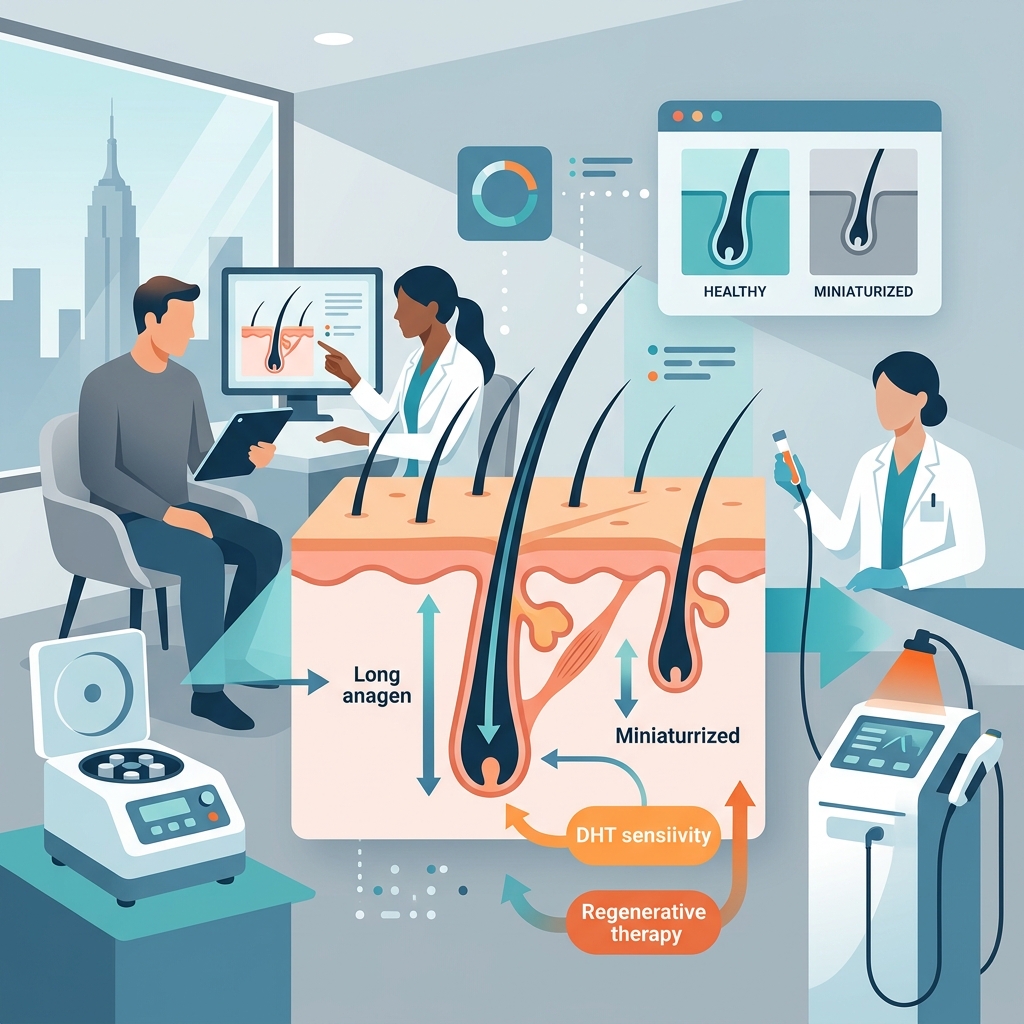
This is regenerative medicine applied to hair: we’re not just slowing loss; we’re actively promoting follicle health and new growth.
What you should do next: Understand that modern hair restoration is science-based and multimodal. Single-treatment approaches have inherent limitations.
Combining Hair Restoration with Our Longevity and Wellness Services
Hair loss often accompanies broader aging and health concerns. A man experiencing significant hair loss frequently has metabolic concerns, hormonal imbalances, cardiovascular risk factors, and declining energy. By addressing hair restoration within a comprehensive longevity framework, we optimize your overall health trajectory while restoring your hair.
Our longevity protocols often include:
- Comprehensive metabolic and hormonal assessment
- Optimized hormone replacement therapy if indicated
- Peptide therapies that support multiple anti-aging mechanisms
- IV hydration and nutrient repletion
- Sleep optimization and circadian rhythm management
- Targeted supplementation addressing nutritional gaps
- Cardiovascular and metabolic risk reduction
Many patients find that as they address the systemic factors contributing to hair loss, they experience improved energy, better sexual function, clearer skin, and overall vitality. Hair restoration becomes part of a larger rejuvenation process.
What you should do next: View your hair loss consultation as an entry point into broader health optimization. Ask us about our tiered wellness memberships during your visit.
Real Results: What Our Patients Achieve
Our patients consistently report meaningful hair restoration over 6-12 months. Those with early to moderate hair loss often achieve substantial regrowth and density improvement. Even patients with more advanced loss experience meaningful restoration when they commit to consistent treatment and patience.
Beyond the physical results, patients report restored confidence, improved professional presence, and renewed interest in social and dating situations. The psychological impact often exceeds the visible hair density improvement, because regaining control over your appearance carries profound emotional weight.
We track objective measures: baseline photography, scalp mapping, and patient satisfaction. Most patients combining pharmaceutical management with PRP or exosome treatments report visible improvement by 4-6 months and substantial results by 12 months.
Results vary based on your starting point, the intensity of your protocol, treatment adherence, and individual biology. Someone with early hair loss responds faster than someone with advanced baldness. Consistency matters: patients who miss treatments or skip medications see slower results.
What you should do next: Request before-and-after photography from our office to see realistic results from patients with similar hair loss patterns.
Timeline and What to Expect During Treatment
Initial consultation and assessment takes 60 minutes. We’ll discuss findings, answer questions, and outline a recommended protocol with expected timeline and investment.
If you move forward with treatment:
Months 1-3: Initial treatments establish baseline response. You may notice slight scalp improvements and feel more energized if we’re addressing hormonal or nutritional deficiencies. Visible hair changes rarely appear this early, so don’t lose patience.
Months 3-6: Hair shedding may temporarily increase as follicles synchronize and transition. This is normal and expected. Density improvements become visible to trained eyes, though others might not notice yet.
Months 6-9: Meaningful visible improvement for most patients. New hair growth becomes apparent, and existing hairs thicken slightly.
Months 9-12: Full results emerge. Most patients see substantial restoration of density and improved hairline definition depending on their protocol intensity.
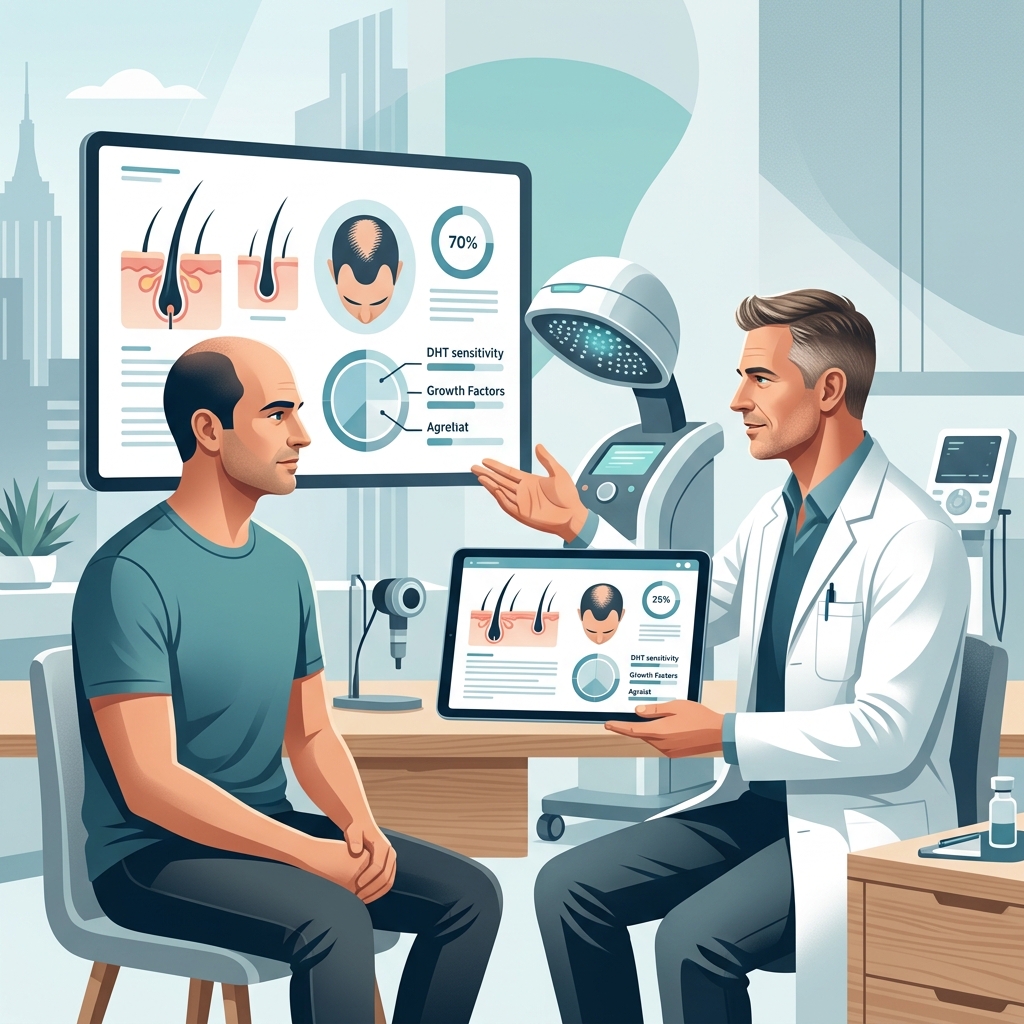
Year 2+: Maintenance protocols sustain results. Most patients transition to quarterly treatments rather than monthly, reducing both time and investment while preserving gains.
Parallel treatments like scalp RF microneedling or exosome therapy complement pharmacological approaches. These typically involve 3-6 sessions spaced 4-6 weeks apart, then maintenance annually or semi-annually.
What you should do next: Commit to at least 9 months before evaluating effectiveness. Hair growth simply takes time.
Maintaining Your Results with Our Tiered Wellness Memberships
Sustaining hair restoration requires ongoing care. We offer tiered wellness memberships that make maintenance affordable and convenient while bundling hair restoration care with broader health optimization.
These memberships provide:
- Quarterly or semi-annual hair restoration treatments (PRP, exosome, or RF microneedling)
- Prescription medication refill coordination
- Ongoing assessment and protocol adjustment
- Access to our IV lounge for nutrient optimization
- Hormone level monitoring and optimization
- Peptide therapies and supplementation support
- Priority scheduling and member pricing
Many patients find that the membership structure motivates consistent care while reducing per-visit costs compared to standalone treatments. You’re investing in sustained results rather than hoping a single treatment solves the problem indefinitely.
Membership flexibility allows you to adjust intensity based on your results and lifecycle. Early in treatment, you might utilize monthly services. Once you reach desired results, you scale back to quarterly or semi-annual maintenance.
What you should do next: Ask about our tiered membership options during your consultation. The right structure aligns with your treatment intensity and budget.
Schedule Your Hair Loss Consultation Today
Hair loss is treatable. The combination of advanced medical knowledge, proven regenerative therapies, pharmaceutical optimization, and comprehensive health support creates real restoration possibilities that weren’t available five years ago.
Your first step is a detailed consultation where our specialists assess your specific situation, identify contributing factors, and design a protocol customized to your goals and timeline. We’ll discuss realistic expectations, required investment, and what your journey might look like over the coming months.
Contact our Manhattan or New Providence location today to book your hair loss consultation. Take back control of your appearance and reclaim the confidence that comes with a full head of hair.
Contact Us Today For a Free Consultation
Frequently Asked Questions (FAQ)
What hair restoration treatments does Éternité offer for male pattern baldness?
We provide a comprehensive range of evidence-based treatments tailored to your specific type and stage of hair loss. Our offerings include medical-grade topical and oral medications, advanced laser therapies, PRP (platelet-rich plasma) treatments, peptide protocols, and innovative low-level light therapy systems. We combine these modalities strategically to address hair loss from multiple angles and maximize your results.
How long does it typically take to see results from your hair restoration treatments?
Results vary depending on which treatments we recommend for you, but most patients begin noticing improvements within 3 to 6 months of consistent treatment. Some therapies like PRP show measurable outcomes sooner, while others require patience as hair growth cycles naturally progress. During your consultation, we’ll provide you with a realistic timeline based on your individual hair loss pattern and the specific protocol we design for you.
Can we integrate hair restoration with other wellness services at Éternité?
Absolutely. We’ve found that hair health improves significantly when combined with our longevity services, hormone replacement therapy, and nutritional optimization protocols. Hair loss often connects to underlying hormonal imbalances or nutritional deficiencies, so we address these factors comprehensively. Our specialists coordinate your hair restoration plan with your broader anti-aging and wellness objectives to support optimal results.