



Table of Contents
- Why Men Consider Penile Fillers for Enhancement and Confidence
- The Role of Anticoagulants in Your Health and Medical History
- How Penile Fillers Work and Why Medication Interactions Matter
- Anticoagulant Effects on Bleeding and Bruising During Treatment
- Our Comprehensive Pre-Treatment Screening and Medical Protocols
- Managing Medications Before Your Penile Filler Appointment
- What to Expect During Your Customized Filler Procedure
- Post-Treatment Care and Activity Guidelines for Optimal Results
- Why Our Medical Team Ensures Your Safety and Satisfaction
- Frequently Asked Questions (FAQ)
Why Men Consider Penile Fillers for Enhancement and Confidence
Men pursue penile fillers for straightforward reasons: enhanced girth, improved symmetry, or simply greater confidence in intimate situations. Unlike surgical augmentation, filler-based penile enhancement offers a minimally invasive option with minimal downtime, making it an attractive choice for busy professionals in the NY and NJ area who want measurable results without extended recovery.
The psychological component matters too. Many men report that achieving their desired appearance directly improves self-esteem and relationship satisfaction. Our experience shows that when patients feel comfortable in their own skin, that confidence naturally extends into all areas of life.
Penile fillers typically use dermal filler materials like hyaluronic acid or calcium hydroxylapatite, which add volume and contour to the shaft and glans. Results are visible immediately and continue to improve subtly over two weeks as tissue hydration settles. The procedure takes 20-30 minutes, and most men return to light activity the same day.
What to do next: If you’re considering penile enhancement, schedule a private consultation with our medical team. We’ll discuss your aesthetic goals, examine candidacy, and address any health concerns including current medications.
The Role of Anticoagulants in Your Health and Medical History
Anticoagulants are medications that reduce your blood’s ability to clot. Common types include warfarin (Coumadin), direct oral anticoagulants (DOACs) like apixaban (Eliquid) or rivaroxaban (Xarelto), and injectable anticoagulants like heparin and enoxaparin (Lovenox). Many patients also take antiplatelet agents such as aspirin or clopidogrel (Plavix), which function similarly by preventing clot formation.
These medications serve critical protective roles, especially for patients with atrial fibrillation, history of stroke, deep vein thrombosis, or mechanical heart valves. Stopping them abruptly carries real cardiovascular risk, which is why your medical history is never incidental during aesthetic treatment planning.
Understanding your anticoagulation status is the foundation of safe cosmetic procedures. We take this seriously because your cardiovascular health always comes first, even when pursuing aesthetic goals.
What to do next: Bring a complete list of all current medications to your initial consultation, including over-the-counter supplements and herbal products that may affect bleeding.
How Penile Fillers Work and Why Medication Interactions Matter
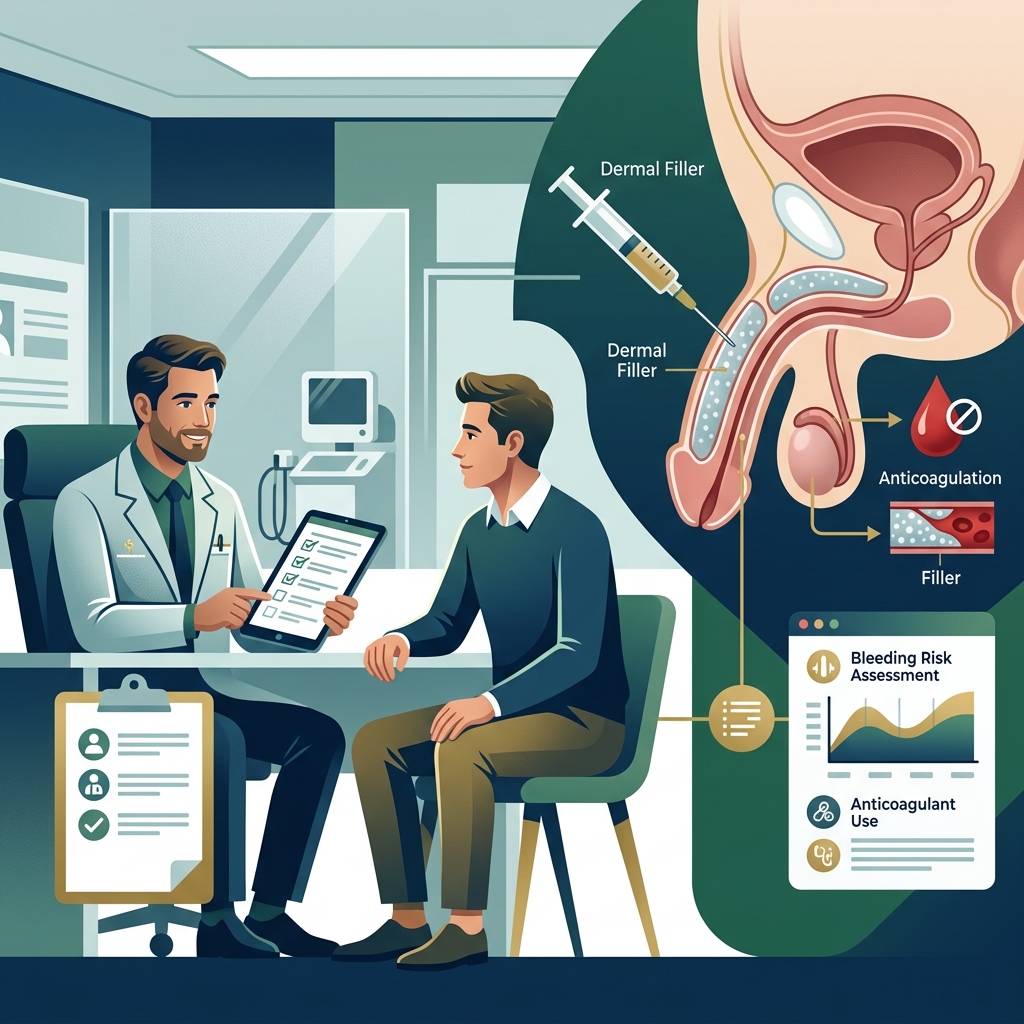
Penile fillers work by injecting biocompatible material into the subcutaneous tissue of the shaft and/or glans, creating controlled augmentation. The injections are precise and placed in specific anatomical planes to optimize both aesthetics and function. We use sterile technique and advanced ultrasound guidance when indicated to ensure accurate placement and minimize vascular trauma.
The injection process itself creates minor tissue trauma as the needle punctures the skin and underlying tissue. In patients not taking anticoagulants, this trauma triggers normal hemostasis (clotting), and bleeding stops within minutes. Anticoagulants interfere with this natural process, extending bleeding time and increasing hematoma (bruising) risk.
Additionally, some herbal supplements like ginkgo biloba, fish oil at high doses, and garlic supplements can potentiate bleeding effects. Certain prescription medications like NSAIDs (ibuprofen, naproxen) inhibit platelet function and compound bleeding risk when combined with anticoagulants. This is why our pre-treatment screening asks detailed questions about everything you ingest.
What to do next: Provide our team with documentation from your prescribing cardiologist or internist about why you’re on anticoagulation. This helps us coordinate care and may inform our decision to proceed, modify technique, or reschedule.
Anticoagulant Effects on Bleeding and Bruising During Treatment
Patients on anticoagulants experience measurably higher bruising and swelling during injectable procedures. What might be minimal pinpoint bruising in a non-anticoagulated patient can become diffuse bruising covering the penile shaft and extending to the scrotum or lower abdomen.
Bleeding into tissue creates hematomas that reabsorb over 10-21 days, during which time they appear as dark purple or blue discoloration. More extensive bruising also increases swelling, which can temporarily affect penile appearance and function. Swelling typically peaks 24-48 hours post-treatment.
In rare cases, patients on anticoagulants may experience prolonged oozing from injection sites or arterial bleeding if a small vessel is inadvertently punctured. This is why our medical team uses specific hemostasis techniques, applies appropriate pressure, and may apply topical hemostatic agents like thrombin or tranexamic acid at treatment sites.
Most importantly, the bruising and swelling are temporary and do not indicate treatment failure or permanent complications. However, they extend the recovery timeline and require adjusted expectations.
What to do next: If you’re on anticoagulants, discuss with us whether a modified timeline makes sense. Some patients delay cosmetic procedures during peak anticoagulation periods, while others proceed with full informed consent.
Our Comprehensive Pre-Treatment Screening and Medical Protocols
We conduct thorough pre-treatment evaluation because penile enhancement is a medical procedure, not a retail service. Our screening includes detailed medical history, medication reconciliation, cardiovascular risk assessment, and direct communication with your primary care physician or cardiologist when anticoagulation is involved.
We review your anticoagulation indication and current INR (International Normalized Ratio) if you’re on warfarin, as this measures clotting time and informs our procedural safety. We also assess bleeding history, prior surgeries, and any adverse reactions to anesthetics or fillers.
Our team determines whether your anticoagulation status requires modification before treatment. Some patients coordinate with their cardiologist to bridge from warfarin to shorter-acting anticoagulants, while others maintain current therapy and proceed with enhanced bruising precautions. The decision is individualized and always made collaboratively with your primary medical team.
We document all findings and obtain written informed consent that specifically addresses anticoagulant interactions and expected bleeding/bruising outcomes. This protects your safety and ensures you enter treatment with realistic expectations.
What to do next: Schedule your consultation at least two weeks before your desired treatment date. This timeline allows us to coordinate with your physicians and prepare any necessary modifications to your medication regimen.
Managing Medications Before Your Penile Filler Appointment
If you’re on anticoagulants, do not stop taking them without explicit instruction from your prescribing physician. Abrupt discontinuation carries serious cardiovascular risk and is almost never medically appropriate. Instead, we coordinate directly with your doctor about the safest approach.
Depending on your specific anticoagulant and bleeding risk profile, your physician may recommend:

- Continuing anticoagulants unchanged and accepting increased bruising
- Temporarily reducing dose if medically appropriate
- Bridging to injectable anticoagulation (like heparin) that can be held shortly before procedure
- Scheduling treatment around routine anticoagulation monitoring dates
Independently, we ask you to avoid NSAIDs (ibuprofen, naproxen, aspirin) for five days before treatment unless your cardiologist specifically requires them. We recommend acetaminophen for any pain management instead. Stop herbal anticoagulants like high-dose fish oil, ginkgo, and garlic supplements five to seven days before appointment.
Alcohol thins the blood and increases bruising, so we recommend abstaining for 24 hours before treatment. Stay well-hydrated in the days leading up to your appointment, as hydration improves tissue quality and healing.
What to do next: Create a written list of all medications and supplements, including doses. Share this with our team at least one week before treatment so we can review interactions and provide specific pre-appointment instructions.
What to Expect During Your Customized Filler Procedure
Our penile enhancement procedure begins with topical numbing cream applied 15-20 minutes before treatment, followed by local anesthetic injection at the treatment sites. Most men find the procedure minimally uncomfortable, with sensation described as pressure rather than sharp pain.
We inject filler using fine sterile needles in a controlled, layered fashion. For optimal aesthetics, we typically inject along the dorsal and lateral aspects of the shaft, creating natural-looking girth enhancement while preserving normal function. We may also subtly augment the glans to improve definition. The entire injection sequence takes 20-30 minutes.
Throughout the procedure, we monitor injection sites for appropriate fill, symmetry, and vascular compromise. We apply gentle pressure and hemostatic techniques between injection sites. For patients on anticoagulants, we apply additional pressure and may use topical hemostatic agents like thrombin paste.
We take before and after photographs in your private treatment room. Most patients experience minimal bleeding beyond pinpoint oozing at injection sites. We provide detailed post-care instructions and a follow-up contact number for any questions.
What to do next: Plan to rest the remainder of treatment day. Avoid strenuous activity, exercise, and sexual activity for the duration recommended by our team (typically 3-7 days depending on anticoagulation status).
Post-Treatment Care and Activity Guidelines for Optimal Results
Swelling and bruising are normal and expected, particularly in anticoagulated patients. Bruising typically appears within hours and peaks at 24-48 hours. Most resolves within 10-14 days, though some residual discoloration may linger slightly longer in patients on anticoagulants.
To optimize healing and minimize swelling:
- Apply ice packs for 15 minutes several times daily for the first 48 hours
- Elevate when possible during the first few days
- Wear supportive underwear or compression shorts to reduce swelling
- Avoid hot baths, saunas, and strenuous exercise for 5-7 days
- Sleep with head elevated for the first few nights
- Take acetaminophen for discomfort (avoid NSAIDs)
- Stay hydrated and eat nutritious foods to support tissue healing
Sexual activity should be avoided for the duration specified during your post-care consultation, typically 3-7 days. This timeline allows initial filler stabilization and reduces the risk of displacement or vascular injury.
Bruising will fade naturally; resist the urge to apply excessive pressure or massage the area. If you experience concerning symptoms like severe pain, signs of infection, or functional impairment, contact our office immediately.
What to do next: Schedule a two-week follow-up appointment so we can assess healing, final filler integration, and ensure you’re satisfied with results.
Why Our Medical Team Ensures Your Safety and Satisfaction
We approach penile enhancement as a medical specialty requiring comprehensive training in penile anatomy, injectable techniques, and complication management. Our team includes physicians with extensive experience in aesthetic medicine and sexual health, supported by protocols developed from clinical literature and best practices.
Your safety depends on transparent medical communication. We ask thorough questions not to be invasive but because your anticoagulation status, surgical history, and medication interactions directly influence our procedural approach and your outcomes. We never pressure patients to proceed or minimize legitimate medical concerns.
We maintain detailed medical records, document informed consent including anticoagulant interactions, and remain available for post-treatment questions. If complications arise, we manage them immediately with appropriate expertise and care.
Our commitment extends beyond the procedure day. We measure success not just by aesthetic enhancement but by your confidence, satisfaction, functional comfort, and most importantly, your ongoing health and safety.
At Éternité Medical Aesthetics & Longevity Centers in Manhattan and New Providence, we combine clinical credibility with genuine patient care. If you’re considering penile enhancement and currently take anticoagulants, we’re equipped to work with your existing medical team and deliver safe, beautiful results.
What to do next: Contact us to schedule your private consultation. We’ll review your complete medical picture, answer all questions about anticoagulant interactions, and create a personalized treatment plan that prioritizes your health alongside your aesthetic goals.
Contact Us Today For a Free Consultation
Frequently Asked Questions (FAQ)
Do I need to stop taking my anticoagulant medications before my penile filler appointment?
We recommend discussing all medications with our medical team during your pre-treatment consultation, as we cannot advise you to stop prescribed anticoagulants without coordinating with your primary care physician. Depending on your specific medication and dosage, we may ask you to continue your regimen or work with your doctor on a modified schedule. Our comprehensive screening process ensures we understand your complete medical history so we can develop a safe treatment plan tailored to your needs.
What bleeding or bruising should I expect if I’m taking blood thinners?
We’ve found that patients on anticoagulants may experience increased bruising and minor bleeding at the injection sites compared to those not taking these medications. Our advanced injection techniques and post-treatment protocols are designed to minimize these effects, and we provide detailed aftercare instructions to help manage any bruising that does occur. Most patients see significant improvement within 7-10 days following our recommended recovery guidelines.
How does your clinic handle medication interactions with penile fillers?
We conduct thorough medical evaluations before any procedure, including a detailed review of your current medications, supplements, and health conditions to identify potential interactions. Our medical team uses this information to adjust our treatment approach, timing, and aftercare recommendations specifically for your situation. We maintain ongoing communication with our patients throughout the process to ensure you feel informed and confident about your safety at every stage.