



Table of Contents
- Why Dermal Fillers Require Strategic Touch-Up Planning
- Understanding Filler Longevity: What the Research Shows
- The Role of Individual Metabolism in Filler Duration
- Our Personalized Touch-Up Protocol at Éternité
- Signs Your Fillers Need Refreshing
- The Optimal Timeline for Filler Maintenance
- How Our Medical Team Customizes Your Touch-Up Schedule
- Advanced Techniques We Use to Maintain Natural Results
- Combining Fillers with Complementary Treatments for Maximum Impact
- Investment Protection: Why Strategic Touch-Ups Save Money Long-Term
- Booking Your First Touch-Up Appointment with Us
- Frequently Asked Questions (FAQ)
Why Dermal Fillers Require Strategic Touch-Up Planning
Dermal fillers have become a cornerstone of modern aesthetic medicine, delivering immediate volume restoration and natural-looking rejuvenation without surgery. Yet many patients don’t realize that successful filler treatment extends well beyond the initial injection appointment. At Éternité Medical Aesthetics & Longevity Centers, we recognize that strategic touch-up planning is what separates temporary cosmetic improvement from sustained, beautiful results.
Dermal fillers work by restoring lost volume beneath the skin, addressing the natural volume loss that occurs with aging and collagen degradation. Unlike neurotoxins that relax muscles, fillers physically replace what time and gravity have taken away. This mechanism means results are visible immediately, but they’re not permanent.
The key distinction lies in understanding that fillers are gradually metabolized by your body over time. This isn’t a failure of the product or technique; it’s your body doing what it’s designed to do. What matters is having a strategic plan to maintain your results before you notice significant changes.
Many patients wait until fillers have completely dissolved before seeking touch-ups, which creates an unnecessary gap where results regress. Strategic touch-up planning means scheduling maintenance appointments before full resorption occurs. This approach prevents the “yo-yo” effect of looking great one month and noticeably different six months later.
Actionable takeaway: Schedule your touch-up consultation 2-3 weeks before you anticipate wanting refreshment, not after you feel fillers have completely worn off.
Understanding Filler Longevity: What the Research Shows
Clinical research has established clear timelines for the most commonly used dermal fillers. Hyaluronic acid fillers like Juvederm and Restylane typically last 6 to 12 months, with individual variation based on filler cross-linking density and injection depth. Thicker, more robust formulations tend to last longer than lighter products designed for subtle enhancement.
Calcium hydroxylapatite (Radiesse) and polylactic acid-based fillers (Sculptra) show extended longevity, often lasting 12 to 18 months or longer. Radiesse stimulates collagen production while providing immediate volume, while Sculptra works more gradually but offers sustained results through ongoing collagen remodeling.
Poly-L-lactic acid fillers represent a distinct category because they don’t replace volume immediately like hyaluronic acid. Instead, they act as a collagen stimulator, meaning results develop over weeks and months, peaking around three months post-treatment. This is why Sculptra is particularly valued for comprehensive facial rejuvenation and body contouring applications like our liquid butt lift treatments.
The research also shows that repeated treatments can extend duration slightly. Some studies suggest that with consistent maintenance, patients experience marginal increases in longevity over multiple treatment cycles, though this effect plateaus after several years.
Actionable takeaway: Choose filler types based on your lifestyle and maintenance preferences, not just cost. Longer-lasting options may offer better value if you prefer fewer appointments annually.
The Role of Individual Metabolism in Filler Duration
Your body’s metabolic rate is perhaps the single most important variable determining how long fillers last for you personally. Patients with faster metabolisms break down fillers more quickly, while those with slower metabolic rates often enjoy extended results. This explains why one patient’s fillers last eight months while another’s last a full year with the identical product and technique.
Lifestyle factors significantly influence metabolic speed. Patients who exercise regularly, stay hydrated, and maintain consistent sleep patterns typically experience longer filler retention. Conversely, high stress levels, poor sleep, and dehydration can accelerate filler breakdown. Certain medications and supplements also affect metabolism, which is why we conduct a thorough health history during your consultation.
Sun exposure and UV radiation damage accelerate aging at the cellular level, potentially increasing metabolic activity in facial skin. Patients who spend significant time outdoors without adequate sun protection may notice fillers resorb slightly faster. This doesn’t mean you need to avoid the sun, but rather that consistent SPF 30+ application supports both filler longevity and overall skin health.
Age itself plays a nuanced role. Younger patients typically have more robust metabolic function, but they also have better skin elasticity, which may create the illusion of longer-lasting results even if the filler itself resorbs at a similar rate to older patients.
Actionable takeaway: If fillers consistently dissolve faster than expected, evaluate your sleep quality, exercise routine, and hydration levels. Small lifestyle adjustments can extend results by weeks or months.
Our Personalized Touch-Up Protocol at Éternité
We’ve developed a structured approach to filler maintenance that begins during your initial consultation. Our medical team documents your baseline facial anatomy, skin quality, and aesthetic goals with detailed photography and clinical assessment. This baseline becomes your reference point for all future touch-ups.
During your first appointment, we discuss expected longevity based on filler type and your individual profile. We then schedule your follow-up touch-up consultation approximately three weeks before we anticipate peak resorption. This timing allows us to assess results in real time and plan maintenance before noticeable regression occurs.
Our protocol includes quarterly progress reviews via video consultation for patients on our wellness memberships. These virtual check-ins allow us to monitor changes remotely, answer questions about aftercare, and prepare you for upcoming touch-up appointments. This proactive approach prevents patients from feeling abandoned between appointments.
We also maintain detailed treatment records that track which fillers were used, injection volumes, exact placement, and how long results lasted specifically for you. Over time, this data becomes invaluable for predicting your personal timeline and optimizing future treatments.
Actionable takeaway: Ask your provider to document your filler history comprehensively. Having this baseline data ensures consistency across multiple appointments and different injectors.
Signs Your Fillers Need Refreshing
Most patients notice filler changes gradually rather than suddenly. Early signs include slight loss of definition in previously enhanced areas, reduced projection of cheekbones or lips, and subtle softening of jawline contours. The key distinction is that your face still looks good; it simply looks slightly less enhanced than immediately post-treatment.
More obvious indicators include visible hollowing returning in treated areas, lips returning toward their original volume, or increased nasolabial fold prominence despite previous filler treatment. Some patients describe this as their face “settling back” to its baseline appearance.
One useful self-assessment method is comparing current photos to those taken immediately post-treatment. A side-by-side comparison often reveals changes that aren’t obvious in daily mirror-checking. We recommend having professional photography done at each appointment, which provides objective documentation.
However, timing isn’t purely visual. If you had excellent results six months ago and you’re now at month eight, a touch-up is worth considering even if changes are subtle. Preemptive touch-ups maintain continuity of results without allowing regression.
Pay attention to how you feel emotionally, not just how you look visually. If you notice decreased confidence or find yourself avoiding certain angles in photos, these psychological cues signal that refreshment would benefit you.
Actionable takeaway: Schedule follow-up photos at every appointment. Use these as your baseline for assessing when touch-ups are warranted, rather than relying on memory or daily mirror observations.
The Optimal Timeline for Filler Maintenance
For hyaluronic acid fillers in areas like the lips and nasolabial folds, most patients benefit from touch-ups every 6 to 9 months. Cheek fillers, which sit deeper in the face and experience less movement and muscle activity, often last closer to 12 months. Tear trough fillers under the eyes may persist for up to 18 months because the under-eye area has minimal facial expression.
Strategic maintenance means scheduling touch-ups slightly before full resorption. If you know your hyaluronic acid fillers last about eight months, booking your touch-up at the six-month mark allows us to refresh areas that are beginning to soften while maintaining continuity of results. You never experience the dip in appearance that occurs with full resorption followed by re-injection.
For Sculptra and other stimulator fillers, the timeline differs considerably. Initial treatment typically involves three sessions spaced four to six weeks apart, followed by maintenance treatments annually or every 18 months. These fillers require patience because visible results develop gradually, but they offer exceptional longevity and work beautifully for comprehensive facial rejuvenation.
Combining different filler types allows strategic staggering of appointments. For example, Sculptra maintenance might occur annually while hyaluronic acid touch-ups happen every nine months. This approach distributes maintenance costs across the year and ensures you always have some active filler support without requiring simultaneous treatments.
Actionable takeaway: Create a personalized maintenance calendar based on your specific filler types and demonstrated longevity. Mark appointments three weeks before anticipated resorption rather than waiting until results have completely faded.
How Our Medical Team Customizes Your Touch-Up Schedule
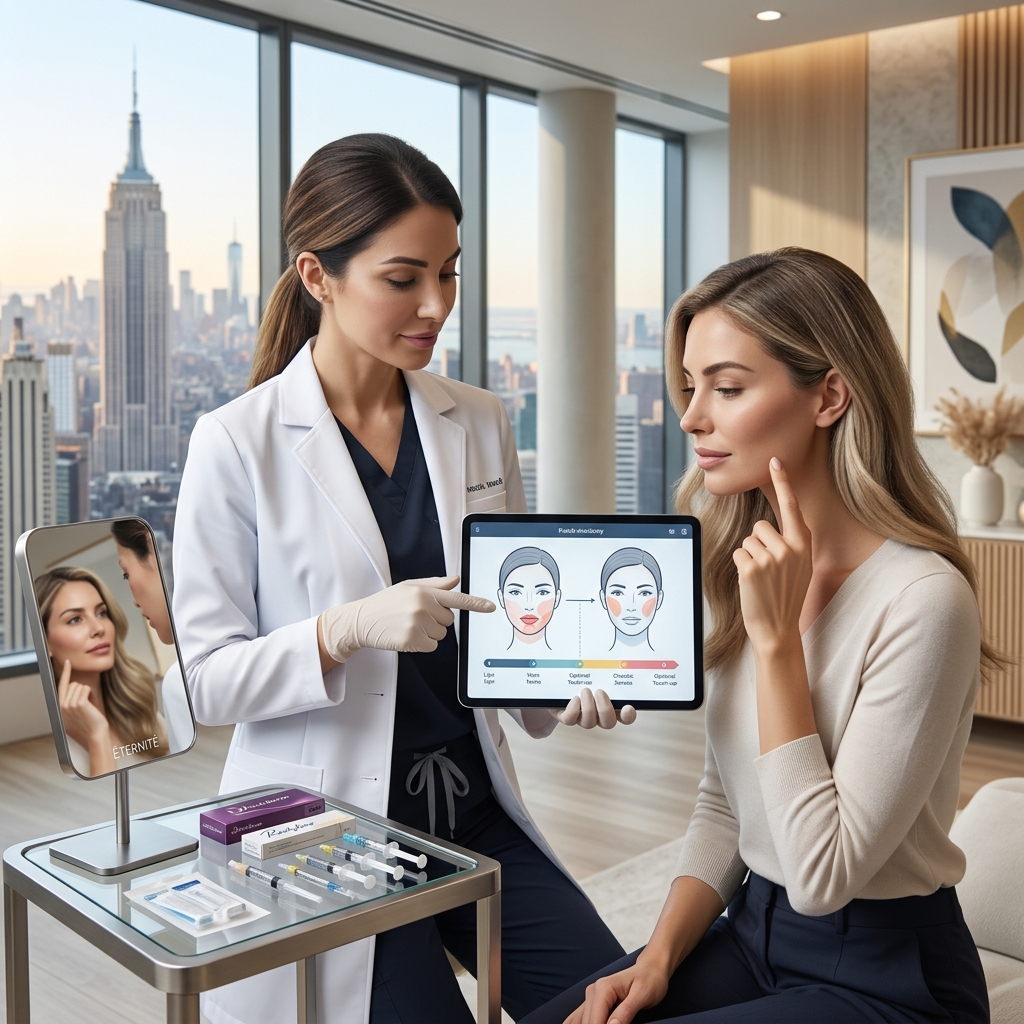
Customization begins with understanding that everyone’s face is different, and everyone’s metabolism is different. We assess your specific anatomy, asking questions about how your body responds to other treatments, how quickly you heal, and how long previous filler treatments lasted if you’ve had them before.
Our practitioners evaluate your current results comprehensively, not just the treated areas. We look at facial balance, symmetry, and how results interact with your overall aesthetic goals. Sometimes a touch-up involves refilling previously treated areas; sometimes it involves expanding treatment to adjacent regions for improved harmony.
We also consider seasonal factors and life circumstances. If you have a major event planned in three months, we might adjust timing to ensure peak results align with that date. If you’re beginning a new medical regimen that could affect metabolism, we discuss how that might impact filler longevity.
Our team discusses realistic expectations openly. We explain that perfect symmetry is neither possible nor desirable; nature’s slight asymmetries contribute to authentic beauty. Our goal is enhancement that makes you look like a refreshed version of yourself, not a different person.
For patients enrolled in our wellness memberships, touch-up customization is part of your ongoing care protocol. We’re invested in your long-term results, not just individual appointments, which fundamentally changes how we approach maintenance and planning.
Actionable takeaway: Communicate any life changes to your provider during touch-up consultations. New exercise routines, medications, or major events help us customize the timing and approach of your maintenance plan.
Advanced Techniques We Use to Maintain Natural Results
We employ sophisticated injection techniques designed to maintain and enhance results with each touch-up. Micro-layering, where filler is deposited in precise amounts across multiple tissue planes, creates natural contours that don’t look over-corrected. This technique requires significant expertise but delivers superior aesthetic outcomes.
Three-dimensional facial analysis guides our approach. Rather than simply re-injecting previous areas, we assess how aging and gravitational changes have affected your entire face during the months since your last treatment. Strategic placement in new areas sometimes provides better balance than simply refreshing the original injection sites.
Blending techniques ensure that treated and untreated areas appear seamlessly integrated. If someone hasn’t had filler work done elsewhere, adjacent areas might look slightly disproportionate after a touch-up. Our injectors are skilled at subtle blending that maintains natural appearance while achieving the enhancement you desire.
We also utilize cannula techniques for certain placements. Cannulas (small, flexible tubes) reduce bruising and swelling compared to traditional needles, making touch-ups more comfortable and allowing you to resume normal activities immediately. This is particularly valuable for patients with busy schedules who need minimal downtime.
Advanced fillers designed specifically for different anatomical regions support our technique selection. Finer formulations for delicate under-eye areas differ substantially from robust products used for cheek and chin enhancement. Matching product characteristics to anatomical demands ensures both longevity and natural appearance.
Actionable takeaway: Ask your provider specifically about their blending techniques and why they’re using specific filler products and injection depths for your unique anatomy. Expertise in these nuances distinguishes excellent results from mediocre ones.
Combining Fillers with Complementary Treatments for Maximum Impact
Dermal fillers work beautifully alongside other aesthetic treatments, and strategic combination often delivers superior results compared to fillers alone. RF microneedling and other skin tightening treatments address texture and laxity while fillers restore volume, creating comprehensive facial rejuvenation.
Chemical peels and advanced facials like our PRX-T33 treatments refresh skin quality between filler touch-ups. Improved skin texture and clarity make filler results appear even more natural and youthful. These treatments also support collagen production, potentially improving skin elasticity and filler longevity.
For patients seeking facial rejuvenation beyond volume restoration, our Ultherapy non-surgical neck and face lift treatments provide skin tightening that synergizes beautifully with filler work. The combination addresses multiple aging vectors: volume loss, skin laxity, and fine lines.
PRP and PRF treatments enhance skin quality and can be microneedled into areas receiving filler, supporting healing and collagen remodeling. This regenerative approach works particularly well for patients pursuing comprehensive anti-aging protocols.
Our practitioners discuss these complementary options during touch-up consultations. Sometimes spacing fillers and other treatments strategically across several months allows each treatment to optimize results while distributing cost and downtime effectively.
Actionable takeaway: Ask about complementary treatments that address your other aesthetic concerns. A comprehensive approach often delivers better results than focusing on fillers alone.

Investment Protection: Why Strategic Touch-Ups Save Money Long-Term
Strategic touch-up maintenance represents smart financial planning, not ongoing expense. Many patients resist touch-ups, viewing them as additional costs beyond their initial investment. However, allowing fillers to completely dissolve and then re-injecting requires larger treatment volumes and higher costs than preemptive refreshment.
When you wait until fillers have fully resorbed, your anatomy returns to its baseline state, requiring the same injection volumes as your initial treatment. Touch-ups that occur before complete resorption require significantly smaller amounts of product because you’re enhancing existing structure rather than recreating it from zero. The volume savings are substantial.
Over a three-year period, strategic maintenance typically costs less than waiting for complete dissolution followed by full re-treatment. A patient who touches up every nine months before full resorption spends less than a patient who allows complete resorption followed by full re-injections every 12 months.
Our membership programs make ongoing maintenance even more accessible. Tiered wellness memberships include filler touch-ups as part of your benefits, dramatically reducing the per-treatment cost of maintaining results. Members typically save 30-40% on touch-up appointments compared to à la carte pricing.
Additionally, consistent results mean you feel confident and maintain higher quality of life. The psychological and emotional benefits of sustained aesthetic improvement extend beyond cost considerations.
Actionable takeaway: Request membership pricing and discuss multi-year treatment planning with our team. Long-term planning reveals substantial cost advantages compared to sporadic individual treatments.
Booking Your First Touch-Up Appointment with Us
Getting started with your touch-up protocol at Éternité is straightforward. If you’ve previously received filler treatment at another facility, bring any documentation or photos from your original treatment. This helps our medical team understand your aesthetic goals and previous results.
Contact our Manhattan or New Providence locations to schedule your touch-up consultation. During this appointment, our practitioners assess your current results, discuss longevity expectations specific to your metabolism and lifestyle, and establish your personalized maintenance timeline.
We recommend scheduling initial consultations four to six months after your previous filler treatment if you’re uncertain about when touch-ups are appropriate. Our team will evaluate your results and discuss timing recommendations based on what we observe.
New patients who have never received filler treatment should book a comprehensive aesthetic consultation rather than a touch-up appointment. We’ll discuss your aesthetic goals, recommend appropriate filler types and volumes, and outline long-term maintenance expectations during this visit.
Visit our website at Éternité Medical Spa to schedule your appointment online or call directly to discuss your specific situation with our intake team. We’re ready to help you maintain beautiful, natural-looking results that enhance your confidence and reflect your best self.
Contact Us Today For a Free Consultation
Frequently Asked Questions (FAQ)
How often should I schedule dermal filler touch-ups at Éternité?
We typically recommend scheduling your first touch-up between 2-4 weeks after your initial treatment to assess how your body metabolizes the filler. Most of our clients return for maintenance appointments every 6-12 months, though this varies based on your metabolism, the type of filler we used, and the areas treated. During your consultation, our medical team will create a personalized touch-up schedule that fits your specific needs and aesthetic goals.
What can I do to extend the longevity of my dermal fillers?
We’ve found that following proper aftercare significantly impacts how long your results last. Avoid strenuous exercise and excessive heat exposure for 24-48 hours post-treatment, stay hydrated, use quality sunscreen daily, and maintain a consistent skincare routine with quality products. Additionally, we offer complementary treatments like RF microneedling and peptide therapy that can enhance and prolong your filler results when strategically combined.
What signs indicate that my fillers need a touch-up?
You’ll notice gradual softening of the treated areas, reduced definition in cheekbones or lips, or a return of fine lines you previously addressed. Rather than waiting until fillers are completely gone, we recommend scheduling your touch-up appointment when you first notice about 30-40% volume loss, as this allows us to maintain your results with smaller, more natural-looking maintenance treatments.