



Table of Contents
- Why Men Choose Penile Fillers for Enhancement and Confidence
- Understanding Blood Thinners and How They Affect Your Body
- The Critical Interaction Between Blood Thinners and Filler Procedures
- Comprehensive Pre-Treatment Assessment at Éternité Medical Aesthetics
- Medication Management Protocols Before Your Penile Filler Treatment
- What to Expect During Your Safe and Medically-Supervised Procedure
- Post-Treatment Care and Recovery Guidelines for Optimal Results
- How We Ensure Your Safety During Aesthetic Enhancement
- Timing Your Treatment: Working Around Your Blood Thinner Regimen
- Achieving Natural-Looking Results Without Compromising Your Health
- Your Partnership With Our Medical Specialists Throughout Your Journey
- Frequently Asked Questions (FAQ)
Why Men Choose Penile Fillers for Enhancement and Confidence
Men seeking penile enhancement often have legitimate questions about safety, especially when they’re managing other health conditions. If you take blood thinners and are interested in penile fillers, understanding how these two factors interact is essential before moving forward with treatment. At Éternité Medical Aesthetics & Longevity Centers, we prioritize your safety and optimal results, which means having transparent conversations about your medications and medical history upfront.
Penile fillers represent a non-surgical approach to enhancement that delivers measurable improvements in both girth and overall appearance. Unlike invasive surgical options, dermal fillers offer a reversible solution with minimal downtime, allowing men to return to their normal routines immediately after treatment.
The appeal extends beyond aesthetics. Many men report increased confidence in intimate situations, improved self-image, and enhanced comfort with their bodies. These psychological and emotional benefits often translate into better quality of life and relationship satisfaction. Penile fillers work by adding volume to the shaft using biocompatible materials that integrate naturally with tissue, creating results that feel and look genuine.
Our clients choose this treatment because it aligns with their lifestyle priorities. They want tangible results without extended recovery periods, without scars, and without the risks associated with surgery. When performed by experienced medical professionals using appropriate protocols, penile fillers deliver consistent, satisfying outcomes that last 12-18 months, making them an investment worth protecting through careful pre-treatment planning.
Understanding Blood Thinners and How They Affect Your Body
Blood thinners, medically known as anticoagulants or antiplatelet medications, reduce your blood’s ability to clot. Common types include warfarin (Coumadin), dabigatran (Pradaxa), rivaroxaban (Xarelto), apixaban (Eliquat), aspirin, and clopidogrel (Plavix). These medications serve important protective functions: they prevent blood clots that could trigger strokes, heart attacks, or pulmonary embolism, especially for people with atrial fibrillation, recent surgeries, or cardiovascular conditions.
Your body naturally maintains a balance between clotting and bleeding. Blood thinners shift this balance intentionally to reduce clot formation, which is medically necessary for certain conditions. However, this altered clotting profile directly impacts how your body responds to any procedure involving needles, injections, or minor trauma to tissue.
When blood doesn’t clot as readily, you experience increased bleeding and bruising at injection sites. You may also notice prolonged oozing, larger hematomas, or swelling that takes longer to resolve. Understanding this mechanism helps explain why we take blood thinners seriously during aesthetic procedures: they fundamentally change how your tissue responds to treatment.
The Critical Interaction Between Blood Thinners and Filler Procedures
Penile filler injections involve multiple small needle punctures to deposit product precisely along the shaft. Each puncture creates microscopic trauma that normally results in minimal bleeding due to your body’s clotting response. When you’re on blood thinners, this natural clotting response is suppressed.
This interaction creates several potential complications. Excessive bleeding at injection sites can cause larger bruises, more pronounced swelling, and increased discomfort during recovery. In rare cases, significant hematoma formation can distort the filler placement or require medical intervention. Additionally, blood thinners can increase the risk of infection if proper wound care isn’t maintained, and they may theoretically increase the risk of vascular complications if filler accidentally enters a blood vessel.
The severity of these risks depends on several factors: which specific blood thinner you’re taking, your dosage, how long you’ve been on the medication, whether you have additional bleeding disorders, and your overall tissue integrity. This is precisely why we cannot proceed with treatment until we’ve thoroughly evaluated your medication profile and created a safety plan tailored to your situation.
Comprehensive Pre-Treatment Assessment at Éternité Medical Aesthetics
Our approach begins with detailed consultation where we review your complete medical history, current medications, dosages, and the clinical reason you’re taking blood thinners. This isn’t a quick form-filling exercise; we engage in thorough conversation to understand your unique situation.
We assess your bleeding risk profile by asking specific questions: Have you had procedures before while on blood thinners? Do you bruise easily or experience prolonged bleeding from minor cuts? Have you had any adverse reactions to fillers previously? Are you on any additional medications that might affect clotting, such as NSAIDs, supplements like garlic or ginger, or vitamin E? Do you have any bleeding disorders in your family history?
We also examine your tissue quality, skin elasticity, and anatomical considerations specific to penile anatomy. Different men require different filler volumes and placement techniques depending on their goals and baseline anatomy. Our providers will clarify what results are realistic for your situation and discuss any adjustments we might need to make to standard protocols to accommodate your blood thinner use.
Medication Management Protocols Before Your Penile Filler Treatment
For most blood thinners, we’ll coordinate with your prescribing physician before your procedure. Your cardiologist or primary care provider needs to be part of this conversation because they understand your underlying condition and can safely advise whether temporary adjustment is appropriate for you.
For certain patients on aspirin or other antiplatelet agents, we may recommend stopping the medication 5-7 days before treatment, with physician approval. For other blood thinners like warfarin or newer anticoagulants, stopping may not be medically advisable due to clot risk, and we proceed with treatment while on the medication with enhanced safety measures instead.
Here’s what this preparation looks like in practice: You’ll schedule a phone call with our medical team and your prescribing physician (we facilitate this communication). We’ll establish a clear plan that keeps you medically safe while optimizing your aesthetic procedure. You’ll receive written pre-treatment instructions specific to your situation. Avoid additional bleeding risk factors: don’t take NSAIDs like ibuprofen, avoid alcohol for 48 hours before treatment, and skip high-dose vitamin supplements that affect clotting.
The day before your procedure, stay well-hydrated and get adequate sleep. These foundational health habits improve tissue quality and your body’s ability to heal optimally.
What to Expect During Your Safe and Medically-Supervised Procedure
Our penile filler procedure is performed in our private, fully equipped medical facility by experienced practitioners trained in male sexual health aesthetics. When you arrive, we’ll verify all your pre-treatment preparations and confirm that nothing has changed with your medications or health status since your consultation.
We apply a topical numbing cream to the treatment area to minimize discomfort during injections. Our practitioners use smaller gauge needles and precise injection techniques optimized for patients on blood thinners, which helps reduce tissue trauma and bleeding. We work systematically along the shaft, placing filler in multiple small deposits rather than larger boluses, which distributes product more evenly and reduces localized bleeding.
You’ll feel pressure and mild sensations during treatment, but genuine pain should be minimal thanks to the numbing cream. The entire procedure typically takes 20-30 minutes. We have materials available to manage any excessive bleeding with gentle pressure and specialized techniques. Our team monitors your response throughout and adjusts techniques if needed.
Post-Treatment Care and Recovery Guidelines for Optimal Results
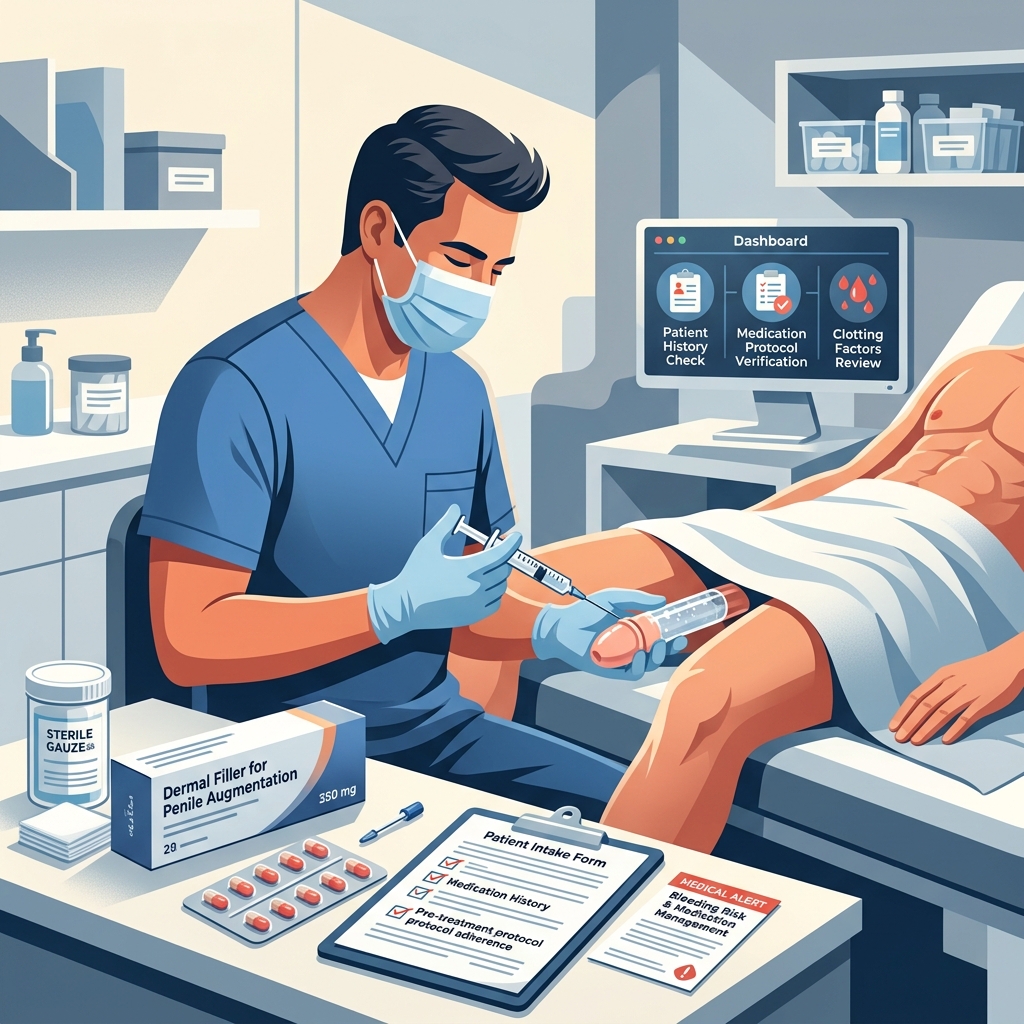
Your immediate post-treatment period is critical for optimal results and safety. We’ll provide detailed written instructions, but here’s what matters most: keep the area clean and dry for the first 24 hours. Avoid touching, rubbing, or putting pressure on the treated area. Don’t engage in sexual activity for at least 5-7 days.
Bruising and swelling are normal, especially if you’re on blood thinners. These typically resolve within 5-10 days, though some residual swelling may persist for 2-3 weeks as filler fully integrates. Ice application during the first 24-48 hours helps minimize swelling. After 48 hours, gentle warmth and light massage (as instructed) can help with final swelling resolution.
Continue your blood thinner medication exactly as prescribed unless your physician advises otherwise. Watch for any signs of infection: increasing redness, warmth, pus, or fever require immediate medical attention. Also contact us if you develop excessive swelling, severe pain, or discoloration that concerns you. These are rare, but we monitor closely.
Avoid NSAIDs for pain management since they can increase bleeding; acetaminophen is safer. Avoid vigorous exercise and heavy lifting for 7 days. Avoid hot baths, saunas, and strenuous activities that increase blood flow and pressure.
How We Ensure Your Safety During Aesthetic Enhancement
Safety is woven throughout every step of our process. We maintain detailed protocols specific to patients on anticoagulant therapy, informed by medical literature and our extensive clinical experience. Our providers have advanced training in complications recognition and management, including rare vascular events.
Our facility is fully equipped with emergency medications and equipment should any unforeseen issue arise, though serious complications are exceptionally rare when proper protocols are followed. We use only FDA-approved, medical-grade filler products with established safety profiles. We maintain precise documentation of the exact filler type, volume, location, and batch numbers in case any question arises post-treatment.
We schedule follow-up contact with you 24 hours and 7 days post-procedure to assess healing and address any concerns. Our team remains accessible if you need guidance during recovery. We recommend follow-up appointments at 2 weeks and 4 weeks post-treatment to evaluate final results and ensure everything has integrated beautifully.
Our providers are experienced in male sexual health aesthetics specifically. This specialization matters: penile tissue has unique vascular and structural characteristics that differ from facial anatomy, and our team understands these nuances deeply.
Timing Your Treatment: Working Around Your Blood Thinner Regimen
Strategic timing of your procedure requires coordination with your medical care. If you’re scheduled for any surgical procedures, dental work, or medical procedures that might require temporary blood thinner adjustment, we need to know those dates. Ideally, we schedule penile filler treatment well away from these other events to avoid conflicting medical protocols.
Some men prefer scheduling treatment during naturally convenient times: perhaps around vacation when they can focus on recovery without work stress, or during seasons when they anticipate less intimate activity anyway. There’s no medically superior time of year, so personal preference and logistics can guide your decision.
Discuss with your healthcare provider whether your specific blood thinner regimen might benefit from any temporary adjustment for aesthetic procedures. For some medications and conditions, the medical consensus supports brief interruption; for others, continued therapy is essential. Only your cardiologist or prescribing physician can make this determination. We’ll partner with them to implement whatever plan protects your health most effectively.
Achieving Natural-Looking Results Without Compromising Your Health
Natural-looking results require restraint and artistry. We don’t maximize volume to dramatic extremes; instead, we enhance proportions thoughtfully. Our goal is results that look like an improved version of you, not obviously treated. This approach serves you better, both aesthetically and medically.
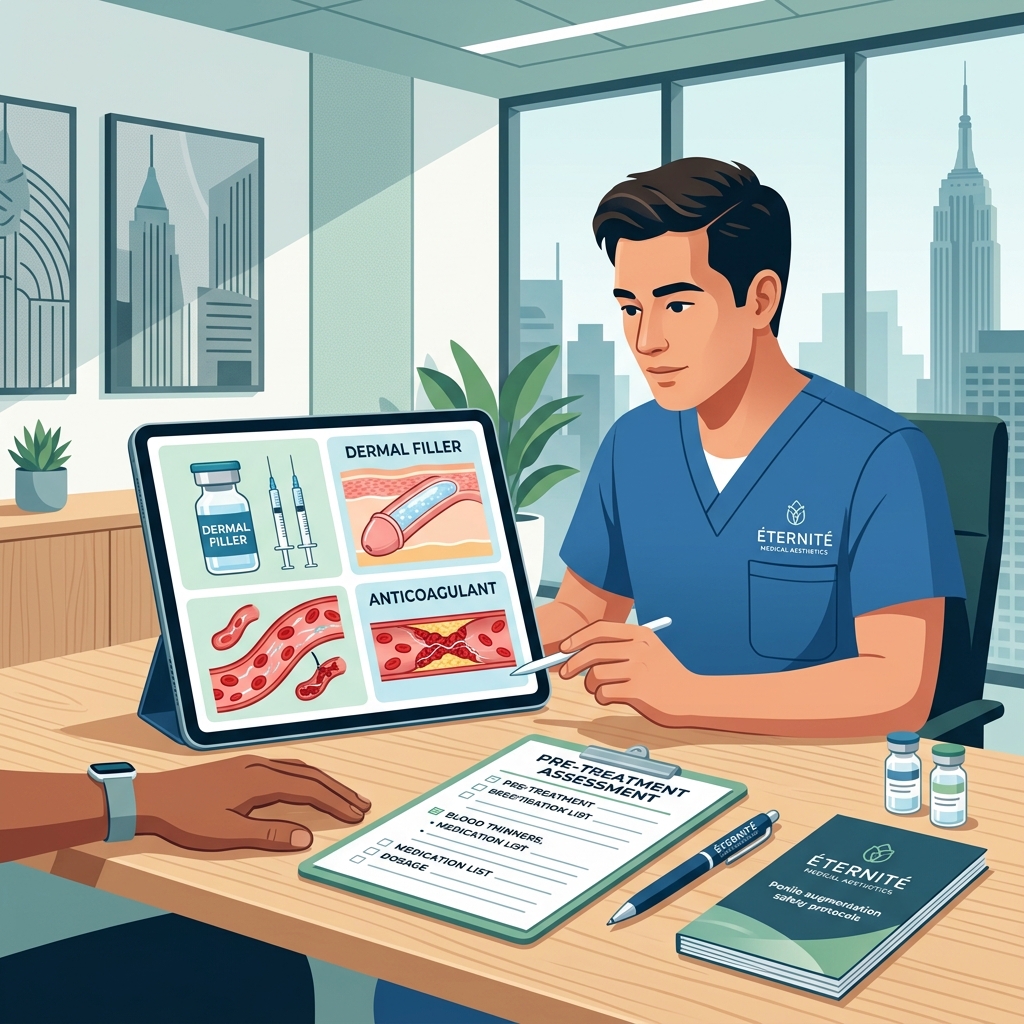
Smaller, more conservative augmentation also means less total filler volume, fewer injection points, and reduced overall tissue trauma. For patients on blood thinners, this conservative approach actually reduces procedural risks while still delivering meaningful enhancement. You’ll see improvement in girth and appearance without the overt look of cosmetic work.
Results typically become fully apparent within 2 weeks as swelling resolves and filler settles into place. The filler provides immediate volume, but tissue hydration and integration continue over subsequent weeks, often revealing final results that are even more impressive than the immediate post-treatment appearance.
Your Partnership With Our Medical Specialists Throughout Your Journey
We view aesthetic enhancement as a partnership between you and our medical team. You bring your goals, your body, and your health status; we bring our expertise, experience, and commitment to safety. This collaboration extends from your initial consultation through your final results and beyond.
Our medical specialists and providers have dedicated years to understanding aesthetic medicine, male sexual health, and the intricate details of how different medical conditions and medications affect treatment. When you choose Éternité Medical Aesthetics & Longevity Centers, you’re choosing practitioners who treat this work with the rigor and precision it deserves.
Your next step is straightforward: contact our team at our Manhattan, NY or New Providence, NJ location to schedule your confidential consultation. Bring your current medication list and any medical records from your prescribing physician. We’ll discuss your goals, review your health history, and create a personalized plan that safely delivers the enhancement you’re seeking. You deserve results you feel confident about, achieved through medical protocols that prioritize your wellbeing completely.
For further reading: Botox safety guidelines, Jeuveau safety guidelines.
Contact Us Today For A Free Consultation
Frequently Asked Questions (FAQ)
Can I proceed with penile fillers if I’m currently taking blood thinners?
We require a comprehensive medical evaluation before moving forward with any penile filler treatment if you’re on blood thinners. Depending on your specific medication and dosage, we may recommend temporarily adjusting your regimen under your physician’s guidance, or we might determine that an alternative treatment timeline works better for your health. Our medical team coordinates directly with your prescribing doctor to ensure we manage your treatment safely without compromising your therapeutic needs.
What happens during my pre-treatment consultation regarding medications?
During your consultation, we conduct a detailed medication review where we ask about all prescriptions, supplements, and over-the-counter drugs you’re taking, especially anticoagulants and antiplatelet medications. We explain how these substances interact with the filler procedure and bleeding risk, then provide you with specific pre-treatment and post-treatment guidelines tailored to your individual health profile. This collaborative approach allows us to optimize your safety while achieving the natural-looking enhancement results you’re seeking.
How long do I need to wait after stopping blood thinners before getting penile fillers?
The waiting period varies based on the specific medication you’re taking and your doctor’s recommendations, which is why we don’t provide a one-size-fits-all answer. We work with your healthcare provider to establish an appropriate timeline that ensures your body has adequately adjusted before your procedure. Once we receive clearance from your physician and confirm your readiness, we schedule your treatment at the optimal moment for both safety and results.