


Table of Contents
- Understanding Incontinence: Why It Happens and Why Treatment Matters
- The Limitations of Traditional Pelvic Floor Therapy Alone
- How Votiva RF Technology Works: The Science Behind Vaginal Radiofrequency
- Votiva RF for Incontinence: Mechanism of Action and Clinical Results
- Why Pelvic Floor Therapy Has Its Place in Your Treatment Plan
- Our Integrated Approach: Combining Votiva RF with Comprehensive Pelvic Health
- What to Expect During Your Votiva RF Treatment at Éternité
- Real Results: How Our Patients Regain Confidence and Quality of Life
- The Advantage of Advanced Radiofrequency Over Traditional Methods Alone
- Choosing the Right Incontinence Solution for Your Lifestyle and Goals
- Frequently Asked Questions (FAQ)
Understanding Incontinence: Why It Happens and Why Treatment Matters
Incontinence affects millions of women, yet many suffer in silence, unaware that effective solutions exist beyond the limitations of traditional approaches. Stress incontinence, urgency incontinence, and mixed incontinence stem from different physiological mechanisms, but they share a common thread: weakened or dysfunctional pelvic floor structures and vaginal tissue quality.
The pelvic floor supports your bladder, uterus, and bowel. Childbirth, hormonal changes, aging, and genetics all compromise the strength and elasticity of these tissues. When the urethral sphincter loses structural support or when vaginal tissue loses collagen and elasticity, involuntary urine leakage becomes inevitable, often during activity, coughing, or sneezing.
Beyond the physical inconvenience, incontinence affects quality of life profoundly. Many women limit exercise, avoid social situations, and experience emotional distress. At Éternité Medical Aesthetics & Longevity Centers, we recognize that treating incontinence is about restoring not just continence, but confidence and freedom. The good news is that modern medicine now offers solutions far more effective than Kegel exercises alone.
The Limitations of Traditional Pelvic Floor Therapy Alone
Pelvic floor physical therapy has value, but it addresses only part of the incontinence puzzle. These exercises target muscular strength and coordination, which helps some patients with mild stress incontinence. However, they cannot regenerate lost collagen, restore vaginal elasticity, or rebuild the structural support that years of childbirth and hormonal change have compromised.
Consider a common scenario: a 52-year-old woman performs pelvic floor exercises faithfully for six months and sees modest improvement. She still leaks with high-impact activities, because her vaginal tissue has thinned and lost elasticity from menopause. The muscles may strengthen, but the tissue quality itself remains compromised. In such cases, therapy alone reaches a ceiling of effectiveness.
Additionally, pelvic floor therapy requires consistent patient compliance and multiple weekly sessions over months. Many women find it difficult to sustain motivation when results plateau. Others have severe incontinence for which muscular rehabilitation alone cannot provide meaningful relief. These limitations led us to integrate advanced radiofrequency technology into our comprehensive incontinence care.
How Votiva RF Technology Works: The Science Behind Vaginal Radiofrequency
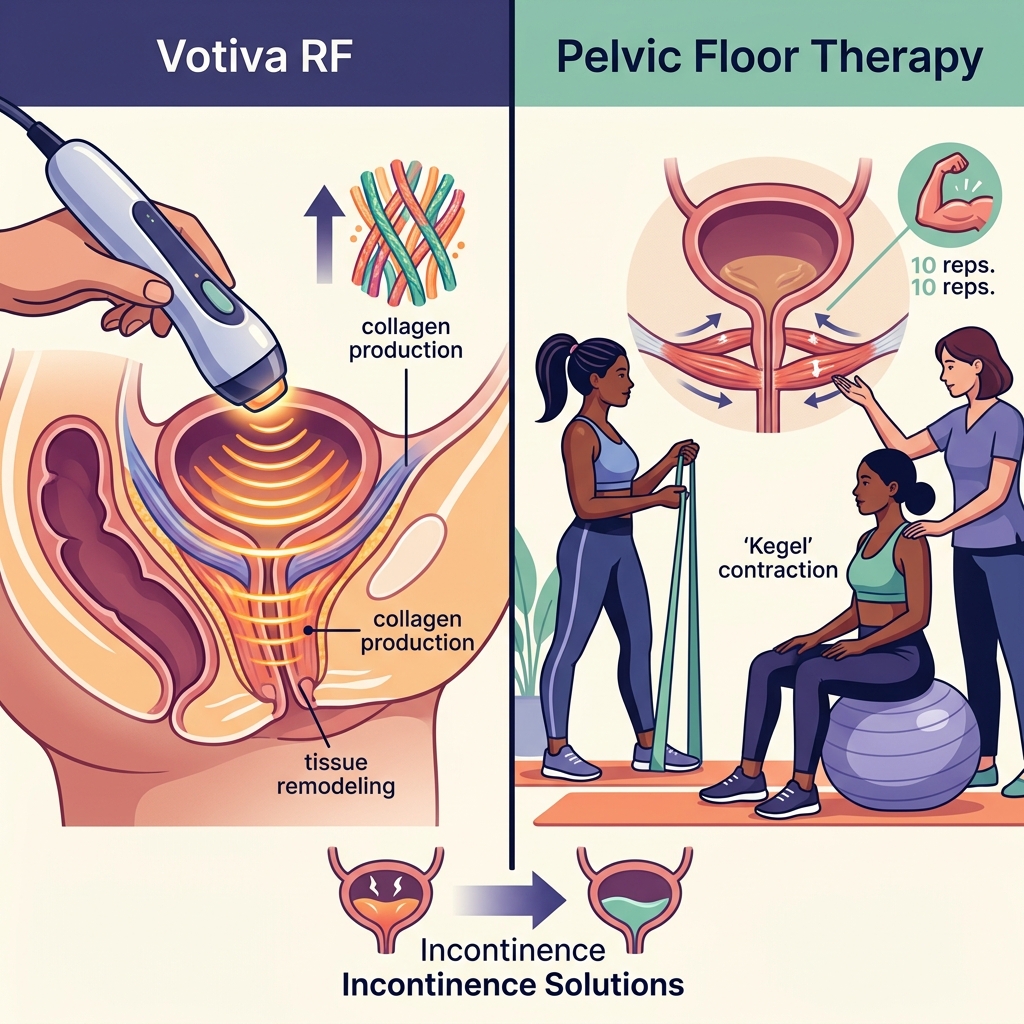
Votiva uses fractional radiofrequency energy to stimulate collagen production and remodeling in vaginal and urethral tissue. When radiofrequency energy penetrates the vaginal wall, it creates controlled micro-injuries that trigger the body’s natural healing response. This process activates fibroblasts, the cells responsible for producing new collagen and elastin.
The technology operates at a precise frequency that heats tissue to a therapeutic temperature without causing burns or excessive damage. The fractional approach means the energy is delivered in targeted zones, leaving surrounding tissue intact to support faster healing. Over the following weeks and months, new collagen deposition strengthens and tightens the vaginal wall, urethra, and surrounding pelvic structures.
Votiva differs fundamentally from older laser systems because it delivers energy deeper into tissue layers while maintaining safety at the surface. This dual-layer approach addresses both the superficial vaginal lining and the deeper structural elements that support continence. The result is tissue regeneration rather than simply stimulating muscle contraction.
Votiva RF for Incontinence: Mechanism of Action and Clinical Results
When applied specifically for incontinence, Votiva RF strengthens the urethral support structures and increases urethral closure pressure. The regenerated collagen in the urethral wall restores the tissue’s ability to compress and maintain a tight seal, particularly during activities that increase abdominal pressure.
Clinical studies demonstrate that patients treated with Votiva RF incontinence treatment experience measurable improvements in urinary leakage episodes. Many patients report a significant reduction in both stress and urgency incontinence. The mechanism works because restored vaginal tissue density directly supports the bladder neck and urethra in their proper anatomical position.
The results are progressive. Patients typically notice initial improvements after the second or third treatment, with maximum results appearing three to six months after completing the treatment series. Most women require three to four sessions spaced four to six weeks apart. This timeline allows time for collagen remodeling to occur between treatments.
Why Pelvic Floor Therapy Has Its Place in Your Treatment Plan
We do not view pelvic floor therapy as obsolete; rather, we recognize it as a complementary tool that enhances outcomes when combined with advanced tissue regeneration. Muscular strength and coordination remain important components of continence, particularly for stress incontinence during specific activities like running or jumping.
The combination approach works synergistically. Votiva RF regenerates the tissue architecture and structural support, while pelvic floor exercises optimize muscular strength and coordination within that improved foundation. A woman with regenerated urethral support who also maintains strong pelvic floor muscles experiences superior outcomes compared to either treatment alone.
We recommend that patients continue or begin pelvic floor therapy alongside Votiva RF treatment. This integrated strategy addresses the full spectrum of continence mechanisms and provides patients with tools they can maintain indefinitely for long-term results.
Our Integrated Approach: Combining Votiva RF with Comprehensive Pelvic Health
At Éternité Medical Aesthetics & Longevity Centers, we design customized incontinence treatment plans that extend beyond a single modality. Our comprehensive approach includes a detailed assessment of your incontinence type, severity, medical history, and personal goals.

We typically recommend Votiva RF as the cornerstone treatment, paired with ongoing pelvic floor physical therapy, lifestyle modifications, and sometimes complementary therapies like H-Wave electrotherapy, which stimulates pelvic floor muscles through electrical stimulation. We also address hormonal factors, particularly estrogen deficiency in menopausal women, because vaginal tissue health is intimately connected to hormonal balance.
Our medical providers assess whether vaginal atrophy, tissue laxity, or muscular weakness predominates in your case. This precision diagnosis allows us to calibrate treatment intensity and select additional therapies that address your specific anatomy and physiology. Some patients benefit from repeated Votiva RF sessions over extended timelines, while others achieve optimal results with a standard series followed by maintenance treatments annually.
What to Expect During Your Votiva RF Treatment at Éternité
The Votiva procedure at our Manhattan and New Providence locations takes approximately 20 to 30 minutes. There is no general anesthesia or extensive downtime required. You remain awake and alert throughout the treatment, with only topical numbing cream applied beforehand to maximize comfort.
The handpiece is gently inserted into the vagina, and you feel warmth and gentle vibration as the radiofrequency energy is delivered in specific patterns. Most patients describe the sensation as comfortable and tolerable. Some experience mild tingling or a warm sensation, which subsides immediately when the treatment ends.
After treatment, you may experience mild swelling, slight discharge, or temporary pelvic heaviness for a day or two. These effects resolve quickly. You can return to normal activities immediately, though we recommend avoiding sexual activity and vigorous exercise for 48 hours after each session. There is no recovery period or downtime that interferes with work or daily life.
Real Results: How Our Patients Regain Confidence and Quality of Life
Over the past years, we have treated numerous women with incontinence using Votiva RF, and the transformation in their quality of life has been profound. One patient, a 48-year-old who had avoided yoga classes for five years due to leakage during downward dog and jumping poses, completed her Votiva RF series and returned to her studio practice without a single episode of leakage within two months.
Another woman, 56 and post-menopausal, had experienced urgency incontinence so severe that she required frequent bathroom access throughout the day and night. After three Votiva RF treatments combined with hormone optimization and pelvic floor therapy, her nighttime frequency resolved almost entirely, and daytime urgency decreased from six to eight episodes daily to just one or two manageable episodes.
These outcomes reflect the cumulative effect of restored tissue architecture, improved pelvic floor support, and addressed underlying physiological imbalances. Patients consistently report renewed confidence during social activities, improved intimacy, and freedom to engage in exercise and recreation without the constant worry of incontinence.
The Advantage of Advanced Radiofrequency Over Traditional Methods Alone
Traditional pelvic floor therapy, pessaries, and pharmacological treatments each have limitations. Pessaries require manual insertion and fitting and carry risks of tissue irritation. Medications like anticholinergics address urgency but do nothing to restore tissue structure and often carry side effects.
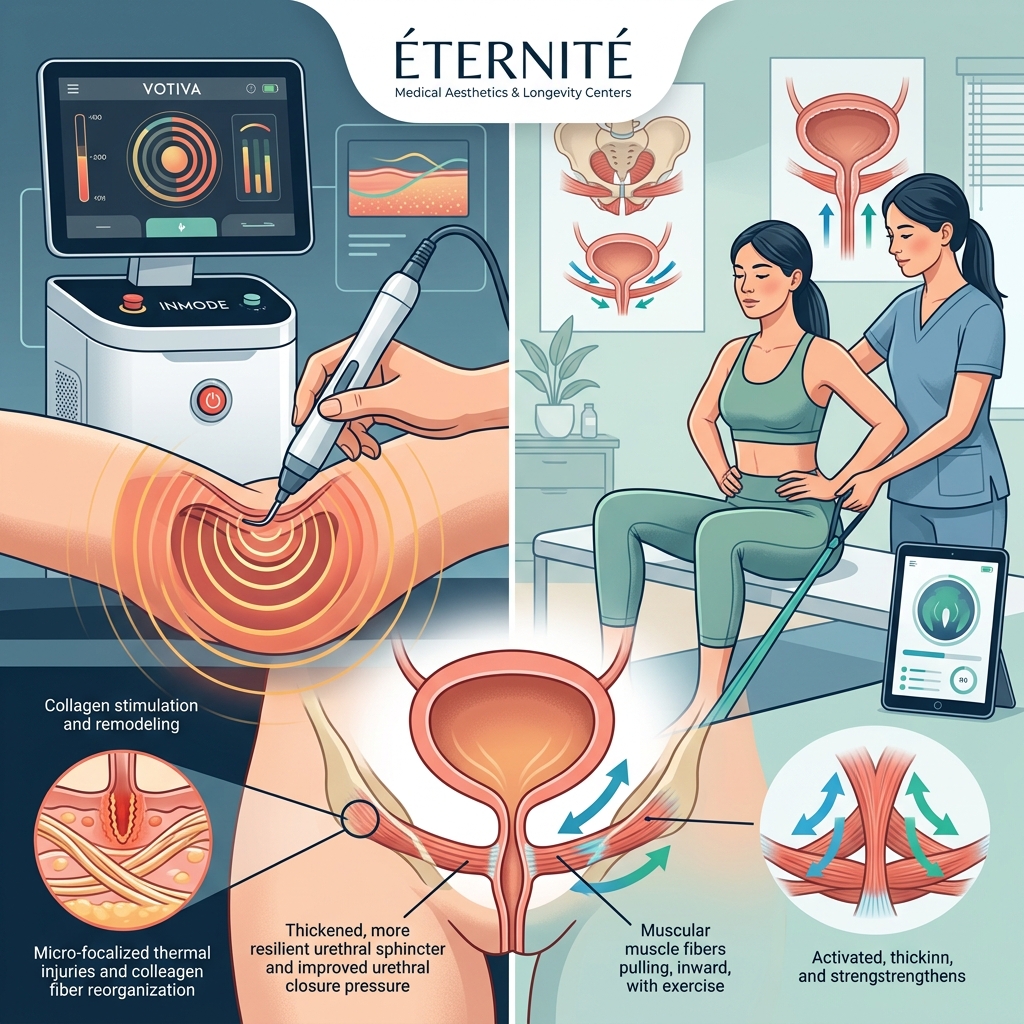
Radiofrequency technology offers a non-invasive, pharmaceutical-free approach that directly addresses the underlying tissue quality and structural integrity. Unlike laser systems from the past, modern Votiva RF provides deeper penetration, fractional delivery, and superior safety profiles. The technology is FDA-cleared specifically for vaginal laxity and urinary incontinence, giving you assurance that the approach is scientifically validated.
What truly distinguishes radiofrequency treatment is that it works with your body’s own healing mechanisms. You are not dependent on external devices, daily medications, or continuous exercises to maintain improvement. The regenerated collagen persists, and the strengthened structural support remains, though maintenance treatments may optimize long-term results.
Choosing the Right Incontinence Solution for Your Lifestyle and Goals
Your choice between pelvic floor therapy alone, Votiva RF alone, or an integrated approach depends on your incontinence severity, tissue quality, personal preferences, and lifestyle goals. If you have mild stress incontinence and are motivated to perform exercises consistently, pelvic floor therapy may suffice. However, if you have moderate to severe incontinence, tissue laxity visible on examination, or insufficient response to conservative therapy, Votiva RF offers superior outcomes.
We recommend scheduling a confidential consultation with our providers at Éternité Medical Aesthetics & Longevity Centers to discuss your specific situation. During this appointment, we assess your pelvic floor strength, examine tissue quality, and design a treatment plan tailored to your anatomy and goals. We will honestly discuss what each modality can and cannot achieve in your case, ensuring you make an informed decision aligned with your expectations.
Incontinence is treatable, and you do not need to accept it as an inevitable consequence of aging or childbirth. Modern regenerative medicine offers solutions that restore not just continence, but confidence and quality of life. Contact us today at one of our locations in Manhattan, NY, or New Providence, NJ to take the first step toward freedom and renewed wellness.
For further reading: Vaginal laser treatment.
Contact Us Today For A Free Consultation
Frequently Asked Questions (FAQ)
How does Votiva RF work differently than pelvic floor therapy alone for treating incontinence?
We use Votiva RF to deliver controlled radiofrequency energy that stimulates collagen remodeling and tightens vaginal tissue at the structural level, directly addressing the physical causes of incontinence. While pelvic floor therapy strengthens muscles through targeted exercises, our Votiva RF treatments work synergistically by improving tissue elasticity and support around the urethra, which is why we often recommend combining both approaches for optimal results.
What is the typical timeline for seeing results with Votiva RF treatment at our centers?
We generally see our patients experience noticeable improvements in urinary symptoms within 2-3 weeks of completing their initial treatment series, with continued enhancement over the following months as collagen remodeling deepens. Most patients require 3-4 sessions spaced 2-3 weeks apart, and we customize your protocol based on your specific incontinence severity and lifestyle goals during your initial consultation.
Is Votiva RF treatment painful or does it require downtime?
Our Votiva RF treatments are non-surgical and well-tolerated, with most patients describing minimal discomfort during the procedure itself. We typically see our patients resume normal activities immediately after treatment, making this an ideal solution for those seeking effective incontinence relief without disrupting their daily lives.