


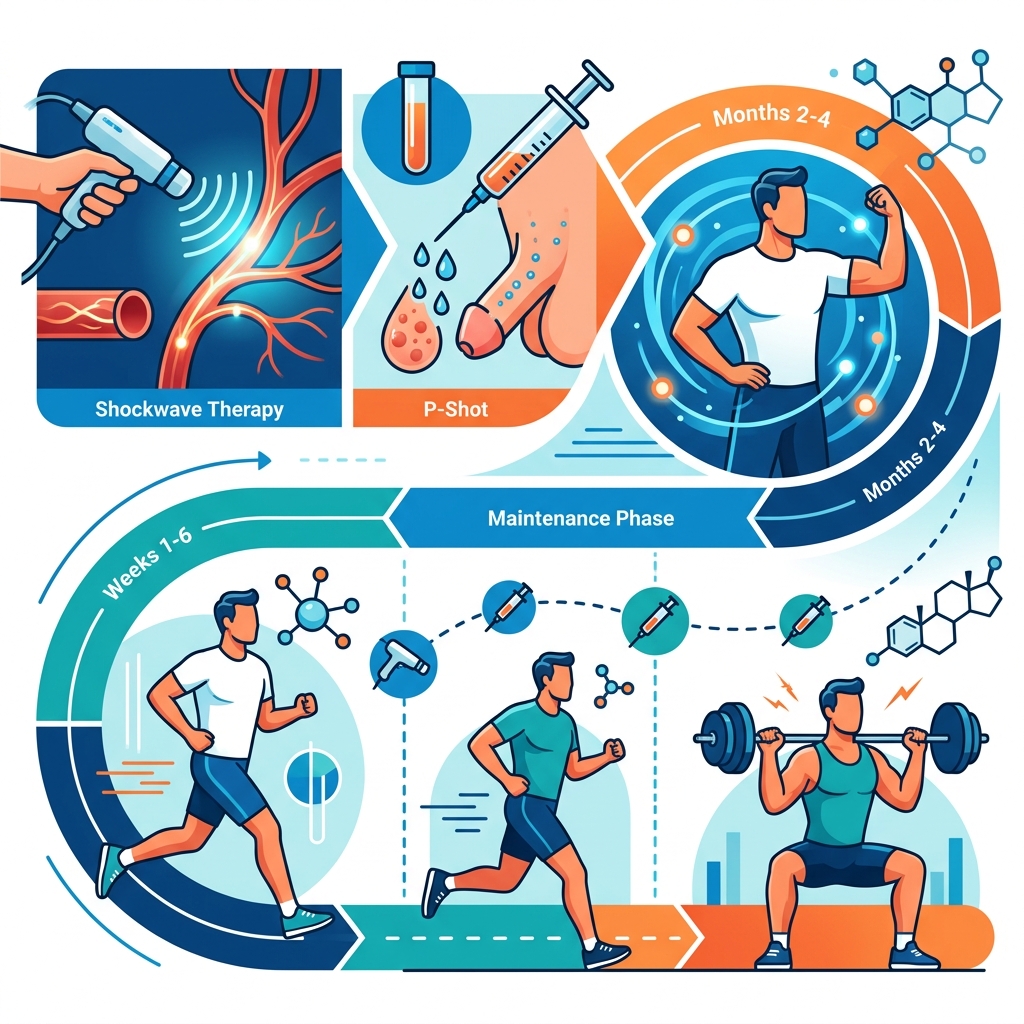
Table of Contents
- Why Men Over 40 Face Declining Sexual Performance and What You Can Do About It
- Understanding Shockwave Therapy: How It Restores Erectile Function
- The P-Shot Explained: Regenerative PRP for Male Sexual Enhancement
- Initial Treatment Phase: What to Expect in Your First 6 Weeks
- Peak Results Window: Months 2-4 When You'll Notice Maximum Improvement
- Maintenance Timeline: How Often You Need Follow-Up Treatments
- Combining Shockwave Therapy and P-Shot for Optimal Results
- Real-World Maintenance Schedules from Our Manhattan and New Jersey Patients
- Factors That Influence Your Individual Maintenance Needs
- How Our Longevity Approach Extends Treatment Benefits Between Sessions
- Getting Started: Your Personalized Maintenance Plan at Eternité Medical Aesthetics
- Frequently Asked Questions (FAQ)
Why Men Over 40 Face Declining Sexual Performance and What You Can Do About It
Sexual performance decline after 40 isn’t inevitable, though it’s remarkably common. Testosterone naturally decreases by roughly 1% annually starting in the early 30s, while blood vessel elasticity diminishes and nerve sensitivity gradually shifts. Poor circulation, accumulated metabolic stress, and hormonal imbalances compound these age-related changes, making erectile dysfunction (ED) affect an estimated 40% of men at 40 and rising significantly thereafter.
Rather than accept this as normal aging, we’ve seen transformative results when men address the underlying physiology. The good news: your sexual function responds exceptionally well to targeted regenerative treatments. Shockwave therapy and platelet-rich plasma (PRP) injections, commonly called the P-Shot, work synergistically to restore natural erectile capability by rebuilding damaged tissue and improving blood flow.
The key distinction: these aren’t pharmaceutical band-aids. They trigger your body’s own healing mechanisms to rebuild vascular health and tissue resilience. When combined with a structured maintenance protocol, most men experience sustained improvements that compound over time rather than fade.
Action step: Schedule a consultation to assess your specific ED drivers before pursuing treatment so your protocol targets root causes rather than symptoms alone.
Understanding Shockwave Therapy: How It Restores Erectile Function
Shockwave therapy uses acoustic waves to stimulate neovascularization, essentially prompting your body to grow new blood vessels in penile tissue. The mechanism is elegant: micro-trauma from the acoustic pulses triggers angiogenesis (new vessel formation) and improves blood flow dynamics to tissues that have become sluggish from age and vascular compromise.
Clinical research shows shockwave therapy restores erectile function in 60-70% of men with ED, with effects most pronounced in those whose ED stems from vascular insufficiency rather than purely psychological causes. The treatment requires no downtime, no medications, and produces no systemic side effects since the waves target only penile tissue.
A typical initial protocol involves 12 sessions spaced weekly or bi-weekly. Sessions last 15-20 minutes and involve positioning the applicator over the shaft and base of the penis while delivering controlled acoustic pulses. Some men report mild tingling or warmth during treatment, but discomfort is minimal.
The biological timeline matters: your body needs 4-8 weeks after the final session to fully complete new vessel formation. This is why patience during the initial phase prevents premature conclusions about treatment efficacy.
Actionable insight: Shockwave therapy pairs exceptionally well with vascular support strategies between sessions. Improved diet, cardiovascular exercise, and stress management accelerate the tissue regeneration process.
The P-Shot Explained: Regenerative PRP for Male Sexual Enhancement
The P-Shot leverages your own blood’s healing components. We draw a small blood sample, centrifuge it to concentrate platelets and growth factors, then precisely inject the resulting plasma directly into penile tissue using ultrasound guidance. This concentrates your body’s natural repair machinery exactly where function matters most.
Platelets contain dozens of growth factors that stimulate collagen remodeling, nerve regeneration, and improved tissue elasticity. Unlike synthetic fillers, PRP integrates with your existing tissue architecture and continues signaling cellular repair for weeks after injection.
Results typically emerge gradually: initial improvements in sensation often appear within days, while full erectile enhancement develops over 6-12 weeks as collagen remodeling progresses. Many patients report improved morning wood as an early indicator that vascular and neurological function is recovering.
The P-Shot complements shockwave therapy exceptionally well because they address different mechanisms. Shockwave triggers new vessel formation; PRP regenerates tissue quality and nerve responsiveness within those vessels. Combined, they create a comprehensive restoration approach.
What to do next: Understand that PRP results depend partly on your own healing capacity, which improves with optimized nutrition, sleep quality, and low systemic inflammation.
Initial Treatment Phase: What to Expect in Your First 6 Weeks
Your first 6 weeks establish the foundation for everything that follows. During this window, you’re managing acute treatment effects while your body initiates deep healing processes.
Days 1-3: Mild soreness at injection sites is normal if you’ve had the P-Shot; some bruising or swelling may appear. Shockwave therapy typically produces no lingering discomfort. Avoid aggressive sexual activity and intense exercise during this brief window while tissues stabilize.
Weeks 2-4: This is when early biological signals emerge. Some men report improved sensation or stronger morning erections. If you’re combining both treatments, the synergistic effects begin intersecting. Continue completing your shockwave sessions according to your protocol schedule.
Weeks 5-6: Tissue remodeling accelerates beneath the surface, though visible improvements may feel subtle. This is precisely when men sometimes lose confidence, believing the treatments aren’t working. Resist this impulse. Clinical literature and our own patient tracking consistently show that weeks 5-8 represent the bridge between initial healing and noticeable functional gains.
Avoid these mistakes: Excessive sexual activity too early disrupts healing; inconsistent treatment attendance interrupts the cumulative biological cascade; discontinuing complementary lifestyle changes (exercise, sleep, hydration) undermines treatment effectiveness.
Your task: Maintain your treatment schedule religiously and track subjective improvements in a simple log. Note morning erection quality, sensation changes, and endurance. This personal data often reveals progress your conscious experience might otherwise miss.
Peak Results Window: Months 2-4 When You’ll Notice Maximum Improvement
Months two through four represent the convergence point where cellular regeneration fully expresses itself. This is when most men report dramatic improvements in erectile rigidity, endurance, and sensation.
By week 8-12, new blood vessels have matured, collagen remodeling has substantially advanced, and nerve regeneration reaches functional levels. Erections typically become noticeably firmer, sexual performance extends with greater stamina, and many men describe restored confidence that extends into other life areas.
During this window, sexual responsiveness sharpens. The refractory period often shortens, and sensation returns with pronounced clarity. Men frequently report that intimacy feels reconnected to physical pleasure rather than performance anxiety.
Week 16-20 often marks the absolute peak. Tissue regeneration plateaus at this point, meaning further improvements come slowly. This is why the maintenance question becomes critical: sustaining these gains requires strategic follow-up interventions before regression begins.
Critical insight: Peak results don’t mean “mission accomplished.” Without maintenance, gradual decline resumes because ongoing vascular stress, aging, and metabolic pressures continue. Think of this window as establishing a new baseline that requires periodic reinforcement.
Immediate action: If you’re at peak results now, schedule your first maintenance treatment before week 24 to prevent loss of momentum.
Maintenance Timeline: How Often You Need Follow-Up Treatments
Maintenance frequency varies based on your individual biology, but general patterns emerge from our experience treating hundreds of men.
For most patients, one maintenance shockwave session every 6-12 months sustains vascular improvements. Some men require sessions every 9 months; others stretch to annual treatments. The determining factor is usually how quickly you notice subtle decline in performance. Your personal responsiveness teaches the right interval.
P-Shot maintenance typically works on a 12-18 month cycle for most men. Some benefit from annual injections; others find 18-month spacing optimal. The regenerative effects compound with repeated treatments, meaning your second P-Shot often produces more robust results than your first because your tissue is already primed from the initial intervention.
Men who combine both treatments often need less frequent individual sessions because the treatments amplify each other. A shockwave session followed by a P-Shot injection 4-6 weeks later creates synergistic effects that extend the maintenance window compared to either treatment alone.
Hormonal optimization dramatically influences maintenance needs. Men with adequate testosterone, consistent exercise routines, and strong sleep quality often extend treatment intervals. Those with metabolic stress, poor sleep, or hormonal imbalance may benefit from more frequent maintenance.
Practical structure: Schedule your first maintenance appointment 8-10 months after completing initial treatment. During that visit, we assess functional changes and adjust your ongoing protocol based on your response.
Combining Shockwave Therapy and P-Shot for Optimal Results
The synergistic approach works because each treatment mechanism amplifies the other. Shockwave therapy creates an environment of heightened cellular activity and improved blood supply. When you introduce PRP into this primed tissue, growth factors work more effectively because vascular infrastructure has been optimized.
Optimal timing involves completing your full shockwave protocol first (12 sessions), then scheduling your P-Shot 2-4 weeks after your final shockwave session. This allows shockwave-induced vascular changes to stabilize before you layer in PRP regeneration. The tissues are maximally receptive at this precise window.
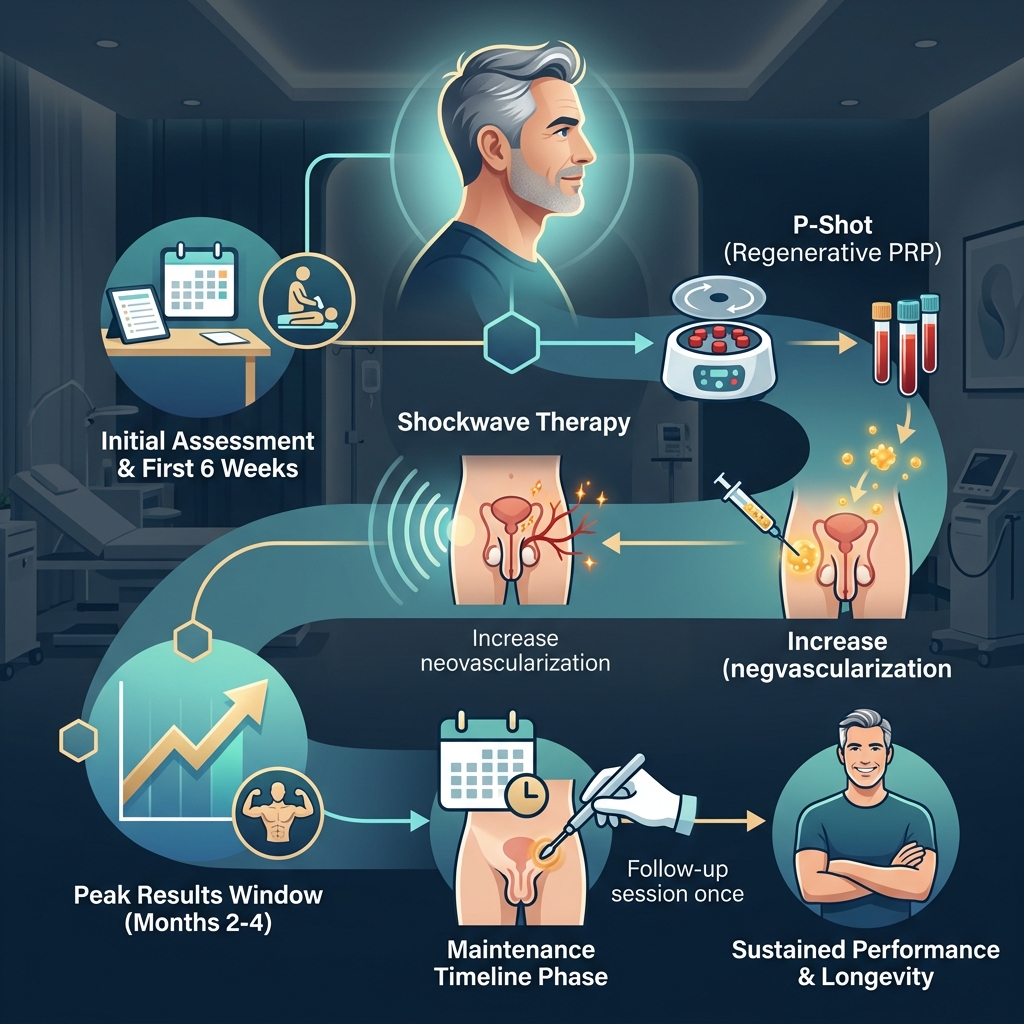
Some men prefer the reverse sequence: P-Shot first, then shockwave therapy beginning 2-3 weeks later. Both approaches work. The key is allowing adequate spacing so treatment effects don’t overlap in ways that create temporary inflammation while managing both simultaneously.
Men seeking maximum enhancement benefit from alternating maintenance treatments. Year one includes one shockwave session plus one P-Shot. Year two reverses this sequence. This staggered approach maintains continuous tissue optimization without excessive treatment frequency.
The combined approach typically produces results superior to either treatment alone. Men report stronger, more sustained erectile improvements and often notice enhanced sensation that neither treatment alone consistently delivers.
Strategic move: During your consultation, discuss whether combining treatments immediately makes sense for your situation or whether sequential treatment over several months better fits your recovery timeline and goals.
Real-World Maintenance Schedules from Our Manhattan and New Jersey Patients
Our patients across Manhattan, the Bronx, Westchester, and New Providence span diverse professions and lifestyles, yet clear maintenance patterns have emerged.
A 52-year-old executive from Manhattan with borderline hypertension found that biannual shockwave sessions plus annual P-Shot injections sustained his results optimally. He combines these with consistent cardiovascular exercise and stress management. His maintenance calendar: shockwave in March, P-Shot in September, repeat annually.
A 58-year-old entrepreneur from Westchester whose ED stemmed primarily from vascular insufficiency benefits most from annual shockwave therapy with P-Shot boosters every 18 months. His metabolic stress was significant, so we incorporated our comprehensive longevity assessment to address hormonal and nutritional factors. Adding these contextual changes reduced his treatment frequency needs.
A 46-year-old professional from New Providence follows a more aggressive schedule: semi-annual shockwave sessions with annual P-Shots. He’s highly motivated to maintain peak performance and has the flexibility to prioritize self-care. His results remain exceptional.
One recurring insight: men who invested in broader anti-aging and longevity protocols alongside sexual wellness treatments required less frequent maintenance. Optimizing sleep, managing inflammation through targeted supplementation, addressing hormonal imbalances, and improving cardiovascular capacity all extend treatment benefits. These changes compound rather than substitute for sexual wellness treatment.
Pattern to recognize: The men with the longest intervals between treatments typically combine their sexual wellness protocol with comprehensive longevity strategies. They’re optimizing their entire system, not just targeting ED symptoms.
Factors That Influence Your Individual Maintenance Needs
Your personal maintenance timeline depends on multiple intersecting variables.
Vascular health baseline: Men with existing cardiovascular disease, diabetes, or hypertension typically need more frequent maintenance because their vascular environment remains challenging. Conversely, men with strong baseline cardiovascular function often stretch maintenance intervals.
Hormonal status: Testosterone levels directly influence sexual function recovery and treatment responsiveness. Low testosterone undermines both shockwave and P-Shot effectiveness. If your testosterone sits below 400 ng/dL, hormone replacement therapy becomes a critical complement to regenerative treatments. Men receiving hormone optimization often halve their maintenance frequency needs.
Lifestyle consistency: Exercise frequency, sleep quality, stress management, and diet quality all influence how long treatment benefits sustain. Men exercising consistently maintain better microcirculation and tissue health between sessions. Poor sleep and chronic stress accelerate decline.
Age and metabolism: Younger men (40-50) often need less frequent maintenance than men in their 60s because tissue regeneration capacity remains higher. Metabolic function also matters; men with robust metabolism recover faster and maintain results longer.
Sexual activity frequency: Paradoxically, regular sexual activity actually maintains vascular tone better than inactivity. Men with consistent intimate relationships often notice results persist longer because they’re maintaining the systems we’re treating.
Previous ED severity: Men with mild ED (occasional performance issues) often need less frequent maintenance than those with severe ED (non-functional erections). The deeper the original deficit, the more reinforcement the tissue requires.
Action step: During your maintenance assessment, we evaluate these specific factors to personalize your ongoing protocol rather than applying a generic schedule.
How Our Longevity Approach Extends Treatment Benefits Between Sessions
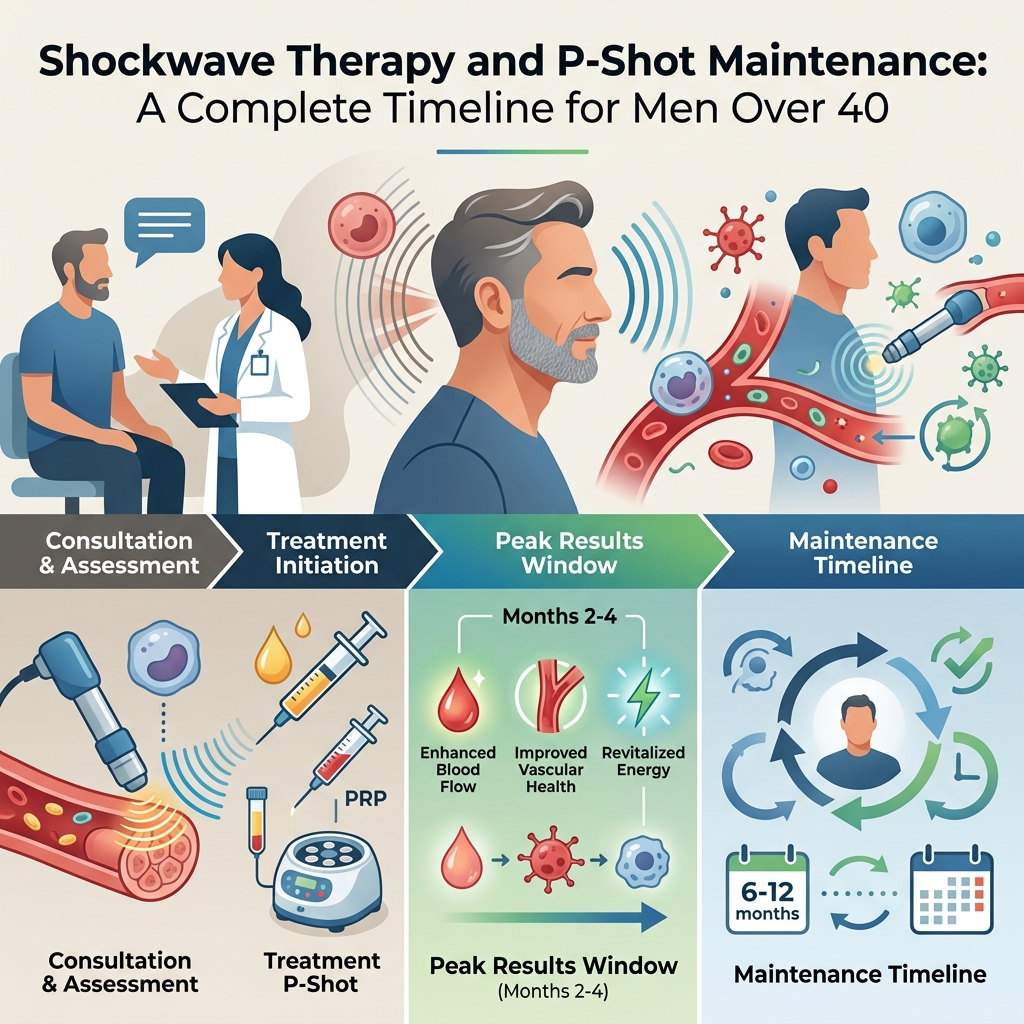
At Éternité Medical Aesthetics & Longevity Centers, we recognize that treating sexual wellness in isolation misses the opportunity for comprehensive optimization. Your erectile function reflects your overall vascular health, hormonal balance, metabolic efficiency, and neurological vitality.
Our longevity approach examines the systems supporting sexual performance: cardiovascular capacity, hormonal optimization through appropriate replacement therapy, metabolic health including glucose management and insulin sensitivity, inflammatory burden, sleep quality, and neurological function including nerve regeneration capacity.
When we optimize these parallel systems, treatment benefits extend dramatically. Peptide therapy supporting tissue regeneration, targeted supplementation addressing micronutrient deficiencies, cardiovascular conditioning, and comprehensive hormone assessment all multiply the benefits of shockwave therapy and P-Shot treatments.
Men receiving personalized longevity protocols alongside sexual wellness treatment typically experience faster initial improvement rates, peak results that emerge earlier, superior long-term maintenance of benefits, extended intervals between treatments, and better overall quality of life beyond sexual function.
Our providers assess your complete health picture, not just penile function. We examine your unique biochemistry and design interventions that address your specific barriers to optimal sexual performance.
What this means for you: Your maintenance schedule becomes personalized based on how aggressively we can optimize your underlying systems. A man with excellent cardiovascular health, optimized hormones, and low inflammation needs entirely different maintenance than someone with metabolic dysfunction and hormonal imbalance, even if their ED severity appears similar.
Getting Started: Your Personalized Maintenance Plan at Eternité Medical Aesthetics
Beginning your sexual wellness journey starts with a comprehensive assessment. During your initial consultation, we evaluate your complete medical history, perform a thorough physical examination, and discuss your specific functional goals.
This assessment clarifies whether your ED stems primarily from vascular insufficiency (where shockwave therapy excels), tissue quality and nerve damage (where PRP shines), hormonal deficiency, or some combination. Your unique diagnosis shapes your personalized protocol.
We’ll discuss realistic timelines: initial treatment phases lasting 8-12 weeks, peak results windows typically emerging months 2-4, and maintenance strategies fitting your lifestyle and biological responsiveness. We’ll explain maintenance frequency expectations based on your specific situation rather than offering generic protocols.
Our providers include experienced clinicians who specialize in men’s sexual wellness and understand that ED treatment extends far beyond symptom management. We’re focused on restoring genuine function and confidence.
Schedule your initial consultation at either our Manhattan location serving the greater New York area or our New Providence location serving Union County and surrounding regions. During this visit, we’ll establish your personalized shockwave therapy and P-Shot maintenance timeline, discuss complementary longevity strategies optimizing your overall health, and answer detailed questions about your recovery expectations.
We believe that men deserve comprehensive, medically grounded approaches to sexual wellness that address root causes rather than symptoms. Your journey toward restored function and confidence begins with understanding your unique biology and building a maintenance plan designed specifically for you.
For further reading: ED Shockwave Therapy.
Contact Us Today For A Free Consultation
Frequently Asked Questions (FAQ)
How often should I schedule maintenance treatments after my initial P-Shot and shockwave therapy sessions?
We typically recommend our patients return for maintenance treatments every 12 to 18 months once they’ve completed their initial six-week treatment phase and experienced peak results. However, we customize this timeline based on your individual response to treatment, lifestyle factors, and sexual wellness goals. During your consultation at our Manhattan or New Jersey centers, we’ll assess your specific needs and create a personalized maintenance schedule that keeps your results optimized long-term.
What results can I expect in the first few months of combining shockwave therapy with the P-Shot?
We’ve found that most men experience noticeable improvements between weeks 6 and 12, with peak results typically appearing around months 3 and 4 of treatment. You may notice improved erectile quality, increased sensitivity, and better overall sexual performance during this window. We encourage our patients to track their progress and communicate with our clinical team so we can adjust protocols if needed and ensure you’re achieving your desired outcomes.
Can I extend the time between my maintenance treatments through lifestyle optimization?
Absolutely. We integrate longevity and biohacking strategies into our comprehensive approach, which means we work with you on factors like cardiovascular health, hormone optimization, stress management, and nutritional support that can significantly extend your treatment benefits. Our anti-aging protocols and functional medicine recommendations help many of our patients in the NY and NJ area maintain their results longer and require less frequent touch-ups than standard maintenance schedules.