


Table of Contents
- The Problem: Why Generic Cheek Fillers Fall Short of Your Aesthetic Goals
- Understanding Projection vs. Flatness: What Your Cheeks Really Need
- How We Evaluate Your Unique Facial Anatomy and Proportions
- Our Approach to Subtle, Proportional Cheek Enhancement
- Achieving Natural-Looking Projection: Layering and Placement Mastery
- Why Precision Matters: Common Mistakes with Over-Filled Cheeks
- The Role of Product Selection in Your Customized Treatment Plan
- Recovery and Results: What to Expect After Your Treatment
- Long-Term Maintenance and Optimal Refresh Schedules
- Your Consultation: How We Design Your Signature Look
- Frequently Asked Questions (FAQ)
The Problem: Why Generic Cheek Fillers Fall Short of Your Aesthetic Goals
Cheek enhancement sounds straightforward until you sit down for a consultation and realize how nuanced facial anatomy truly is. Many patients arrive expecting a simple “add more volume” solution, only to discover that successful cheek projection depends on understanding your unique bone structure, skin quality, and overall facial harmony. At Éternité Medical Aesthetics & Longevity Centers, we approach cheek filler projection as both an art and a science, grounding every decision in anatomical precision and your individual aesthetic goals.
A common frustration we hear is that cheek fillers looked great for a week, then either settled into a flat appearance or appeared overdone and unnatural. This happens because many providers treat cheek enhancement as a one-size-fits-all procedure: inject volume, step back, done. But cheeks aren’t simply a surface to fill; they’re a complex interplay of bone, muscle, and soft tissue that determines how your entire face reads.
When fillers are placed without regard to your facial structure, several problems emerge. A patient with a narrow face needs different projection than someone with a naturally broad structure. Skin thickness varies significantly person to person, which affects how filler material settles and appears after the initial swelling subsides. Volume placed incorrectly can create an unintended fullness that reads as puffy rather than lifted, or it can fail to create the lifted, youthful appearance you’re seeking.
We’ve also observed that rushing the assessment process leads to disappointment. Patients deserve practitioners who take time to analyze their bone structure, assess skin elasticity, and discuss realistic outcomes before any needle touches the skin. This foundational step separates natural, harmonious results from those that look obviously augmented.
Actionable takeaway: Schedule your consultation with a provider who will photograph your face from multiple angles, discuss your concerns in detail, and explain exactly where and how much product will be placed.
Understanding Projection vs. Flatness: What Your Cheeks Really Need
“Projection” and “flatness” are terms we use constantly, but they mean something specific in aesthetic medicine. Projection refers to how much your cheekbones advance forward from the face, creating definition and shadow that sculpts the midface. Flatness occurs when the cheek area lacks this forward extension, making the entire face appear less defined and potentially older.
Age plays a central role here. In youth, cheekbones sit high and project forward naturally. Over decades, fat pads descend, skin loses elasticity, and cheekbones can appear less prominent. This descent isn’t just about lost volume; it’s about lost structure and support.
The goal of subtle cheek filler projection is restoring that youthful architecture without erasing your natural identity. We’re not aiming for the extreme, sculpted look sometimes seen in celebrity photos. Instead, we create projection that makes you look refreshed, rested, and like yourself, just optimized.
Consider the difference between a 35-year-old with naturally high cheekbones who simply lost some volume versus a 55-year-old with significant cheek descent. The first patient may need 0.5-0.75 mL of filler placed strategically in the high cheek area to restore what they lost. The second may benefit from a more comprehensive approach: support placed deeper in the cheek structure, additional volume in specific zones, or even combination treatments like anti-aging treatments that address skin quality simultaneously.
How We Evaluate Your Unique Facial Anatomy and Proportions
Your first step with us is a thorough facial assessment. We examine your face from front, profile, and three-quarter angles under consistent lighting. We look for bone structure, assess skin thickness and quality, identify where volume has been lost, and note any asymmetries.
This assessment includes several key measurements and observations:
- Bone structure: We palpate your cheekbones to understand their natural height and projection. Some patients have naturally higher or lower cheekbones, which influences where and how much filler creates the best result.
- Facial width and proportion: A narrow face benefits from projection placed slightly differently than a broader face. We consider how cheek enhancement will balance other facial features.
- Skin quality: Thin skin shows filler movement and placement more readily than thicker skin. This affects both product selection and placement depth.
- Existing asymmetries: Most faces are naturally asymmetrical. We identify these and discuss whether enhancement should match your natural pattern or gently correct imbalances.
- Lower face support: Your lower face (jaw and jowls) affects how your cheeks appear. Sometimes subtle enhancement to cheek projection makes the entire midface and lower face look more youthful and defined.
We also discuss your lifestyle, skin care routine, and any previous aesthetic treatments. All of this information shapes our recommendation.
Our Approach to Subtle, Proportional Cheek Enhancement
Subtlety is deliberate. We don’t add filler until we’ve identified the precise zones and depths that will create the effect you want. Our approach follows these principles:
Strategic placement over aggressive volume. Rather than injecting large amounts in one location, we place smaller volumes in specific zones that work together to create projection and lift. The high cheek area (the apple of the cheek) receives some filler, but so does the area closer to the bone, creating structural support that makes surface volume appear naturally elevated.
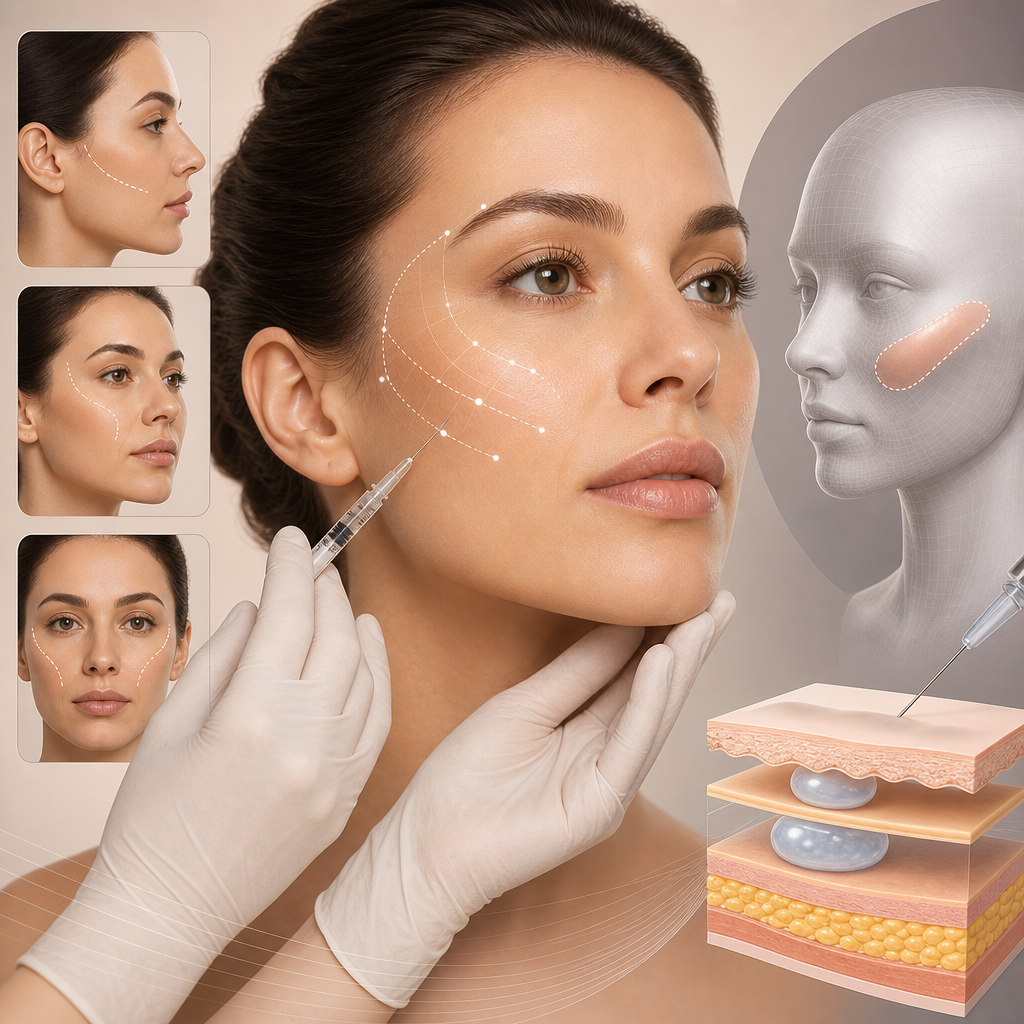
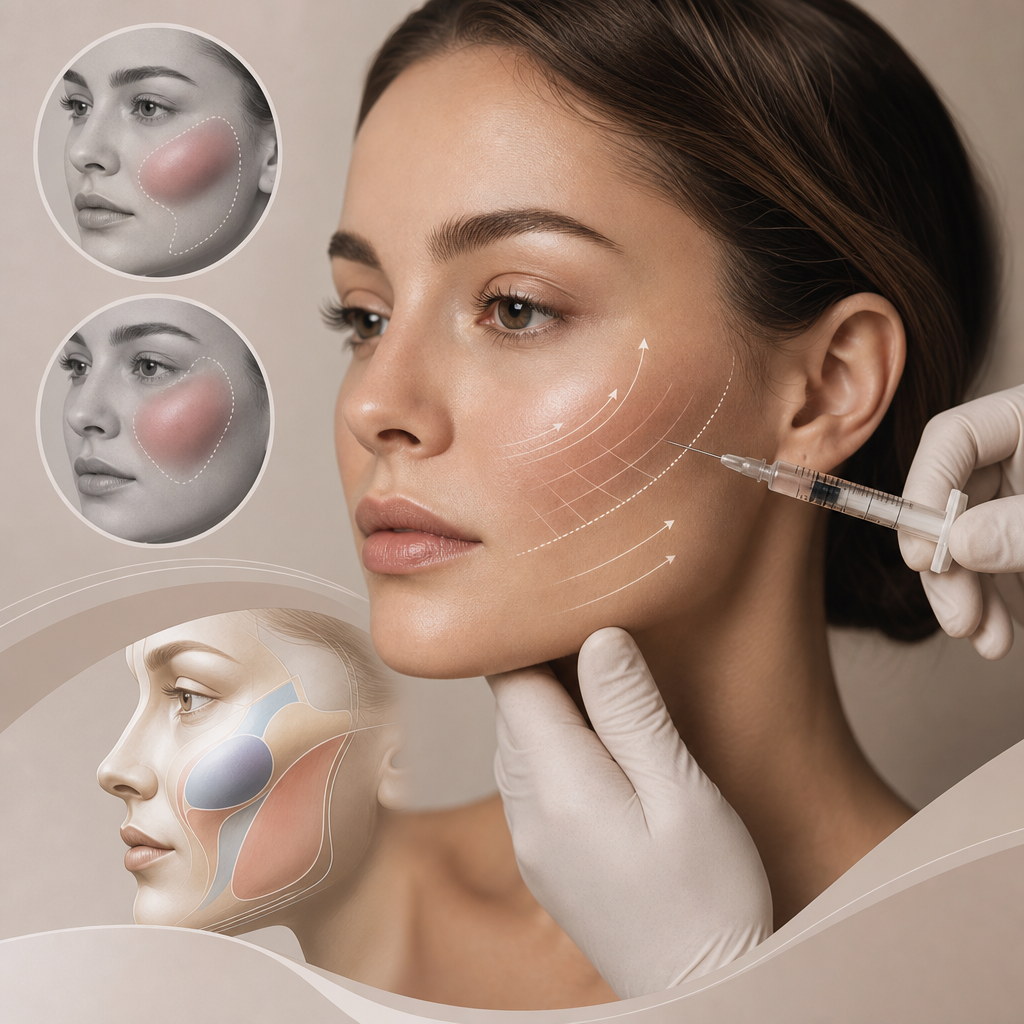
Depth and layering. Cheek filler is most effective when placed in multiple planes. Deeper placement near the periosteum (bone lining) provides structural support and lift. Mid-layer placement adds definition. Superficial placement is minimized to avoid an overstuffed appearance. This layering approach distributes volume intelligently across different depths, creating a natural, sculpted effect.
Balance with overall face aesthetics. Your cheeks don’t exist in isolation. We consider how enhanced cheek projection affects your profile, your under-eye area, your jawline, and your lips. Sometimes addressing cheeks requires adjusting other areas or using complementary treatments to maintain facial harmony.
Conservative initial dosing. We’d rather undershoot and offer a touch-up at two weeks than overshoot. This gives you control and ensures you feel confident in the result. Many patients appreciate building toward their ideal look over one or two sessions rather than attempting a dramatic transformation in a single visit.
Achieving Natural-Looking Projection: Layering and Placement Mastery
The difference between a natural, elegant result and an obvious, overdone appearance comes down to execution. Natural-looking projection requires understanding exactly where to place each milliliter of filler.
We use anatomical landmarks as guides. The high cheek area (located by palpating the cheekbone) receives placement that creates the “apple” effect when you smile. We place additional filler along the cheekbone itself, creating subtle shadow and definition. For some patients, strategic placement extending toward the temple creates additional lift and opens the eye area.
The technique matters enormously. Placement too high creates a flat, swollen appearance. Placement too low emphasizes jowls rather than lifting. Placement that’s too superficial creates visible lumps or asymmetrical fullness. Our practitioners use a combination of gentle palpation, anatomical knowledge, and real-time assessment to place each injection in the precise location that contributes to your overall effect.
Layering also involves timing. Sometimes we place initial volume, step back, assess the appearance from multiple angles, and then add additional filler to specific zones only if needed. This prevents overfilling and ensures symmetry.
Patients frequently comment that the most natural-looking results don’t appear “filled” at all. Instead, they look like they’ve had excellent sleep and skincare for months. That’s exactly what we’re aiming for: enhancement that reads as health and vitality rather than obvious augmentation.
Why Precision Matters: Common Mistakes with Over-Filled Cheeks
Over-filled cheeks are instantly recognizable, and unfortunately, they’re common. The telltale signs include a puffy or swollen appearance, unnatural shadowing under the cheek area, or a look that’s “too much” compared to the rest of the face.
Over-filling happens for several reasons. Some practitioners equate more volume with better results. Others lack training in subtle placement techniques and compensate by adding product. Budget constraints sometimes push patients to accept large amounts in a single session rather than spreading treatment across multiple visits.
The consequences of over-filling extend beyond aesthetics. Excessive filler can actually accelerate aging in some cases. It can distort the natural anatomy of the face, create an unbalanced appearance that worsens as filler settles, and occasionally cause complications like granulation or visible lumps that are difficult to correct.
We’ve also observed that patients with over-filled cheeks often become dissatisfied as their face changes with time. Because the cheek projection is so pronounced, any subsequent aging or filler migration creates an increasingly unnatural appearance.
This is why precision and restraint are central to our philosophy. A cheek filler result should look better at three months than it does at three days, as swelling resolves and filler settles into its final position. You should feel like you’re looking at yourself, optimized.
The Role of Product Selection in Your Customized Treatment Plan
Not all dermal fillers are equal, and selecting the right product for your cheeks is crucial. We use several premium-quality options, chosen based on your anatomy, skin type, and aesthetic goals.
Hyaluronic acid (HA) fillers are popular for cheek enhancement because they’re reversible, integrate beautifully with tissue, and come in various viscosities (thicknesses). A thicker HA filler may be ideal for creating structural support deep in the cheek, while a lighter formulation works well for subtle surface enhancement.
Calcium hydroxylapatite (CaHA) offers excellent longevity and creates a subtle lifting effect that many patients prefer. It stimulates collagen production over time, creating a gradual improvement in skin quality and texture alongside the volumizing effect.
Poly-L-lactic acid (PLLA) works through collagen stimulation, making it ideal for patients seeking gradual improvement and longer-lasting results. It requires multiple sessions but delivers remarkably natural-looking projection as new collagen develops.
Your skin quality, age, and desired longevity all influence which product we recommend. During your consultation, we’ll explain which filler aligns with your goals and why we’ve selected it for your specific anatomy.
Recovery and Results: What to Expect After Your Treatment
Cheek filler recovery is straightforward for most patients. You may experience mild swelling, slight redness at injection sites, and minimal bruising (depending on your skin and how easily you bruise). These effects typically resolve within 3-5 days.
Swelling is most pronounced in the first 24-48 hours. This means your cheeks will look fuller immediately after treatment, and you may feel like the result is too much. This is completely normal. As swelling subsides over the next week, the filler settles into its final position, usually creating a more refined appearance than what you see on day one.
Many patients can return to normal activities immediately. We recommend avoiding intense exercise, prolonged sun exposure, and extreme heat for 24 hours post-treatment. You should also avoid touching or massaging your cheeks for at least a week, as this can displace the filler.
Results continue improving as swelling fully resolves. By week two, you’ll see your final result, though some subtle refinement continues through week four as the filler fully integrates with your tissue. This is also the ideal time for a touch-up appointment if you feel additional filler would enhance your result.
Long-Term Maintenance and Optimal Refresh Schedules
Cheek filler longevity varies by product and individual metabolism. Hyaluronic acid fillers typically last 9-18 months, while calcium hydroxylapatite and poly-L-lactic acid offer longer-lasting results, often 18-24 months or beyond.
Rather than waiting until filler is completely gone, we recommend a proactive refresh schedule. Most patients benefit from subtle touch-ups every 12-15 months with HA fillers, or every 18-24 months with longer-lasting options. This maintains results without allowing the face to lose the projection and lift you’ve achieved, which can make the descent seem more dramatic when filler fully dissolves.
Some patients ask whether regular filler treatments stretch the skin or create dependency. The answer is nuanced. Quality filler, appropriately placed, doesn’t stretch skin; instead, it provides support that can actually benefit skin quality by reducing gravitational stress. The key is consistent, subtle enhancement rather than extreme volume changes.
We also recommend maintaining excellent skincare and considering complementary facial treatments that enhance your results. Treatments like microneedling, chemical peels, or laser therapies improve skin texture and radiance, making your cheek enhancement appear even more natural and youthful.
Your Consultation: How We Design Your Signature Look
Your consultation is where we build the foundation for your ideal result. We begin with your goals. Are you seeking subtle enhancement, or more noticeable projection? Do you want to restore what you’ve lost with age, or create a refined version of what you naturally have?
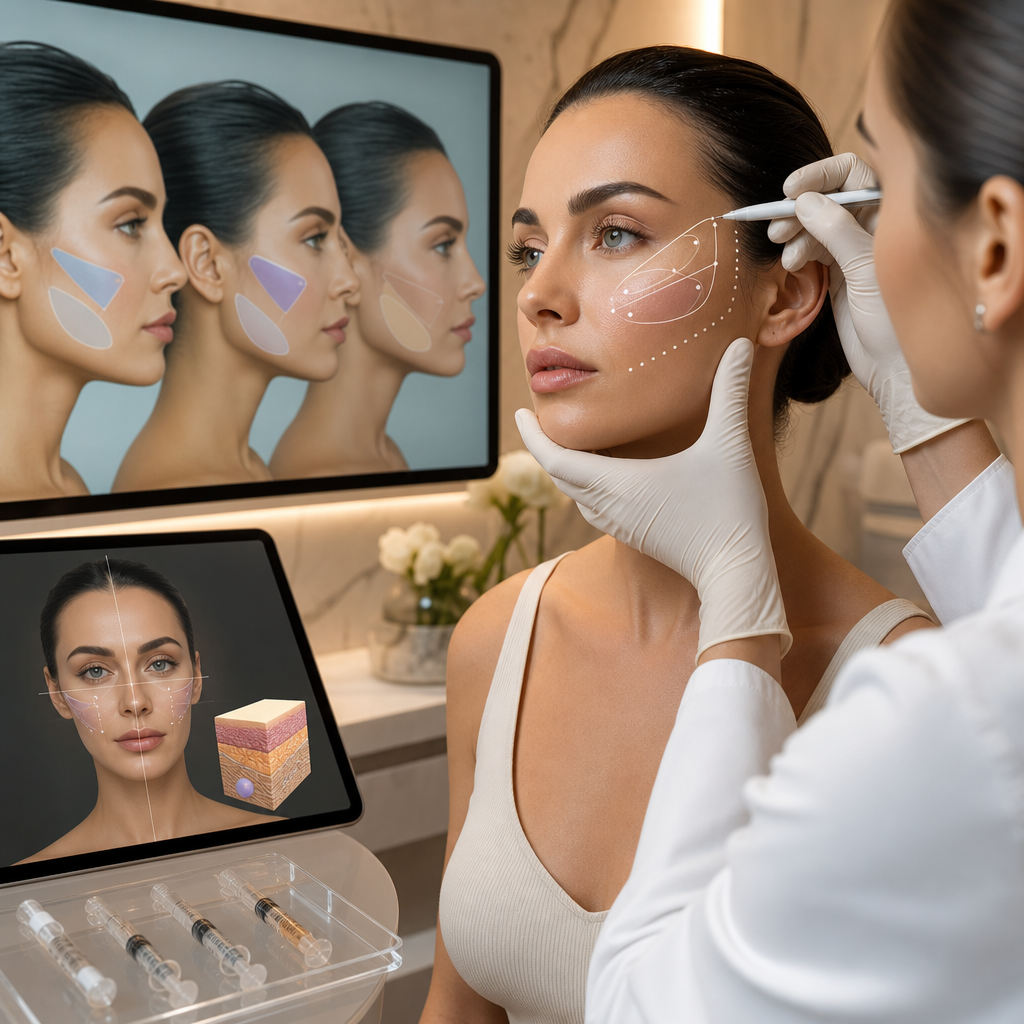
We then assess your face thoroughly and share our observations with you. We show you exactly where filler will be placed, how much we recommend, and why this approach aligns with your goals and anatomy. We may use before-and-after images of similar patients (protecting privacy, of course) to illustrate what subtle, natural-looking cheek projection looks like.
We also discuss realistic expectations. No filler treatment stops aging; it creates a refreshed, lifted appearance that typically lasts 12-24 months before a touch-up is needed. We discuss investment, longevity, and any concerns you have.
During the actual treatment, our approach remains collaborative. We check in with you, ensure you’re comfortable, and step back frequently to assess symmetry and balance. If you feel uncertain about placement or volume at any point, we pause and discuss adjustments.
Many patients find that discussing their specific face, understanding their anatomy, and having input on placement creates confidence in their result. This collaborative approach is central to what we do at Éternité Medical Aesthetics & Longevity Centers.
Your next step is simple: request an appointment for a consultation at our Manhattan, NY location or our New Providence, NJ facility. During this time, we’ll assess your unique facial anatomy, discuss your goals, and design a treatment plan that creates natural, subtle cheek projection tailored specifically to you. We look forward to helping you achieve your signature look.
Contact Us Today For A Free Consultation
Frequently Asked Questions (FAQ)
How do we determine if you’re a good candidate for subtle cheek filler projection?
During your consultation, we evaluate your facial bone structure, skin elasticity, and current cheek volume to assess whether filler projection will enhance your natural proportions. We take measurements and consider your overall facial anatomy to ensure any augmentation complements your existing features rather than creating an artificial appearance. If we determine you need additional support or a different approach, we’ll recommend alternative treatments from our comprehensive range of options.
What’s the difference between the fillers we use for cheek projection?
We select from several premium filler options based on your specific needs, as each product has distinct properties that affect projection, longevity, and how naturally the cheeks integrate with surrounding facial anatomy. Some fillers we use are better suited for subtle volumization and structural support, while others work excellently for layering techniques that create dimension without obvious augmentation. During your treatment plan discussion, we’ll explain which products we recommend and why they’re ideal for your customized approach.
How often will we need to refresh your cheek fillers to maintain results?
Most of our patients benefit from refreshing their cheek fillers every 12 to 18 months, though this varies based on your metabolism, the specific products we used, and how your body naturally breaks down the filler over time. We monitor your results during follow-up appointments and help you establish an optimal maintenance schedule that keeps your cheeks looking naturally enhanced without requiring constant touch-ups. We also offer our tiered wellness memberships, which can help you manage the frequency and cost of your ongoing aesthetic maintenance.