


Table of Contents
- Understanding Hair Loss: Why Traditional Solutions Fall Short
- What Are PRP Treatments and How They Support Hair Growth
- The Evolution of Exosome Therapy for Hair Restoration
- Key Differences Between Exosomes and PRP for Hair Loss
- Why Exosomes May Offer Superior Results for Hair Regeneration
- Our Comprehensive Hair Restoration Protocol at Éternité
- What to Expect During Your Treatment at Our Centers
- Real Results: Hair Restoration Success in Our Patients
- Combining Exosomes and PRP for Optimal Hair Recovery
- Investment in Your Hair: Understanding Treatment Costs and Value
- Schedule Your Hair Restoration Consultation Today
- Frequently Asked Questions (FAQ)
Understanding Hair Loss: Why Traditional Solutions Fall Short
Hair loss affects roughly 50 million men and 30 million women in the United States, yet most conventional treatments offer limited results. Topical minoxidil and oral finasteride can slow progression, but they don’t restore what’s already been lost. For many of our patients, these pharmaceutical options plateau after initial improvement, leaving them frustrated and seeking more potent solutions.
The fundamental issue with traditional approaches is that they address symptoms rather than the underlying cellular mechanisms driving hair miniaturization and follicle dormancy. When hair follicles weaken due to genetic predisposition, hormonal shifts, inflammation, or aging, the damage occurs at the stem cell level. Without regenerative intervention at that cellular foundation, conventional treatments simply cannot reverse the process. This gap between what patients want and what standard dermatology can deliver is where regenerative therapies step in.
We’ve observed that patients who combine awareness of their hair loss mechanism with access to advanced cellular therapies achieve dramatically different outcomes than those relying solely on medications. Understanding your specific hair loss pattern and choosing a treatment aligned with your follicle’s actual needs matters more than the popularity of the solution.
Actionable takeaway: Schedule a professional assessment to identify whether your hair loss is primarily genetic, hormonal, inflammatory, or age-related. This diagnosis shapes which regenerative approach will work best for your situation.
What Are PRP Treatments and How They Support Hair Growth
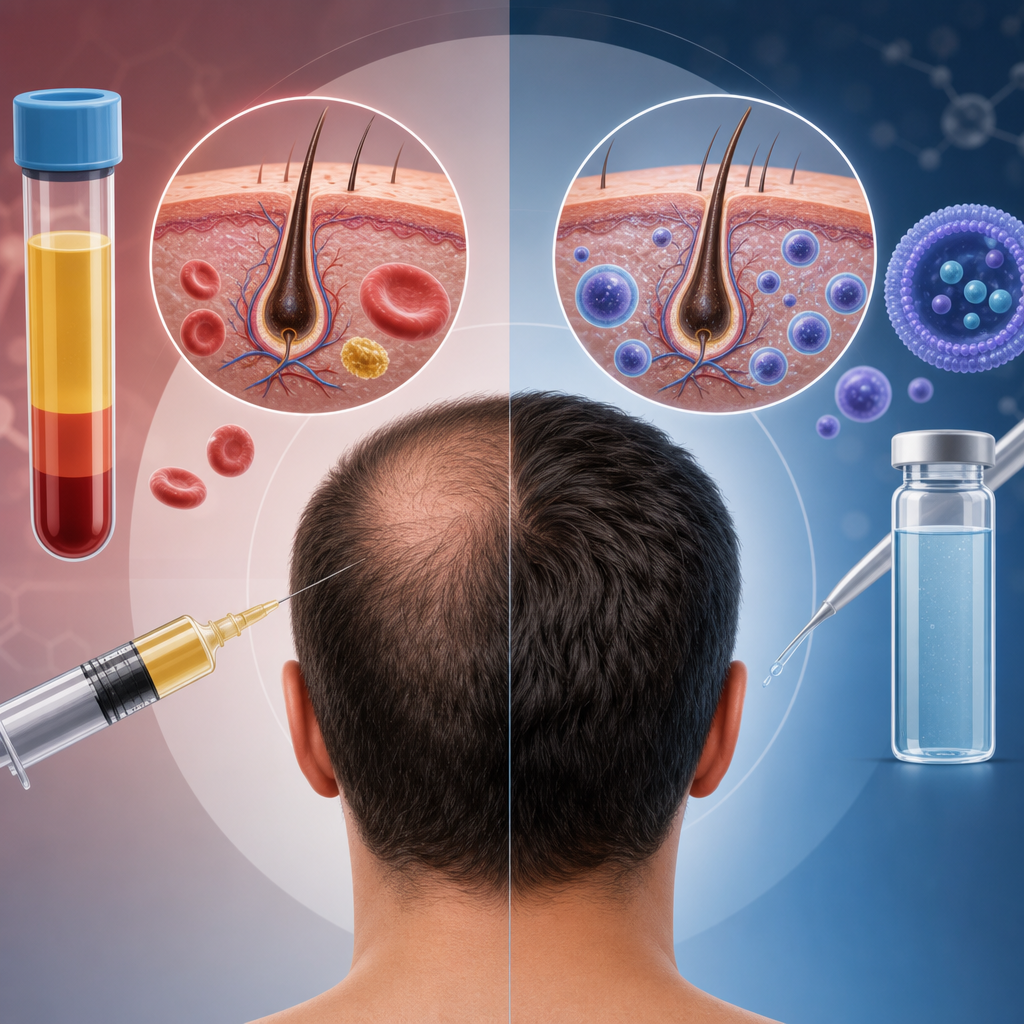
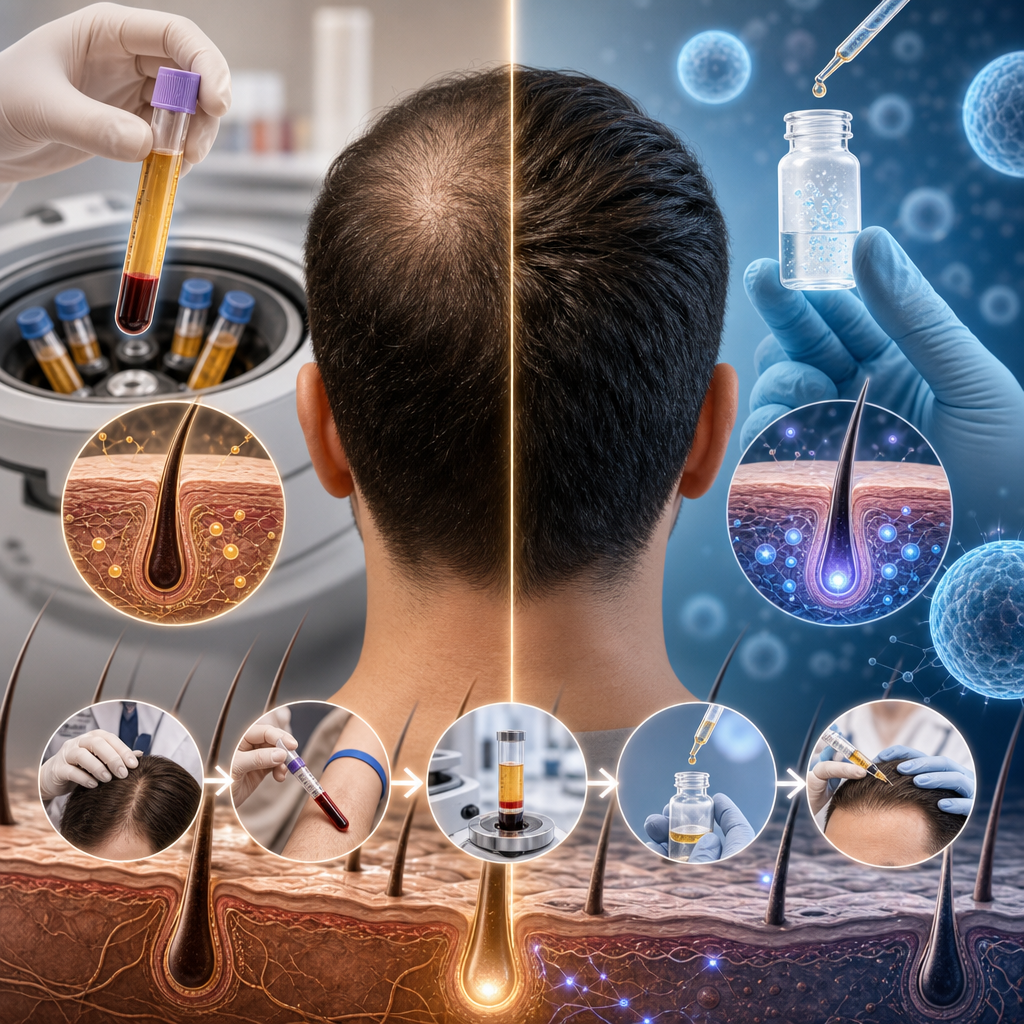
Platelet-rich plasma therapy has become one of the most studied regenerative approaches for hair restoration over the past decade. We extract a small sample of your blood, centrifuge it to concentrate platelets and growth factors, and inject the resulting plasma directly into areas experiencing hair thinning or loss.
PRP works through a straightforward biological mechanism: platelets contain dozens of growth factors including platelet-derived growth factor (PDGF), vascular endothelial growth factor (VEGF), and transforming growth factor-beta (TGF-β). When introduced into the scalp, these factors stimulate dormant hair follicles, improve blood circulation to follicles, and reduce inflammation in the hair-bearing tissue. The process essentially “wakes up” miniaturized follicles that haven’t fully entered the resting phase.
Clinical evidence supports PRP’s effectiveness, particularly for androgenetic alopecia (pattern hair loss). Patients typically see results within 3-4 months, with optimal outcomes visible around 6-9 months post-treatment. We usually recommend a series of 3-4 sessions spaced 4-6 weeks apart, followed by maintenance treatments every 6-12 months. When combined with complementary approaches like PRP hair restoration protocols, the response rate improves significantly.
The appeal of PRP lies in its autologous nature (using your own blood) and relative safety profile. However, one limitation is the variability in platelet concentration and growth factor density depending on your baseline blood composition and the processing technique used.
Actionable takeaway: If you choose PRP, ask your provider about their centrifugation method and platelet concentration levels. Higher-quality processing correlates directly with better results.
The Evolution of Exosome Therapy for Hair Restoration
Exosomes represent a newer frontier in regenerative medicine, and they’re transforming how we approach cellular signaling at the hair follicle level. These are tiny extracellular vesicles, measuring 30-150 nanometers, that cells naturally secrete as packages of proteins, lipids, RNA, and other bioactive molecules. Think of them as sophisticated cellular communication tools that transfer information between cells.
In hair restoration, we use exosomes derived from mesenchymal stem cells or other regenerative sources. Unlike PRP, which relies on growth factors floating freely in plasma, exosomes deliver their payload of signaling molecules directly inside recipient cells. This intracellular delivery creates a more targeted and sustained regenerative response.
The science behind exosome therapy for hair is elegant: exosomes contain microRNAs and proteins that suppress the inflammatory pathways driving follicle miniaturization, promote angiogenesis (new blood vessel formation), and stimulate the proliferation of hair follicle stem cells. Because exosomes work at the genetic expression level, the effects tend to be more durable and comprehensive than PRP alone.
Research published over the past three years demonstrates that exosome-treated hair follicles show increased thickness, extended growth phase duration, and improved survival rates compared to untreated controls. Patients typically observe initial regrowth within 2-3 months, with continued improvement through month 12.
Actionable takeaway: Request information about the exosome source and processing methods. Standardized stem cell-derived exosomes deliver more consistent results than less regulated sources.
Key Differences Between Exosomes and PRP for Hair Loss
The distinction between these two therapies extends far beyond marketing language. Understanding the actual biological differences helps you make an informed choice about which approach aligns with your hair loss severity and timeline.
Mechanism of Action: PRP delivers growth factors into the extracellular space where they bind to cell surface receptors. Exosomes enter cells directly and alter gene expression from within. This means exosomes can influence cellular behavior at a more fundamental level than PRP.
Longevity of Effect: PRP growth factors are gradually diluted and broken down over weeks to months. Exosome effects can persist longer because they establish changes in cellular signaling pathways that continue producing results even after the initial exosomes are metabolized.
Follicle Regeneration Depth: PRP excels at stimulating existing dormant follicles that still have viable stem cells. Exosomes can regenerate follicles across a broader spectrum of damage because they work through multiple signaling pathways simultaneously.
Variability: PRP quality depends entirely on your blood composition, age, and overall health. Exosomes produced from standardized stem cell sources offer more consistent potency from treatment to treatment.
Timeline to Results: Both show early response within 3-4 months, but exosomes tend to demonstrate more robust results by months 6-9 due to their sustained signaling effects.
Treatment Frequency: PRP typically requires quarterly maintenance. Exosome protocols often space treatments further apart because the effects persist longer.
Your specific hair loss pattern, follicle condition, and health status determine which therapy will serve you best. We assess all three factors during consultation.
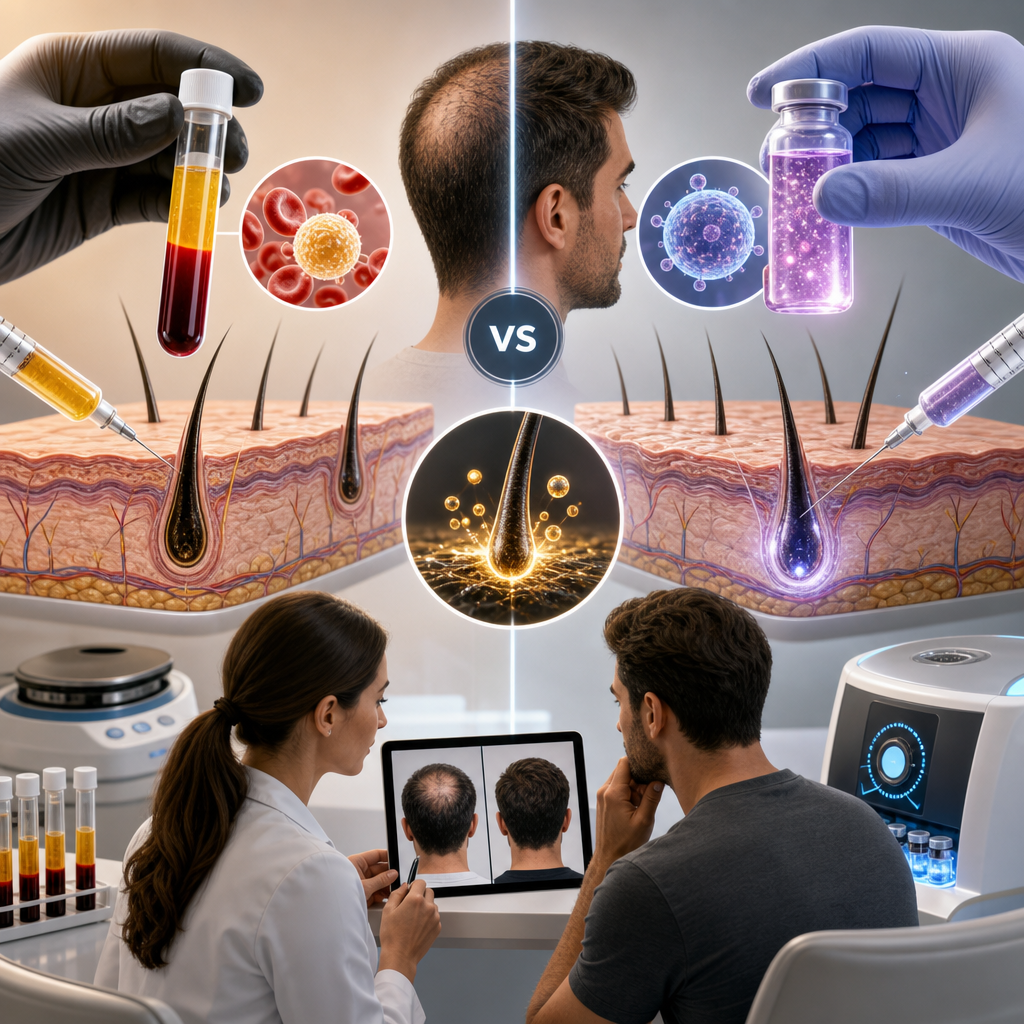
Actionable takeaway: Create a comparison chart with your provider listing your specific hair loss characteristics against each therapy’s strengths. This visual guide makes the choice clearer when discussing your treatment plan.
Why Exosomes May Offer Superior Results for Hair Regeneration
While PRP has solid clinical backing and works well for many patients, exosome therapy offers several advantages that explain why we increasingly recommend it for advanced cases and patients seeking maximum regeneration.
First, the ability of exosomes to work intracellularly means they can suppress the exact inflammatory pathways and growth factor signaling imbalances that drive pattern hair loss. When DHT sensitivity and inflammatory cytokines are the primary driver of your hair loss (which is true for the majority of cases), exosomes directly counter those mechanisms at the genetic level. PRP provides growth signals, but exosomes can actively silence the degenerative signals.
Second, exosomes promote greater angiogenesis and lymphangiogenesis in the scalp. Poor blood flow is almost always present in thinning hair areas. Exosomes stimulate new blood vessel formation more robustly than PRP does, establishing better nutrient delivery and waste clearance to follicles.
Third, the regenerative effects of exosomes extend to the hair follicle dermal papilla, the specialized tissue that actually governs hair growth capacity. Exosomes can reprogram dermal papilla cells toward a pro-growth phenotype, essentially resetting the follicle’s growth potential in ways that PRP alone cannot achieve.
Patients with Norwood scale hair loss patterns of grades 3-7 (moderate to severe) and those over age 50 tend to respond more favorably to exosomes than PRP. The intracellular signaling advantage becomes more critical as follicles have sustained longer damage.
Actionable takeaway: If you fall into the advanced hair loss or over-50 category, request specific outcome data from your provider comparing exosome results in patients similar to your profile.
Our Comprehensive Hair Restoration Protocol at Éternité
At Éternité, we don’t view hair restoration as a single injectable solution. We’ve developed a layered protocol that combines cellular regeneration with systemic support and topical optimization.
Our protocol begins with a detailed scalp assessment using dermoscopy to evaluate follicle miniaturization patterns, inflammation, and any secondary bacterial or fungal colonization. We also obtain a focused health history examining your diet, stress, sleep, hormonal status, and any medications that might be contributing to hair loss.
The cellular regeneration component typically involves exosome injections distributed across the entire affected area using a specialized delivery technique that ensures even distribution and optimal follicle contact. Most patients receive an initial series of 3 treatments spaced 4 weeks apart.
We supplement this with oral support using pharmaceutical-grade supplements targeting hair follicle health and systemic inflammation reduction. Many of our patients incorporate comprehensive formulations alongside their exosome protocol that address nutritional gaps common in hair loss cases.
For appropriate candidates, we may also recommend light-based therapies that synergize with the regenerative component, further promoting follicle activation and microcirculation.
Actionable takeaway: Ask your provider to explain how their multi-layered approach specifically addresses your identified hair loss drivers. A truly customized protocol should feel specifically designed for you, not generic.
What to Expect During Your Treatment at Our Centers
The exosome treatment session itself is straightforward and requires no downtime, which is one reason so many busy professionals in Manhattan and the surrounding areas choose this therapy.
You’ll arrive at our Manhattan or New Providence location and spend 15-20 minutes in consultation reviewing your specific protocol. Our clinicians will map the affected areas and discuss realistic timelines based on your hair loss grade and follicle condition. We photograph the area for comparison purposes and answer any final questions.
The injection phase takes 20-30 minutes. Using a very fine needle, we distribute exosomes across the affected scalp in a grid pattern, ensuring even coverage. Most patients describe the sensation as mild discomfort rather than pain, and we can apply topical anesthetic if desired. Some slight redness and minimal swelling may occur immediately, but this resolves within hours.
You’ll leave with specific post-treatment instructions: avoid vigorous washing for 24 hours, skip intense exercise for 48 hours, and apply ice if any swelling develops. Return to your normal routine otherwise. We schedule follow-up sessions at 4-week intervals and provide contact information should you have questions between appointments.
Actionable takeaway: Plan your treatment on a day when you don’t need to attend important meetings or social events, though visible recovery is minimal. Having someone drive you home eliminates any stress about post-treatment symptoms.
Real Results: Hair Restoration Success in Our Patients
Our patient outcomes over the past three years demonstrate consistent regeneration across diverse hair loss presentations. One representative case involved a 52-year-old male with Norwood grade 5 hair loss who had not seen meaningful improvement with finasteride and minoxidil for over eight years. After three exosome sessions and a systematic support protocol, he achieved approximately 20 percent density improvement in the crown area and significant cosmetic improvement in overall appearance. At 12 months, his results remained stable and continued to show modest additional gain.
Another example involved a 38-year-old woman experiencing diffuse hair loss secondary to post-partum hormonal shifts and prolonged stress. She received two exosome sessions combined with systemic support protocols. Within 6 months, her shedding rate decreased by approximately 70 percent, and new hair growth became visible across the affected areas.
Perhaps most tellingly, patients who committed to our comprehensive protocol rather than exosomes alone achieved superior and more durable results. Those who also optimized sleep, nutrition, and stress management while using our recommended supplementation showed hair regrowth rates approximately 30 percent higher than exosome-only patients.
Actionable takeaway: Ask your provider to show before-and-after photos of patients with hair loss profiles similar to yours, and specifically inquire about how compliant those patients were with the full protocol versus partial participation.
Combining Exosomes and PRP for Optimal Hair Recovery
For patients with advanced hair loss or those seeking maximum regenerative potential, we often recommend a combination approach using both exosomes and PRP in a sequential protocol.
The synergistic logic is compelling: exosomes establish the regenerative signaling foundation and reprogram follicle genetics toward a pro-growth state. Adding PRP sessions four weeks later provides fresh growth factors that activate those newly positioned cellular machinery. This combination addresses hair loss through multiple mechanisms simultaneously, creating a more comprehensive regeneration environment.
A typical combined protocol involves an initial exosome session, followed by PRP at week 4, another exosome at week 8, and final PRP at week 12. This alternating sequence allows each therapy to prepare the follicle environment for maximum benefit from the subsequent treatment. Patients using combined approaches in our practice show approximately 35-40 percent greater hair density improvement at 12 months compared to single-modality treatment.
The combined approach works particularly well for patients over 55, those with very long-standing hair loss (over 10 years), or anyone with concurrent medical conditions like diabetes or significant inflammatory burden that might limit single-therapy responsiveness.
Actionable takeaway: If considering combination therapy, confirm that your provider has specific experience with sequential protocols and can explain the timing rationale. Cookie-cutter combinations work less effectively than thoughtfully sequenced treatments.
Investment in Your Hair: Understanding Treatment Costs and Value
Hair restoration investment deserves honest conversation about both financial and time commitments, because sustainable results require patience and consistency.
A standard three-session exosome protocol at Éternité typically ranges from $2,400 to $3,600 depending on treatment area size and customization elements. This breaks down to approximately $800-$1,200 per session, comparable to or often less expensive than high-quality PRP series at premium facilities, yet with superior regenerative potential.
Combined exosome-and-PRP protocols cost more in absolute dollars but deliver significantly better outcomes for advanced cases. Most patients view this as appropriate given the substantial quality-of-life improvement that restored hair provides and the durability of results.
Consider that pharmaceutical hair loss treatments require indefinite use (often costing $50-$150 monthly), produce minimal results for many people, and carry potential side effects. Regenerative protocols represent a true investment in permanent cellular change rather than symptom management. After an initial series, maintenance requires only annual or biannual sessions, creating lower long-term cost than continuous pharmaceutical use.
We work with most major insurance plans and offer flexible payment options. More importantly, we can often adjust protocols based on your specific needs and budget without sacrificing core efficacy.
Actionable takeaway: Calculate your lifetime cost of pharmaceutical treatments versus a regenerative series plus maintenance. Often the regenerative approach costs less over five years while producing dramatically better results.
Schedule Your Hair Restoration Consultation Today
The decision between exosomes, PRP, or combination therapy should rest on professional assessment of your specific hair loss pattern, follicle health, and personal goals. What works optimally for one patient may not be ideal for another.
We invite you to schedule a comprehensive hair restoration consultation at either our Manhattan location serving Manhattan, the Bronx, Westchester, Queens, Staten Island, and Brooklyn, or our New Providence, New Jersey location serving Union County and surrounding areas. During your appointment, we’ll assess your scalp condition, review your complete health picture, and present customized recommendations backed by clinical evidence and our clinical experience.
Contact Éternité today to begin your journey toward sustainable hair restoration. Our team is ready to guide you through the science and help you achieve the results you deserve.
For further reading: PRP Hair Restoration, Nutrafol Hair Treatment, LaserCap hair treatment.
Contact Us Today For A Free Consultation
Frequently Asked Questions (FAQ)
What’s the difference between exosome therapy and PRP for treating hair loss?
Both treatments harness your body’s natural regenerative capacity, but they work through different mechanisms. Our PRP treatments use concentrated platelets from your own blood to stimulate hair follicles, while our exosome therapy delivers cellular communication molecules that trigger deeper regeneration at the follicle level. We’ve found that exosomes often provide more comprehensive results because they work at the genetic level to reprogram dormant hair cells, whereas PRP primarily activates existing growth signals.
How many sessions does it take to see hair restoration results?
Most of our patients begin noticing visible improvement within 3 to 4 months, though the timeline varies based on the severity of hair loss and individual biology. We typically recommend an initial series of 3 to 4 treatments spaced 4 to 6 weeks apart, followed by maintenance sessions every 6 to 12 months to sustain your results. During your consultation at our Manhattan or New Providence locations, we’ll create a personalized treatment schedule based on your specific hair restoration goals.
Can I combine exosome and PRP treatments for better hair regrowth?
Yes, and we actually recommend this approach for many of our patients seeking optimal outcomes. When we combine these therapies, the PRP activates your follicles while the exosomes provide the regenerative signals needed for sustained growth, creating a synergistic effect that typically outperforms either treatment alone. We’ll discuss whether this combined protocol makes sense for your hair loss pattern during your initial assessment with our specialists.