


Table of Contents
- Why Persistent Redness Compromises Your Skin's Appearance
- Understanding PDRN: How We Use Polynucleotides for Skin Healing
- Understanding PRP: Our Approach to Platelet-Rich Plasma Therapy
- PDRN's Mechanism for Reducing Inflammation and Redness
- PRP's Role in Stimulating Collagen and Reducing Redness
- Direct Comparison: PDRN vs. PRP for Visible Redness Results
- What Our Clients Experience: Timeline and Expectations
- Combining PDRN and PRP: Our Advanced Protocol
- Who Benefits Most from Each Treatment at Éternité
- Customizing Your Healing Facial Based on Skin Condition
- Next Steps: Schedule Your Personalized Skin Assessment
- Frequently Asked Questions (FAQ)
Why Persistent Redness Compromises Your Skin’s Appearance
Persistent facial redness undermines even the most polished appearance. Whether you’re managing rosacea, post-inflammatory erythema, or chronic vascularity, visible redness can feel impossible to conceal and exhausting to live with. At Éternité Medical Aesthetics & Longevity Centers, we’ve invested in two of regenerative medicine’s most powerful healing modalities: PDRN (polynucleotide) therapy and PRP (platelet-rich plasma) facials. Both address redness through distinct biological mechanisms, and understanding which works best for your skin requires medical clarity, not marketing hype.
Facial redness stems from chronic inflammation, fragile capillary networks, or disrupted skin barrier function. Unlike transient flushing that resolves within minutes, persistent redness reflects an underlying physiological imbalance. The visible component signals that your skin is stuck in a reactive state, triggering unnecessary collagen breakdown and accelerating the visible aging process.
When capillaries remain dilated or inflammatory pathways stay activated, your skin loses the even tone that projects health and vitality. This redness often worsens with environmental triggers, temperature fluctuations, or stress, creating a cycle of frustration. Beyond aesthetics, chronic inflammation accelerates cellular aging and compromises your skin’s barrier integrity, making it more vulnerable to external damage.
The goal isn’t simply to mask redness with concealer. True resolution requires resetting the skin’s inflammatory environment and rebuilding the structural integrity that keeps redness at bay long-term.
Understanding PDRN: How We Use Polynucleotides for Skin Healing
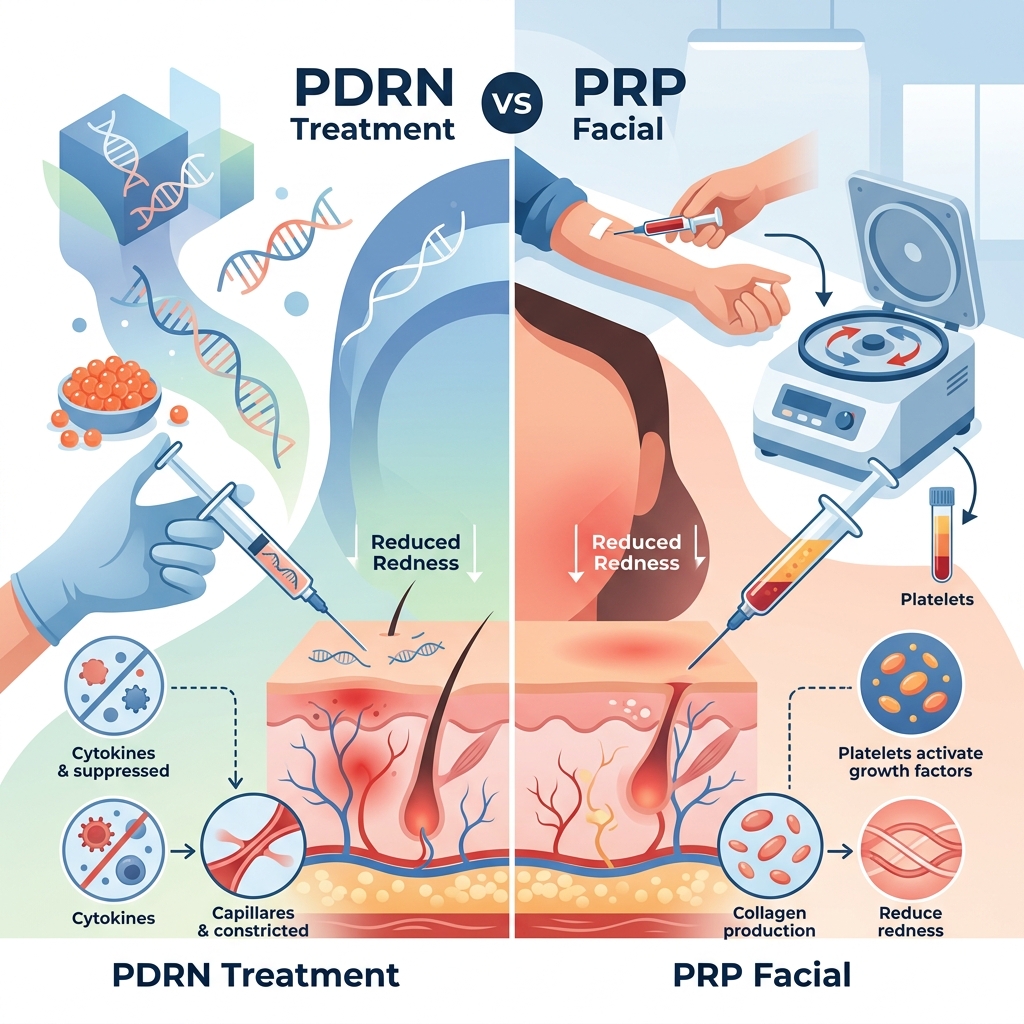
PDRN (polydeoxyribonucleotide) consists of DNA fragments derived from salmon roe that act as signaling molecules within your skin. When we inject or topically apply PDRN, these polynucleotides activate adenosine receptors in your skin cells, triggering a cascade of healing responses without requiring your blood to be drawn or processed.
This distinction matters considerably. PDRN therapy works through direct cellular communication rather than growth factor concentration. Your skin reads PDRN as a signal to activate its own repair machinery, promoting hydration, reducing inflammatory mediators, and stabilizing your microvasculature. The treatment is non-invasive, requires no downtime beyond mild temporary flushing, and delivers measurable improvements in skin texture and redness within days.
We typically administer PDRN as a series of microneedling sessions infused with PDRN serum, or as targeted injections into areas of chronic redness. The polynucleotides integrate into your skin’s tissue, providing cumulative benefits over weeks and months.
Understanding PRP: Our Approach to Platelet-Rich Plasma Therapy
PRP therapy begins with your own blood. We draw a small sample, centrifuge it to concentrate platelets and growth factors, then either inject the plasma directly or apply it during microneedling sessions. Your platelets contain dozens of bioactive proteins that signal cellular renewal and tissue regeneration.
PRP works through a different pathway than PDRN. Rather than activating adenosine receptors, platelets release growth factors like PDGF, VEGF, and TGF-beta, which recruit stem cells and fibroblasts to the treatment area. This creates a more robust, sustained healing response that rebuilds collagen architecture and strengthens capillary integrity from within.
Because we’re using your own biological material, PRP carries zero risk of allergic reaction or foreign body response. Many clients find this philosophical alignment comforting, particularly those prioritizing regenerative approaches that harness their body’s own healing capacity.
PDRN’s Mechanism for Reducing Inflammation and Redness
PDRN’s strength lies in its direct anti-inflammatory action. By activating adenosine A2A receptors on immune cells and endothelial cells lining your capillaries, PDRN suppresses pro-inflammatory cytokines like TNF-alpha and IL-6 while simultaneously promoting anti-inflammatory signaling. This dual mechanism rapidly calms reactive skin.
Additionally, PDRN stimulates hyaluronic acid production within your dermis, improving skin hydration and barrier function. A stronger barrier means your skin is less reactive to environmental triggers, fewer inflammatory flares, and less visible redness overall. Because PDRN molecules are small and integrate directly into tissue, results often appear within 3-5 days, making it ideal for clients seeking rapid visible improvement.
The adenosine signaling pathway also enhances lymphatic drainage, reducing fluid retention and puffiness that can amplify the appearance of redness. We’ve observed that clients using PDRN report not just reduced redness, but also improved skin texture, finer appearance of capillaries, and a more resilient complexion within the first week.
PRP’s Role in Stimulating Collagen and Reducing Redness
PRP’s anti-redness benefit emerges through structural rebuilding rather than immediate inflammatory suppression. Growth factors in your concentrated platelets activate fibroblasts, the cells responsible for collagen and elastin production. Over 4-12 weeks, this sustained collagen deposition thickens your dermis, making capillaries less visually apparent and strengthening the tissue architecture that contains vascularity.
PRP also promotes angiogenesis in a controlled, organized manner, meaning new blood vessels develop in healthier, more stable patterns rather than the chaotic, reactive branching that characterizes rosacea or chronic redness. This structural normalization produces longer-lasting redness reduction than surface-level treatment alone.
The growth factor cascade that PRP triggers also restores the skin barrier and improves circulation efficiency, meaning blood flow distributes more evenly across your face rather than pooling in reactive areas. Clients typically notice progressive improvement over weeks, with peak results materializing around the 3-month mark.
Direct Comparison: PDRN vs. PRP for Visible Redness Results
The choice between PDRN and PRP depends on your timeline and the underlying cause of your redness.
PDRN excels when:
- You need rapid visible improvement (within days, not weeks)
- Your redness stems primarily from inflammation or barrier dysfunction
- You prefer non-blood-derived treatment options
- You’re managing reactive skin with frequent flares
- You want minimal downtime and immediate social function
PRP excels when:
- Your redness involves structural vascular issues (dilated capillaries, broken vessels)
- You’re willing to wait 8-12 weeks for peak results
- You want comprehensive skin rejuvenation alongside redness reduction
- Your redness is chronic and deeply rooted in tissue architecture
- You prefer using your body’s own healing resources
Both treatments reduce redness measurably. PDRN acts faster; PRP lasts longer. Neither is objectively superior. The optimal choice reflects your skin’s specific pathology and your personal timeline.
What Our Clients Experience: Timeline and Expectations
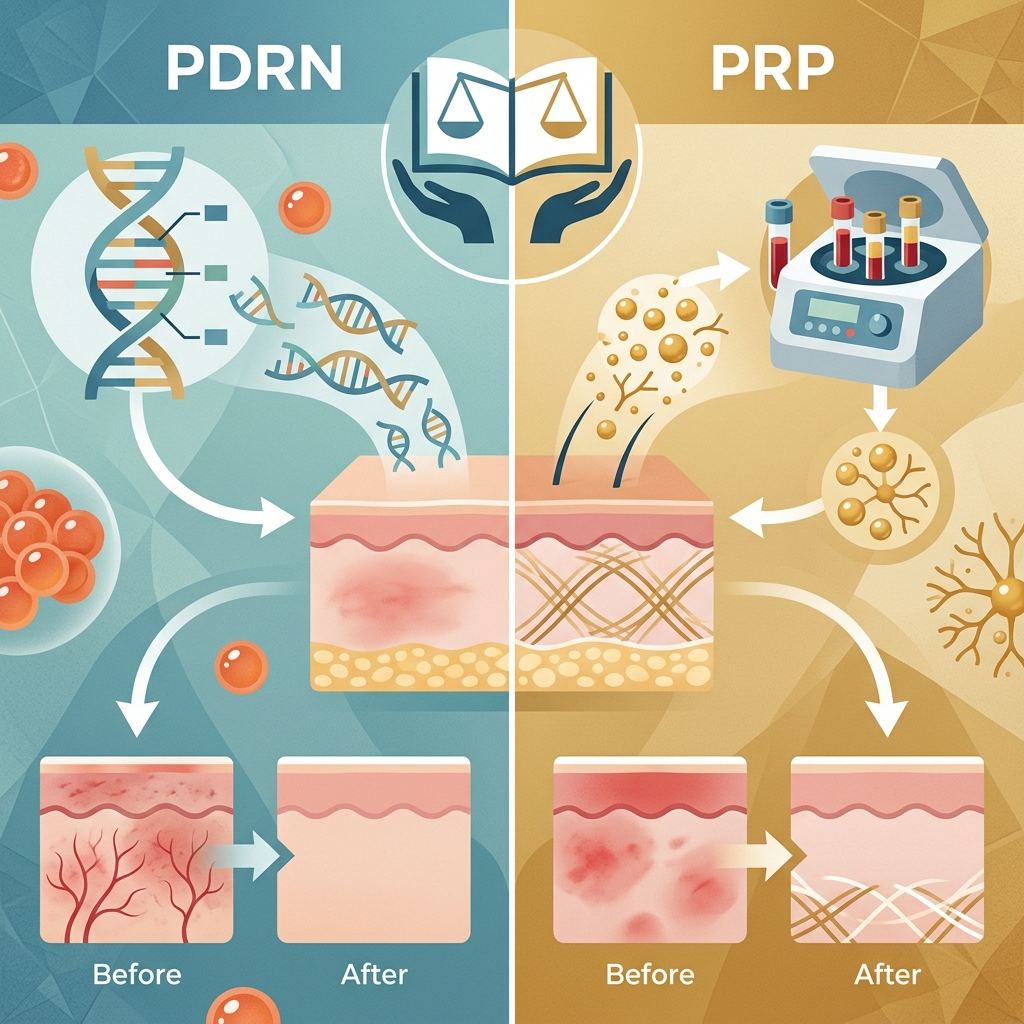
With PDRN, clients report noticeably calmer skin within 3-5 days. Redness fades progressively, and many notice improved texture and radiance by day 10. A series of 4-6 treatments spaced weekly delivers sustained results. Maintenance treatments every 4-6 weeks preserve benefits.
PRP follows a slower trajectory. Days 1-3 involve mild swelling and redness from the treatment itself. By day 5-7, this subsides and subtle glow appears. Weeks 2-6 bring progressive collagen deposition, with capillaries appearing finer and redness more muted. Weeks 8-12 reveal peak results as collagen remodeling completes. A series of 3 treatments spaced 4-6 weeks apart provides comprehensive benefit. Results remain visible for 12-18 months.
Both treatments carry minimal downtime. Light redness, mild swelling, and slight sensitivity are normal and resolve within 24-48 hours. Most clients resume normal activities immediately.
Combining PDRN and PRP: Our Advanced Protocol
We’ve found that sequential or concurrent PDRN and PRP application delivers superior redness reduction compared to either treatment alone. Here’s why: PDRN rapidly calms inflammation while PRP simultaneously rebuilds structural architecture. The combination addresses both the acute inflammatory component and the chronic vascular/collagen deficit simultaneously.
Our advanced protocol typically involves:
- Initial PDRN microneedling sessions (weeks 1-6) to rapidly normalize inflammation
- Concurrent or staggered PRP treatments beginning week 3-4, allowing PDRN to establish a calmer baseline before introducing growth factor stimulation
- Maintenance PDRN treatments every 4-6 weeks to sustain anti-inflammatory benefit
- Annual PRP sessions to refresh collagen architecture
This approach appeals to clients seeking comprehensive, science-backed solutions and willing to invest in layered regenerative treatment. Results are typically superior in depth and longevity compared to monotherapy alone.
Who Benefits Most from Each Treatment at Éternité
PDRN works beautifully for:
- Clients with rosacea or chronic reactive skin
- Those managing post-procedure erythema or wound healing
- Individuals with dehydrated, compromised barriers
- Anyone needing rapid results before social or professional events
- Clients preferring plant or salmon-derived biologics over autologous blood products
PRP works beautifully for:
- Clients with structural vascular issues or visible capillaries
- Those seeking comprehensive facial rejuvenation alongside redness reduction
- Individuals with chronic, deeply rooted redness unresponsive to topicals
- Clients philosophically aligned with regenerative, self-derived approaches
- Anyone with longer timelines and commitment to sequential treatment
During your consultation at Éternité Medical Aesthetics & Longevity Centers, we’ll assess your specific redness pattern, skin thickness, barrier integrity, and aesthetic goals to recommend the ideal pathway. Your skin tells a story; our job is to read it accurately.
Customizing Your Healing Facial Based on Skin Condition
Redness manifests differently across clients. Some present with fine capillary networks and chronic flushing (classic rosacea). Others show post-inflammatory erythema from prior breakouts or aggressive treatments. Still others have reactive, thin-walled capillaries from sun damage or genetic predisposition.
Before recommending PDRN or PRP, we examine:
- Capillary density and organization (organized vs. chaotic)
- Dermal thickness and collagen integrity
- Barrier function and hydration status
- Inflammatory mediator profile (assessed through patient history and visual evaluation)
- Prior treatment response and sensitivities

A client with thin skin and fragile capillaries benefits tremendously from PRP’s collagen-building action. Someone with an intact barrier but reactive inflammation responds faster to PDRN. Chronic rosacea with mixed vascular and inflammatory components often requires both.
We also consider your skin’s resilience and healing capacity. Clients with very reactive skin sometimes benefit from PDRN first to establish a calmer baseline before introducing the more stimulating growth factor cascade of PRP.
Next Steps: Schedule Your Personalized Skin Assessment
Persistent redness doesn’t require lifelong acceptance or endless concealer. Both PDRN and PRP offer genuine, measurable solutions grounded in regenerative biology. The question isn’t which is universally better, but which aligns with your skin’s specific needs and your timeline.
We invite you to schedule a comprehensive skin assessment at Éternité Medical Aesthetics & Longevity Centers. Our team will examine your redness pattern, discuss your timeline and aesthetic goals, explain the mechanisms behind each treatment, and design a personalized protocol. Whether PDRN, PRP, or a combination approach serves you best will become clear through this medical consultation.
Your skin deserves precision, not guesswork. Contact us today to begin your journey toward lasting redness reduction and renewed confidence in your appearance.
For further reading: Éternité Medical Centers.
Contact Us Today For A Free Consultation
Frequently Asked Questions (FAQ)
Which treatment works faster for reducing visible redness, PDRN or PRP?
We find that PDRN typically shows faster initial results for redness reduction, with many of our clients noticing improvements within 1-2 weeks as the polynucleotides work to calm inflammation at the cellular level. PRP takes a slightly longer timeline, usually 3-4 weeks, since it requires time for your body to activate collagen production and remodel tissue. However, the sustained benefits of PRP often extend further, making the choice depend on whether you prioritize quick results or long-term skin transformation.
Can we combine PDRN and PRP in a single treatment for better outcomes?
Yes, we frequently use both treatments together in our advanced healing protocols because they work synergistically. PDRN provides immediate anti-inflammatory benefits while PRP stimulates deeper regeneration, allowing us to address both the surface redness and underlying skin quality in one comprehensive session. Our clients who pursue this combined approach typically experience more dramatic and longer-lasting results than either treatment alone.
How do we determine whether you’re a better candidate for PDRN or PRP?
During your consultation, we assess the root cause of your redness, whether it stems from active inflammation, sensitivity, or compromised collagen structure. If your redness is primarily inflammatory or vascular, we often recommend PDRN as your foundation treatment, whereas if it’s tied to skin laxity or textural damage, PRP becomes our focus. We’re also happy to customize a protocol using both treatments based on your specific skin condition and timeline expectations.