


Table of Contents
- Why Postpartum Urinary Incontinence Affects New Mothers
- The Physical and Emotional Impact of Pelvic Floor Dysfunction
- Understanding Your Treatment Options: Votiva and O-Shot
- How Votiva Radiofrequency Technology Works for Bladder Control
- The O-Shot: Regenerative Medicine for Urinary Health
- Our Comprehensive Approach to Postpartum Wellness at Éternité
- What to Expect During Your Treatment Journey
- Real Results: Reclaiming Confidence After Pregnancy
- Why Choose Our NYC and NJ Centers for Intimate Wellness
- Your Path to Restored Pelvic Health Starts Here
- Frequently Asked Questions (FAQ)
Why Postpartum Urinary Incontinence Affects New Mothers
Pregnancy and childbirth fundamentally reshape the pelvic floor, a complex network of muscles, ligaments, and connective tissue that supports your bladder, uterus, and bowel. During the nine months of pregnancy, your growing baby places sustained pressure on these structures while hormonal shifts soften connective tissue to prepare for delivery. Vaginal birth, in particular, can stretch and sometimes tear the pelvic floor muscles and surrounding tissues, disrupting their ability to control urine flow.
The result is postpartum urinary incontinence, an experience affecting 30 to 40 percent of new mothers. Whether it manifests as light leakage during a cough, sneeze, or laugh (stress incontinence) or a sudden, uncontrollable urge to urinate (urge incontinence), the condition is common but far from inevitable long-term.
Most women experience some degree of pelvic floor weakness in the weeks immediately after delivery. For many, conservative measures like pelvic floor exercises provide meaningful improvement within the first year. However, for those who don’t see adequate progress or who want to accelerate their recovery, advanced non-surgical treatments offer a direct, efficient path to restored bladder control.
The Physical and Emotional Impact of Pelvic Floor Dysfunction
Beyond the inconvenience of managing leakage, postpartum urinary incontinence carries profound psychological weight. Many new mothers feel embarrassed, limiting their social activities, avoiding exercise, or withdrawing from intimate relationships. The frustration of not trusting your body during a season already marked by significant physical and emotional demands can deepen postpartum mood concerns.
Pelvic floor dysfunction also compounds other postpartum challenges. Women struggling with incontinence often avoid activities they enjoyed before pregnancy, reducing physical activity when their bodies need movement and strengthening most. Over time, this can affect cardiovascular fitness, mental health, and overall confidence in returning to pre-pregnancy life.
The good news is that pelvic floor weakness responds exceptionally well to targeted treatment. Unlike conditions that require extensive physical therapy or lifestyle modification alone, modern regenerative and radiofrequency technologies can stimulate collagen remodeling, improve tissue tone, and restore neuromuscular function in ways that were unavailable just years ago. Addressing incontinence early prevents long-term adaptations that make recovery harder and signals to yourself that postpartum wellness deserves the same attention as any other aspect of your health.
Understanding Your Treatment Options: Votiva and O-Shot
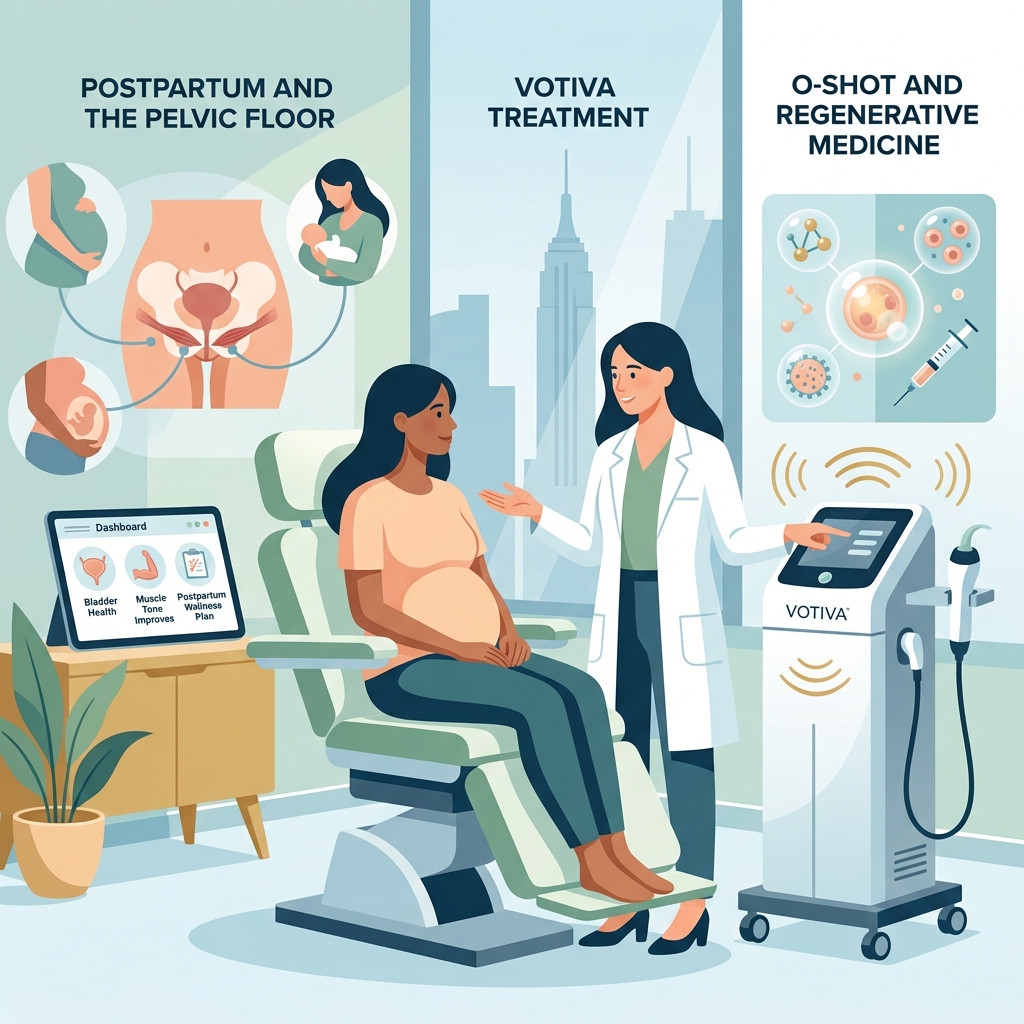
At Éternité Medical Aesthetics & Longevity Centers, we offer two distinct yet complementary approaches to postpartum urinary incontinence: Votiva radiofrequency treatment and the O-Shot, a regenerative medicine procedure using platelet-rich plasma (PRP).
Votiva uses controlled radiofrequency energy to heat the deeper layers of vaginal tissue, triggering collagen contraction and remodeling. This approach strengthens the vaginal wall and surrounding structures that support bladder control. The procedure works at the tissue level, restoring structural integrity and tone.
The O-Shot harnesses your body’s own healing capacity. We extract PRP from your blood and inject it precisely into the areas controlling urinary function, stimulating tissue regeneration and improving blood flow. This approach addresses the vascular and cellular components of pelvic health.
Both treatments are non-surgical, require minimal downtime, and deliver results that typically improve over weeks and months as tissues respond. Many patients benefit from combining both modalities for synergistic effect. Your provider will assess your specific pattern of incontinence, tissue condition, and health history to recommend the approach best suited to your needs.
How Votiva Radiofrequency Technology Works for Bladder Control
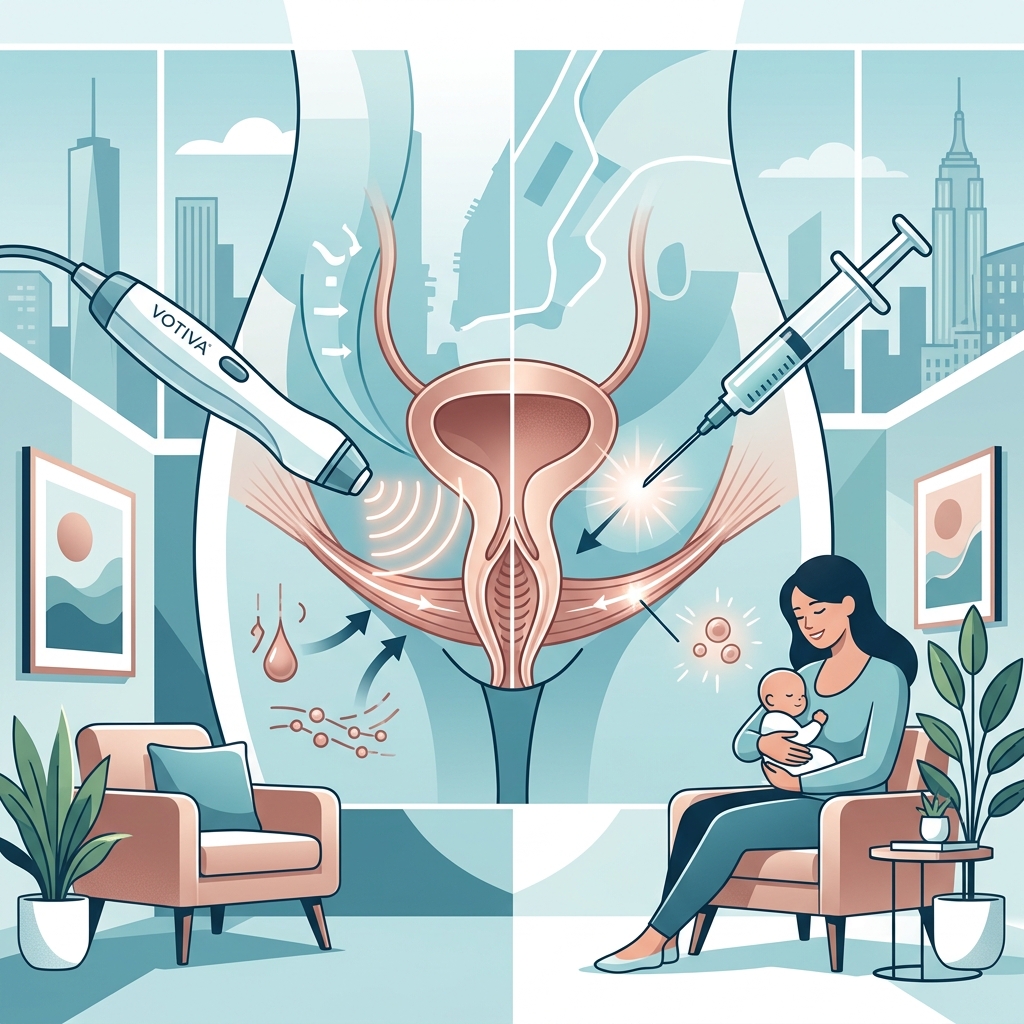
Votiva delivers radiofrequency energy through a specialized handpiece designed for intimate wellness applications. The technology creates controlled heat that penetrates vaginal tissue without damaging the surface. This thermal energy initiates your body’s natural collagen synthesis and tightening response.
The mechanism operates on a simple principle: heating collagen to specific temperatures causes it to contract immediately while simultaneously triggering fibroblasts (collagen-producing cells) to generate new, more organized collagen over the following weeks and months. The result is progressive tightening and strengthening of the vaginal wall and surrounding supportive structures.
For postpartum incontinence specifically, Votiva addresses the structural laxity that allows urine to leak during activities that increase intra-abdominal pressure. By restoring tone and elasticity to the tissues surrounding the urethra and bladder neck, the treatment improves the closure mechanism that prevents involuntary leakage.
Treatment sessions typically last 20 to 30 minutes and involve a series of controlled applications across the vaginal area. Most patients require three sessions spaced four to six weeks apart for optimal results, though improvements often become noticeable after the first or second session. There is no downtime, and most women resume normal activities immediately, though we recommend avoiding vigorous exercise for 48 hours post-treatment.
The O-Shot: Regenerative Medicine for Urinary Health
The O-Shot represents a paradigm shift in intimate wellness, moving beyond mechanical tightening to cellular regeneration. The procedure begins with a simple blood draw, which we then process to concentrate platelets and growth factors into PRP. This serum contains signaling molecules that recruit healing cells and stimulate tissue repair.
We apply topical anesthetic to ensure comfort, then use ultrasound guidance to deliver PRP injections directly to the sensitive tissues controlling urination. The growth factors in PRP upregulate blood flow, reduce inflammation, and activate stem cells within the tissue itself. Over the following weeks, these cells differentiate into functional tissue that improves both sensation and bladder control.
Unlike Votiva, which works primarily through thermal collagen remodeling, the O-Shot addresses the neurovascular and cellular health of intimate tissues. Many patients report improvements in sensation, sexual response, and bladder control even when structural changes alone wouldn’t explain the gains. This suggests the treatment also optimizes nerve function and tissue quality at a fundamental level.
The procedure takes 15 to 20 minutes and produces minimal discomfort. Results develop gradually, with most noticeable improvement appearing between two and six weeks post-treatment as tissue regeneration progresses. A single treatment often provides substantial benefit, though some patients choose repeat treatments annually to maintain and enhance results.
Our Comprehensive Approach to Postpartum Wellness at Éternité
We recognize that postpartum urinary incontinence rarely exists in isolation. New mothers often contend with vaginal laxity, diminished sensation, disrupted hormone balance, and depleted energy levels. Our approach extends beyond incontinence treatment to address your complete postpartum recovery and wellness optimization.
At Éternité Medical Aesthetics & Longevity Centers, our providers begin with detailed assessment of your pelvic floor health, incontinence pattern, tissue condition, and broader wellness goals. We may recommend pairing Votiva or O-Shot with complementary treatments like hormone replacement therapy to optimize tissue health, or with our wellness protocols designed to restore energy and resilience during a demanding season.
We also provide practical pelvic floor education and, when appropriate, referrals to specialized pelvic floor physical therapists who can complement our procedures. This integrated model ensures you receive both targeted intervention and the foundational support needed for complete recovery.
Your treatment plan is personalized, not protocolized. We listen carefully to your experience, track your progress, and adjust recommendations based on your response and evolving needs.
What to Expect During Your Treatment Journey
Your journey begins with a consultation where we discuss your incontinence history, when it began, what triggers your symptoms, and what outcomes matter most to you. We examine your tissue visually, assess pelvic floor tone through gentle palpation, and may perform a simple cough test to observe leak patterns. This assessment guides our recommendation for Votiva, O-Shot, combination therapy, or other complementary treatments.
Once treatment begins, you’ll attend your first session with realistic expectations. You won’t experience immediate cure, but rather gradual, progressive improvement. Many women notice initial changes within one to two weeks; more substantial gains typically appear by four to six weeks as tissue remodeling accelerates.
Between sessions, maintain consistent pelvic floor exercises (your provider will guide you), stay well-hydrated, and avoid prolonged constipation, which strains weakened pelvic structures. Some patients find bladder retraining helpful, gradually spacing bathroom visits to rebuild confidence in your bladder’s capacity.
Plan to complete your full treatment series before final assessment. Votiva typically requires three sessions; the O-Shot often shows results from a single treatment but may be repeated for enhanced effect. Your provider will photograph tissue appearance (with your consent) and track functional improvement through your own reports and simple assessments like how many leak episodes you experience weekly.
Real Results: Reclaiming Confidence After Pregnancy
The transformation patients describe goes well beyond symptom reduction. Women report leaving behind the mental exhaustion of managing leakage, rediscovering their ability to exercise without fear, and returning to intimate relationships without anxiety. The physical improvement brings psychological liberation.
One patient described her experience as “finally feeling like myself again,” noting that she’d adapted to incontinence as an invisible but limiting reality of motherhood. After Votiva and O-Shot, within three months she was running again, engaging in activities she’d abandoned, and feeling confident in her body. Her words: “I didn’t realize how much the leakage was affecting my quality of life until it was gone.”
Another patient chose the O-Shot specifically because she wanted the regenerative approach and valued the tissue health benefits beyond incontinence treatment. She reported improved sensation within weeks and complete resolution of her stress incontinence by eight weeks. She now maintains her results with annual touch-up treatments.
These aren’t outlier experiences. The vast majority of patients treated for postpartum incontinence report significant improvement, with many achieving near-complete resolution. The key is seeking treatment from providers experienced in both the physiology and the emotional dimensions of postpartum recovery.
Why Choose Our NYC and NJ Centers for Intimate Wellness
Éternité Medical Aesthetics & Longevity Centers operates from two conveniently located centers: our Manhattan location serving all five boroughs and surrounding areas, and our New Providence, New Jersey location serving Union County and surrounding communities. This accessibility removes barriers to pursuing the care you deserve.
Our providers combine extensive training in medical aesthetics, regenerative medicine, and intimate wellness with genuine compassion for the postpartum experience. We understand that discussing incontinence can feel vulnerable, and we create an environment where that vulnerability is met with professionalism, discretion, and expertise. Your privacy is paramount, and every interaction is designed to make you feel comfortable and respected.

We invest continuously in the latest technology and evidence-based techniques. Our Votiva systems and PRP protocols reflect current best practices in regenerative medicine. We track outcomes carefully and adjust approaches based on what produces the best results for our patients.
Beyond individual treatment, we’re part of a comprehensive wellness center. If your postpartum recovery reveals underlying hormonal imbalances, we can address those. If you’re interested in accelerating your overall aesthetic and wellness goals, we offer the full spectrum of services under one roof.
Your Path to Restored Pelvic Health Starts Here
Postpartum urinary incontinence is treatable. You don’t have to adapt to leakage as a permanent consequence of motherhood. With targeted, evidence-based treatment, you can restore bladder control, rebuild confidence, and reclaim the physical freedom that pregnancy interrupted.
The first step is simple: schedule a consultation at Éternité Medical Aesthetics & Longevity Centers to discuss your experience and explore your options. We’ll assess your situation thoroughly, explain how Votiva, the O-Shot, or combination therapy might help, and create a personalized plan aligned with your goals and timeline.
Your postpartum recovery deserves expert, compassionate care. Contact our Manhattan or New Providence location today to begin your journey toward restored pelvic health and renewed confidence.
For further reading: Our providers, Éternité Medical Spa.
Contact Us Today For A Free Consultation
Frequently Asked Questions (FAQ)
Is postpartum urinary incontinence normal, and when should I seek treatment?
Yes, postpartum urinary incontinence is incredibly common, affecting many women after pregnancy and delivery. We recommend scheduling a consultation with us if leakage persists beyond the initial recovery period or significantly impacts your daily life. Most women see meaningful improvement with our non-surgical treatments like Votiva and the O-Shot, which work by restoring tissue integrity and pelvic floor function.
How do Votiva and the O-Shot differ, and which option is right for me?
We use Votiva radiofrequency technology to tighten vaginal tissues and strengthen the urethral support structures that control bladder function, while the O-Shot harnesses regenerative medicine to stimulate tissue healing and improve nerve sensitivity in the intimate area. Your ideal treatment depends on your specific symptoms, pelvic floor assessment, and wellness goals, which is why we conduct a thorough evaluation during your initial visit to recommend the best pathway for your recovery.
What is the recovery timeline for these treatments, and when can I expect results?
We design both Votiva and O-Shot treatments to fit seamlessly into your postpartum schedule, with minimal downtime allowing you to return to normal activities immediately. Most patients notice progressive improvement over 4 to 8 weeks as tissues respond to treatment, with continued benefits developing over several months as collagen remodeling and regeneration occur.