


Table of Contents
- Why Ozone and Hydrogen Therapies Require Medical Oversight
- Understanding Ozone Therapy: Mechanism and Medical Boundaries
- IV Hydrogen Therapy and Its Safety Profile
- Critical Contraindications for Ozone Therapy Administration
- Contraindications for IV Hydrogen Therapy
- Patient Populations at Elevated Risk
- How We Screen and Assess Candidacy at Éternité
- The Importance of Comprehensive Health History
- Blood Work and Baseline Testing Requirements
- Real-World Examples: When These Therapies Are Not Appropriate
- Our Medical-Grade Safety Protocol and Monitoring
- Schedule Your Consultation with Our Specialist Team
- Frequently Asked Questions (FAQ)
Why Ozone and Hydrogen Therapies Require Medical Oversight
Advanced intravenous and oxidative therapies have gained attention in the wellness space as potential longevity and performance optimization tools. However, these are not interventions for everyone. At Éternité Medical Aesthetics & Longevity Centers, we recognize that ozone therapy and IV hydrogen treatments carry meaningful clinical contraindications that demand rigorous medical evaluation before administration. Understanding these boundaries isn’t restrictive—it’s responsible medicine that protects your health while maximizing the benefit of treatments that are genuinely appropriate for you.
Ozone and hydrogen-based therapies operate on cellular mechanisms that require precise physiologic conditions to be safe and effective. Unlike many aesthetic treatments that work at tissue-surface or shallow dermal levels, these therapies directly influence oxygen metabolism, cellular signaling, and systemic immune response.
Ozone therapy generates reactive oxygen species (ROS) that can stimulate antioxidant enzyme production and trigger mild immune activation. Hydrogen therapy, delivered intravenously, acts as a selective antioxidant and anti-inflammatory agent. Both modalities create systemic effects that demand baseline health stability.
This is why we don’t approach these therapies casually. A comprehensive medical history, current medication inventory, and targeted laboratory assessment are non-negotiable prerequisites. Administering either therapy to a patient with an unrecognized contraindication can range from ineffective to genuinely harmful.
Understanding Ozone Therapy: Mechanism and Medical Boundaries
Ozone (O3) therapy typically involves autohemotherapy, in which we withdraw a small volume of your blood, expose it to medical-grade ozone in a controlled chamber, and reintroduce it to stimulate your immune response and increase oxygen utilization at the cellular level.
The mechanism is elegant in theory: ozone dissolves into dissolved oxygen and ozonides that interact with red blood cell membranes, increasing their deformability and oxygen-carrying capacity. This can improve tissue perfusion and energy production.
However, ozone’s reactivity is also its limitation. It creates oxidative stress as an intentional first step, relying on your body’s antioxidant reserves to mount a beneficial adaptation. If those reserves are depleted or if your system cannot tolerate transient ROS elevation, ozone therapy becomes counterproductive or risky.
IV Hydrogen Therapy and Its Safety Profile
Molecular hydrogen (H2) delivered intravenously offers a different safety profile than ozone. Hydrogen is a selective antioxidant that preferentially neutralizes hydroxyl radicals and peroxynitrite, the most damaging forms of oxidative stress, while preserving beneficial ROS signaling.
Because hydrogen doesn’t create the systemic oxidative burst that ozone does, it generally carries fewer absolute contraindications. However, “fewer” does not mean “none,” and specific patient populations remain at elevated risk.
IV hydrogen therapy does require baseline cardiac and renal function assessment, particularly in patients over 65 or with a history of hypertension, diabetes, or chronic kidney disease. The theory behind this is straightforward: hydrogen therapy enhances cellular energy production through mitochondrial optimization, which places metabolic demand on organs already under physiologic strain.
Critical Contraindications for Ozone Therapy Administration
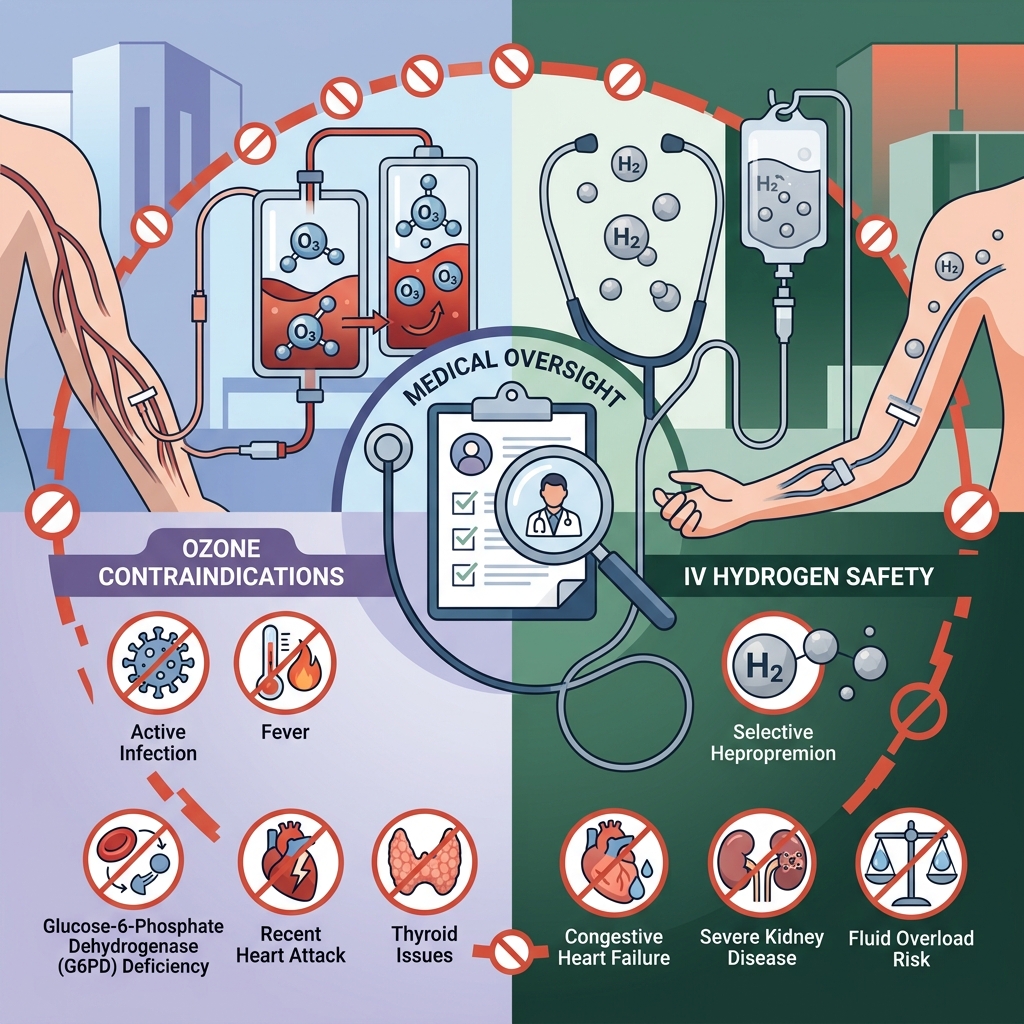
We do not administer ozone therapy to patients with:
- Active acute infections or fever. Ozone’s immune-stimulating effect can amplify systemic inflammatory response when infection is already present, potentially worsening acute illness.
- Uncontrolled hemolytic anemia or G6PD deficiency. Ozone damages red blood cell membranes intentionally; patients with existing hemolytic processes or glucose-6-phosphate dehydrogenase deficiency cannot safely tolerate this oxidative stress.
- Severe thrombocytopenia (platelet count <50,000/mcL). The autohemotherapy procedure requires blood withdrawal and reinfusion, and low platelets elevate bleeding risk significantly.
- Uncontrolled hyperthyroidism. Ozone’s metabolic activation effects can precipitate thyroid storm in hyperthyroid patients.
- Acute hypoglycemia or uncontrolled diabetes. Ozone elevates glucose utilization; patients with unstable glucose control are at risk for dangerous hypoglycemic episodes.
- Recent chemotherapy or severe immunosuppression. These patients lack the reserve capacity to mount an adaptive response to ozone-induced oxidative stress.
- Convulsive disorders not well-controlled on medication. Ozone’s systemic effects can lower seizure threshold.
Contraindications for IV Hydrogen Therapy
IV hydrogen has a narrower contraindication list, but it remains important:
- Severe heart failure (EF <25%) or unstable angina. Enhanced mitochondrial function increases cardiac workload; failing hearts cannot handle increased demand safely.
- Recent stroke or acute neurologic event. While hydrogen’s neuroprotective properties are theoretically beneficial, acute CNS events represent a window of instability where additional metabolic stimulation is inappropriate.
- Severe renal impairment (eGFR <20). The kidneys clear metabolic byproducts of enhanced oxidative metabolism; severely compromised renal function prevents safe clearance.
- Active malignancy with known metastases. Hydrogen’s immune-modulating effects remain poorly characterized in active cancer; we avoid therapy until oncologic stability is achieved.
- Pregnancy or active nursing. Safety data in these populations is insufficient.
Patient Populations at Elevated Risk
Beyond absolute contraindications, several groups require more careful evaluation before either therapy:
Patients on anticoagulation therapy (warfarin, apixaban, rivaroxaban). Ozone autohemotherapy and IV hydrogen both carry theoretical bleeding risk; we require INR stability and often additional monitoring.
Patients with chronic inflammatory conditions (rheumatoid arthritis, lupus, IBD). These patients may have depleted antioxidant reserves and paradoxical inflammatory response to oxidative therapies.
Individuals with multiple medication interactions. Ozone and hydrogen can alter medication metabolism; patients on complex regimens require specialized review.
Athletes or high-performance individuals seeking biohacking benefits. While these populations are often our most engaged wellness seekers, we must confirm baseline cardiovascular and metabolic stability before administration.
How We Screen and Assess Candidacy at Éternité
Our process begins before any therapeutic commitment. During your initial consultation, our medical team conducts a structured evaluation that places safety first and efficacy second.
We review your complete medical history, surgical history, family history, and current lifestyle factors. We assess your motivation for therapy and align realistic outcome expectations with your health status. We discuss previous reactions to oxidative stress, whether from exercise, sauna use, or prior IV therapies.
Our approach is conversational but thorough. We ask follow-up questions that many practices skip: Have you experienced unusual fatigue after intense exercise? Do you have a personal or family history of autoimmune disease? Are you currently managing any inflammatory conditions?
The Importance of Comprehensive Health History
The health history is where we catch contraindications that patients themselves may not recognize as relevant. A patient might not realize that their “mild anemia” constitutes a red flag for ozone therapy, or that a family history of early cardiac events means we need baseline cardiac imaging before IV hydrogen.

We specifically explore:
- All prior surgical procedures and anesthetic reactions
- Every current medication, supplement, and herbal product
- Allergies and adverse reactions to any substance
- Family history of blood disorders, cancer, cardiac disease, or autoimmune conditions
- Recreational drug use or past substance history
- Current stress level, sleep quality, and nutritional status
- Prior experience with IV therapies or infusion-based treatments
This isn’t paperwork gathering. Each element informs clinical judgment about whether your physiology can safely accommodate the metabolic demands of these therapies.
Blood Work and Baseline Testing Requirements
After history collection, we order targeted laboratory work. The panel varies based on risk factors but typically includes:
For all candidates:
- Complete blood count (CBC) with differential
- Comprehensive metabolic panel (sodium, potassium, glucose, BUN, creatinine, liver function)
- Coagulation studies (PT/INR, aPTT, platelet count)
- Thyroid-stimulating hormone (TSH)
For patients over 55 or with cardiovascular risk:
- Fasting lipid panel
- Troponin and B-type natriuretic peptide (BNP)
- Resting EKG
For ozone therapy specifically:
- Hemoglobin and hematocrit review
- G6PD screening (if ethnically indicated or if hemolytic tendency suspected)
For IV hydrogen in renal risk groups:
- Calculated eGFR and urinalysis
We don’t order these tests to be thorough for its own sake. Each result directly determines whether we proceed, modify, or decline therapy.
Real-World Examples: When These Therapies Are Not Appropriate
Consider a 62-year-old patient who arrives seeking ozone therapy for “general longevity optimization.” History reveals well-controlled hypertension, no major surgeries, and active lifestyle. Labs show normal CBC, metabolic panel, and thyroid function. This patient is a reasonable candidate.
Now consider a 58-year-old with a similar wellness goal but with a family history of early cardiac events, a sedentary lifestyle, baseline troponin elevation, and an EKG showing nonspecific ST changes. Despite comparable age and motivation, this patient requires advanced cardiac clearance before IV hydrogen and may not be a candidate for ozone at all.
Or examine a 45-year-old athlete requesting ozone therapy as part of performance optimization. History reveals excellent health markers, but labs show borderline hemoglobin at 12.8 g/dL with microcytic indices suggesting iron deficiency. We don’t proceed until iron stores are replenished; attempting ozone therapy in active iron deficiency risks symptomatic anemia.
These distinctions aren’t obvious from casual conversation. They emerge only through deliberate assessment.
Our Medical-Grade Safety Protocol and Monitoring

Once we’ve confirmed candidacy, safety continues during and after treatment. We maintain strict sterility protocols for autohemotherapy procedures and use only pharmaceutical-grade ozone generated fresh in our treatment rooms. IV hydrogen is administered through sterile peripheral access with cardiac monitoring available.
During therapy, we track vital signs continuously. We observe for any signs of allergic response, hemodynamic instability, or unexpected reaction. We provide detailed post-treatment guidance, including hydration protocols, activity restrictions, and symptom reporting instructions.
We schedule follow-up assessment 48 to 72 hours after each treatment to evaluate response and tolerance. We adjust treatment frequency or concentration based on your actual response, not a preset schedule.
For patients on multiple treatments over weeks or months, we repeat targeted bloodwork every 6 to 8 weeks to ensure sustained safety and appropriate biochemical response.
Schedule Your Consultation with Our Specialist Team
If you’re considering ozone therapy or IV hydrogen as part of your longevity and wellness strategy, our team at Éternité Medical Aesthetics & Longevity Centers is prepared to evaluate you comprehensively and honestly. We’ll tell you clearly whether these therapies align with your health profile, or whether alternative approaches might serve you better.
Our specialists have extensive training in regenerative medicine, functional assessment, and IV therapeutics. We serve Manhattan, the Bronx, Westchester, Brooklyn, Queens, and Staten Island from our Manhattan location, and we serve Union County and surrounding New Jersey communities from our New Providence practice.
Reach out today to schedule your confidential evaluation. We’ll review your complete health picture, order appropriate baseline testing, and develop a treatment plan that optimizes benefit while maintaining the rigorous safety standards your health deserves.
For further reading: IV Therapy safety, Éternité Medical Spa, Red Light Therapy.
Contact Us Today For A Free Consultation
Frequently Asked Questions (FAQ)
What medical conditions prevent us from offering ozone or IV hydrogen therapy?
We cannot administer these therapies to patients with G6PD deficiency, active infections, uncontrolled diabetes, severe cardiovascular disease, or those taking certain medications like chemotherapy agents. Additionally, we do not proceed with treatment if you have uncontrolled hypertension, active bleeding disorders, or are pregnant or nursing. Our medical team reviews your complete health history to identify any contraindications before moving forward with any IV wellness protocol.
Why do we require blood work and comprehensive health screening before IV therapy?
We order baseline testing because ozone and hydrogen therapies directly impact your oxygen metabolism and cellular function, making it essential we understand your baseline health status. Blood work reveals conditions like G6PD deficiency, infection markers, glucose levels, and kidney function that could create safety risks. These screenings protect you by ensuring we only administer treatments when your body can safely process them, and they establish a medical record we reference throughout your care with us.
How does our screening process at Éternité determine if I’m a candidate for these treatments?
We begin with an in-depth consultation about your medical history, current medications, and any prior reactions to IV therapies or oxygen-based treatments. Once we gather this information, we order appropriate laboratory work and review the results with our medical team before scheduling your procedure. This multi-step approach ensures we recommend only the therapies that align with your individual health profile and wellness goals.