


Table of Contents
- 1. Understanding Non-Surgical Skin Tightening Technology and Why Results Matter
- 2. EndoOne: The Gold Standard in RF Energy Skin Tightening
- 3. Ultherapy Alternatives: Why Focused Ultrasound Falls Short Compared to Our RF Approach
- 4. Microneedling vs. EndoOne: Understanding the Collagen Stimulation Difference
- 5. Laser Skin Tightening Options and Their Limitations Without Proper RF Protocols
- 6. Chemical Peels and Their Role in a Comprehensive Tightening Strategy
- 7. Combining EndoOne With Complementary Treatments for Maximum Results
- 8. What to Expect: Downtime, Results Timeline, and Recovery With Our EndoOne Protocol
- 9. Choosing the Right Skin Tightening Solution for Your Manhattan Aesthetic Goals
- Frequently Asked Questions (FAQ)
1. Understanding Non-Surgical Skin Tightening Technology and Why Results Matter
Skin laxity is one of the most visible signs of aging, yet it remains one of the most misunderstood aesthetic concerns. As collagen and elastin naturally decline with age, skin loses its structural integrity, resulting in sagging on the face, neck, jawline, and body. The problem isn’t simply superficial, it’s architectural. The dermis weakens, fibroblasts produce less collagen, and the skin’s ability to bounce back diminishes year after year.
Non-surgical skin tightening addresses this at the source by stimulating collagen remodeling without the recovery time or risks associated with invasive surgery. The key difference among available technologies lies in how effectively they penetrate the dermis, how consistently they generate thermal energy, and whether they create lasting collagen synthesis rather than temporary tightening.
We’ve spent years evaluating and refining non-surgical approaches because temporary fixes frustrate our patients. Real tightening requires sustained collagen reorganization and new collagen deposition over time. This is why understanding the mechanism behind each technology matters far more than the marketing claims.
2. EndoOne: The Gold Standard in RF Energy Skin Tightening
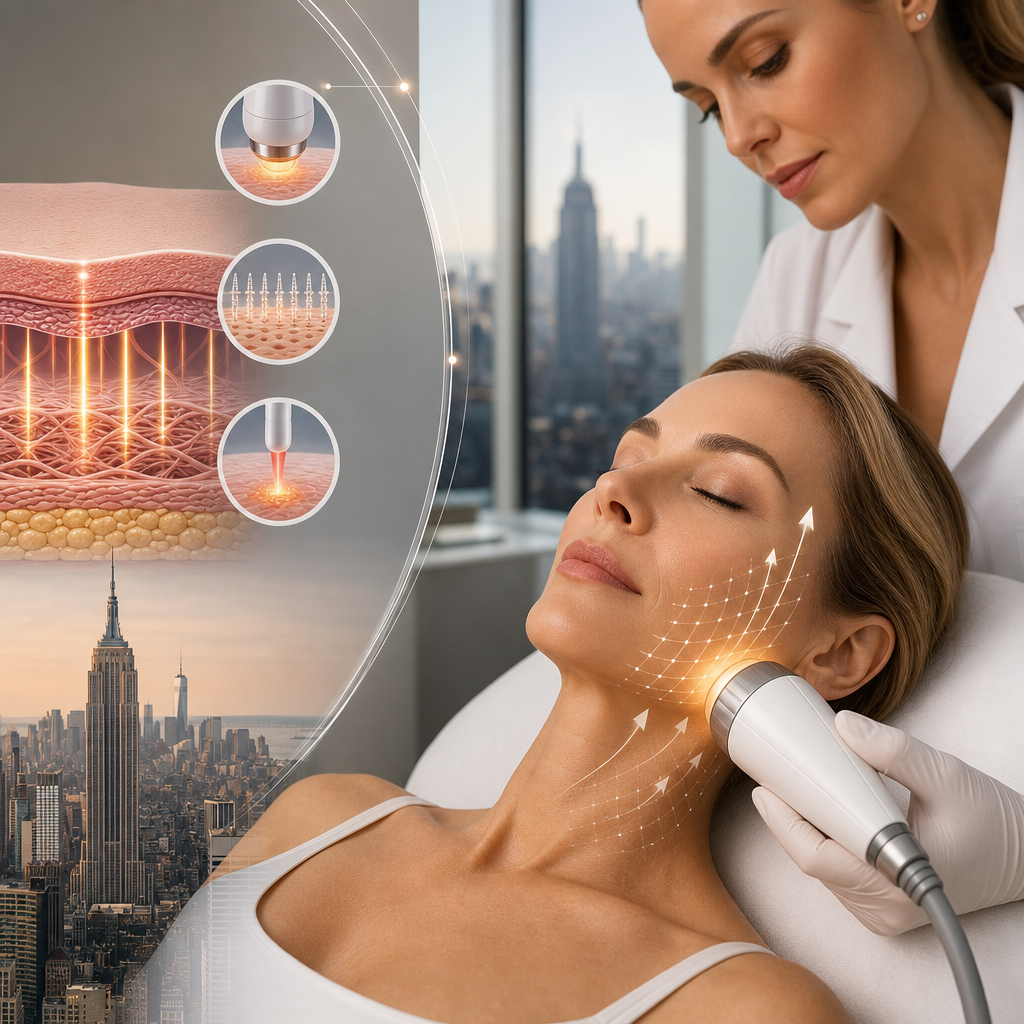
EndoOne represents the pinnacle of radiofrequency technology for skin tightening. Unlike passive heating systems, EndoOne delivers precisely calibrated RF energy that targets the deeper dermal layers while protecting the epidermis through intelligent temperature modulation. The result is controlled collagen contraction followed by months of new collagen deposition.
What makes EndoOne distinctly superior is its ability to reach optimal therapeutic depths consistently. The technology generates uniform heat across the treatment area, creating a predictable biological response. Patients see initial tightening within days as collagen contracts, then continued improvement over three to six months as new collagen fibers form and remodel.
Our Manhattan patients choose EndoOne for facial tightening, jawline definition, neck rejuvenation, and body contouring because the results are measurable and reproducible. A typical protocol involves 3-4 treatments spaced 4-6 weeks apart, with many patients maintaining results for 12-18 months. The treatment is comfortable, requires no downtime, and integrates seamlessly into any aesthetic regimen.
The science is straightforward: RF energy at the correct frequency penetrates 3-4mm into the dermis, heating collagen to approximately 60-65 degrees Celsius. This triggers immediate collagen contraction and activates fibroblasts to produce new collagen over the following months. Unlike surface-level treatments, EndoOne works from the inside out.
3. Ultherapy Alternatives: Why Focused Ultrasound Falls Short Compared to Our RF Approach
Focused ultrasound energy (HIFU technology like Ultherapy in Manhattan) concentrates sound waves on specific depths to generate heat. The premise sounds elegant, but focused ultrasound has significant limitations for comprehensive skin tightening.
First, HIFU creates discrete heat points rather than uniform thermal distribution. This means some areas receive optimal stimulation while others receive insufficient energy, leading to uneven results. Second, the depth targeting is rigid, making it difficult to customize treatment for different skin thicknesses and anatomical areas. Third, patient discomfort during treatment is considerably higher because sound waves create a vibration sensation many find painful, which limits energy delivery and outcome consistency.
EndoOne avoids these pitfalls entirely. By distributing RF energy evenly across the treatment zone, we ensure every square centimeter receives adequate thermal stimulation. The treatment is significantly more comfortable, allowing us to deliver therapeutic energy levels without patient discomfort. Additionally, our ability to adjust RF parameters in real time means we can customize depth and intensity for each area, whether treating delicate under-eye skin, thick neck tissue, or body areas.
From a practical standpoint, EndoOne delivers more predictable results with faster patient adoption because the experience is pleasant rather than painful. Many patients describe it as a warm, soothing treatment rather than an uncomfortable procedure.
4. Microneedling vs. EndoOne: Understanding the Collagen Stimulation Difference
Microneedling creates thousands of microscopic punctures to trigger the skin’s wound-healing response and stimulate collagen production. It’s effective for surface irregularities, texture, and mild skin laxity, but it works within significant limitations.
Microneedling primarily stimulates collagen in the upper to mid-dermis through controlled inflammation. For moderate to advanced skin laxity, this depth and intensity of collagen stimulation often proves insufficient. The treatment requires multiple sessions (typically 4-6) spaced 4-6 weeks apart, and results plateau relatively quickly because the fibroblasts can only be activated so many times through puncture trauma before response diminishes.
Morpheus8 RF-Microneedling combines microneedling with RF energy, creating a hybrid approach. While this is more effective than microneedling alone, it still relies on the microneedling component as the primary collagen-stimulation mechanism, with RF providing secondary enhancement.
EndoOne achieves superior collagen remodeling through direct thermal stimulation of a much larger tissue volume. Instead of relying on inflammation from punctures, EndoOne heats the dermal matrix itself, prompting fibroblasts to remodel existing collagen and synthesize new collagen at a greater scale. For patients with genuine skin laxity rather than texture concerns, EndoOne delivers significantly more dramatic results in fewer treatments.
Our approach: use EndoOne as the foundational tightening treatment, then add targeted microneedling only if texture refinement is also desired. This combination delivers both structural tightening and surface refinement.
5. Laser Skin Tightening Options and Their Limitations Without Proper RF Protocols
Laser energy works by exciting water molecules and melanin, which can generate heat in the dermis. Some laser systems market themselves as tightening devices, but most lasers fundamentally work through pigment absorption and vascular response rather than pure thermal collagen remodeling.
The critical limitation: most laser devices don’t penetrate deeply enough or generate sufficient controlled heat to meaningfully remodel the deeper dermal collagen responsible for skin laxity. Instead, they work best for surface texture, vascular concerns, and pigmentation. While these improvements can make skin appear slightly tighter through inflammation and temporary edema, they don’t address the underlying structural problem.
Laser tightening also carries higher risk of unwanted side effects. The pigment-dependent mechanism means darker skin types require lower energy settings, reducing efficacy. Additionally, the water absorption in lasers can create unpredictable heating patterns, increasing the risk of thermal injury.
RF energy, by contrast, is largely independent of melanin content, making it safe and effective across all skin types. RF doesn’t rely on pigment absorption, it simply heats tissue based on electrical impedance. This is why we confidently treat patients of all ethnicities with the same protocols and achieve consistent results.
For genuine skin tightening across diverse patient populations, RF-based systems like EndoOne outperform laser alternatives substantially.
6. Chemical Peels and Their Role in a Comprehensive Tightening Strategy
Chemical peels (including VI Peel and PRX skin rejuvenation) chemically exfoliate the epidermis and sometimes the upper dermis, removing damaged layers and stimulating epidermal regeneration. They excel at texture, hyperpigmentation, and photodamage repair.
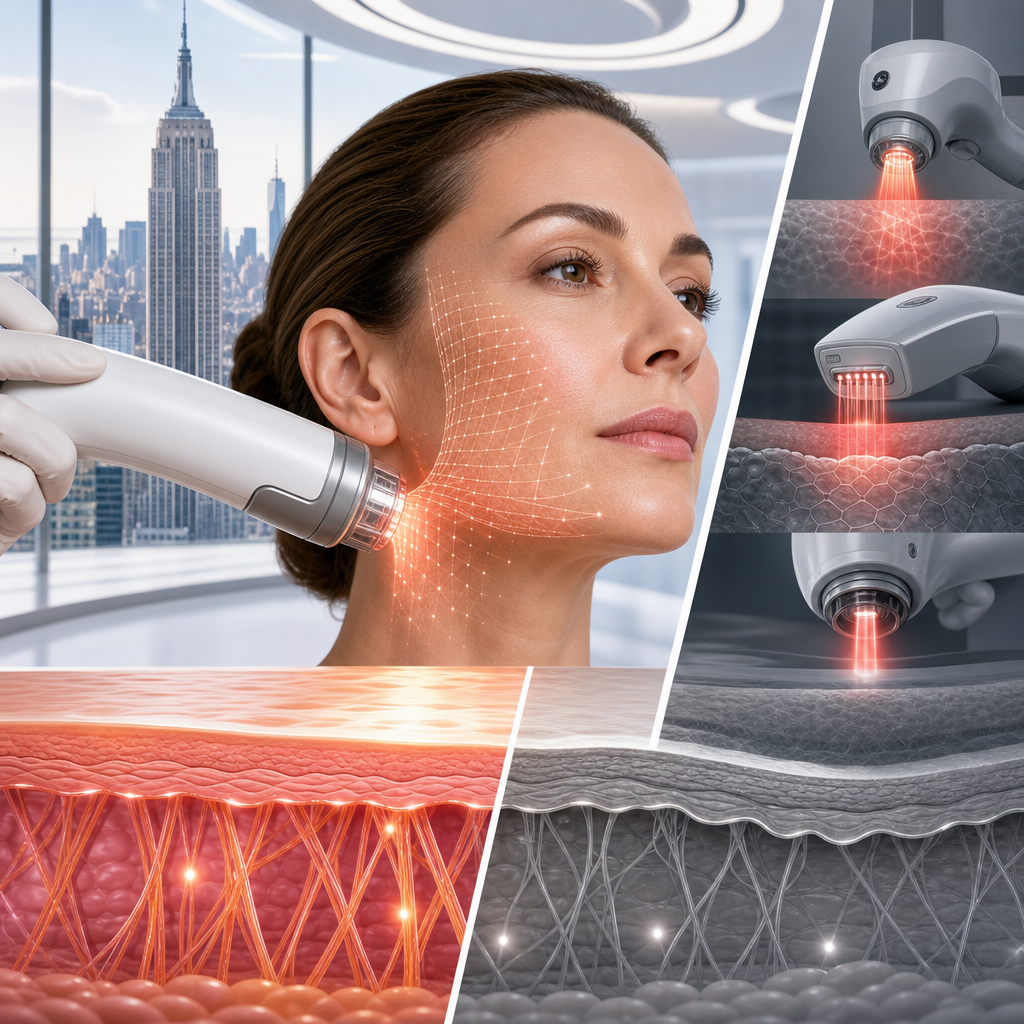
The misconception is that chemical peels provide meaningful skin tightening. They don’t. A peel removes damaged epidermis and mild dermal damage, which can make skin appear slightly more refined and potentially create minor tightening through inflammation, but they cannot remodel the deeper dermal collagen architecture responsible for true skin laxity.
Chemical peels serve an important supporting role in comprehensive aesthetic planning. When combined with EndoOne tightening, a chemical peel can address surface texture and discoloration while EndoOne addresses structural sagging. The combination is synergistic, not redundant.
Our protocol for patients with both laxity and significant sun damage: start with an aggressive chemical peel to address photodamage, allow 7-10 days recovery, then begin EndoOne treatments 2-3 weeks later once peeling is complete. This ensures the patient’s collagen-remodeling response benefits from both renewed epidermal health and deep dermal restructuring.
7. Combining EndoOne With Complementary Treatments for Maximum Results
EndoOne functions beautifully as a standalone treatment, but it integrates powerfully with other modalities to address multiple aging mechanisms simultaneously.
EndoOne paired with Injectables treatment: RF tightening provides structural collagen remodeling while injectables add volume and contour lost to aging. The combination restores both tightness and fullness, which neither treatment achieves alone.
EndoOne combined with chemical peels: RF remodels deep structure while peels resurface and refine the epidermis. This addresses laxity, texture, and pigmentation in a single coordinated plan.
EndoOne with targeted microneedling: RF delivers the primary tightening stimulus while microneedling refines superficial texture and addresses smaller scars or irregularities.
Our Body contouring & tightening approach at Éternité Medical Aesthetics & Longevity Centers often incorporates EndoOne with other body treatments. For patients with mild to moderate skin laxity on abdomen, thighs, or arms, EndoOne eliminates the need for invasive body tightening surgery. For more advanced cases, EndoOne maximizes results from minimally invasive procedures.
The key to success is strategic layering. We assess what specific concerns exist, identify which treatments address each concern, and sequence them for optimal patient safety and cumulative benefit.
8. What to Expect: Downtime, Results Timeline, and Recovery With Our EndoOne Protocol
One of EndoOne’s greatest advantages is the minimal disruption to daily life. The treatment itself takes 20-40 minutes depending on area size. There’s no anesthesia required, no numbing cream necessary, and patients experience only mild warmth during treatment.
Immediately after EndoOne, skin may appear slightly flushed due to mild inflammation, similar to light exercise. This resolves within 1-2 hours. There’s no peeling, no scabbing, no bandaging required. Patients return to normal activities immediately, including work, exercise, and social commitments.
Results begin appearing within 3-5 days as collagen contracts. Patients often notice improved skin texture and subtle tightening almost immediately. Over the next 6-12 weeks, more dramatic improvement emerges as fibroblasts produce new collagen and the dermal matrix remodels.
For optimal results, we recommend a series of 3-4 treatments spaced 4-6 weeks apart. After the initial series, maintenance treatments every 12-18 months sustain results indefinitely. Many patients choose annual or bi-annual treatments as part of their longevity protocol.
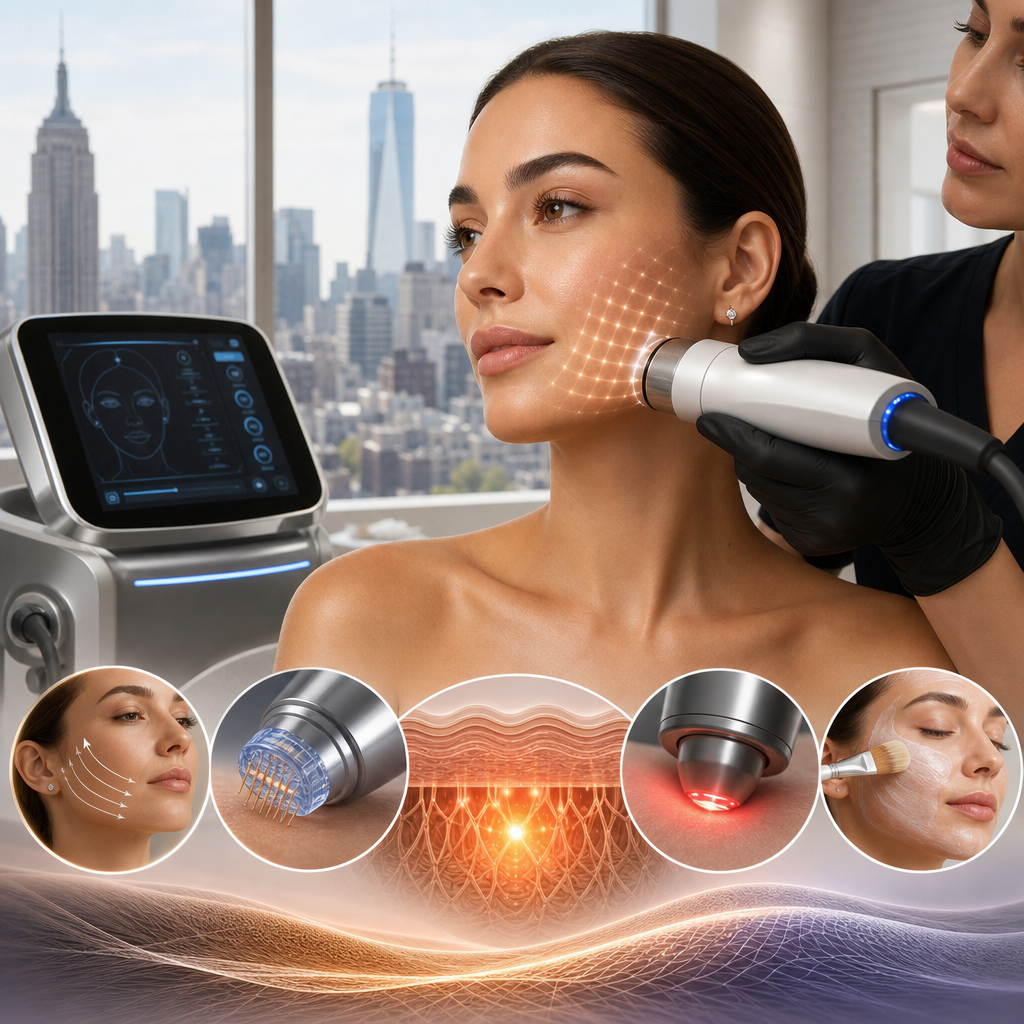
The cumulative improvement is substantial. After a full treatment series, patients consistently report improved jawline definition, reduced neck laxity, tighter cheeks, and overall facial rejuvenation. The changes look natural because they result from structural improvement, not artificial volume or overdone appearance.
9. Choosing the Right Skin Tightening Solution for Your Manhattan Aesthetic Goals
Selecting the right non-surgical tightening requires honest assessment of your specific concerns. Are you dealing with mild texture issues, moderate sagging, or advanced skin laxity? Do you have sun damage, pigmentation, or other concurrent concerns?
If your primary concern is skin laxity, EndoOne is the gold standard. No other non-surgical technology consistently delivers the collagen remodeling depth and intensity required for meaningful structural tightening. It works across all skin types, requires minimal downtime, and produces results that improve continuously over months.
If you have both laxity and significant texture or pigmentation, we build a coordinated plan combining EndoOne with chemical peels or other surface treatments.
If you have advanced laxity combined with volume loss, we integrate EndoOne tightening with volumization through injectables.
At Éternité Medical Aesthetics & Longevity Centers, our role is to translate your aesthetic goals into a precise, evidence-based protocol. We understand that every patient’s aging pattern is unique. During your consultation, we’ll assess your skin architecture, discuss your timeline and lifestyle constraints, and recommend the most effective pathway to your goals.
The bottom line: if meaningful, lasting skin tightening is your objective, EndoOne represents the definitive choice. It combines superior science, proven efficacy, patient comfort, and minimal downtime in a single technology. Schedule your consultation at Éternité Medical Aesthetics & Longevity Centers in Manhattan to experience how RF-based tightening can restore structural integrity and deliver the refined, taut appearance you deserve.
Contact Us Today For A Free Consultation
Frequently Asked Questions (FAQ)
What makes EndoOne different from other non-surgical skin tightening treatments we offer?
EndoOne uses advanced radiofrequency energy to stimulate deep collagen production with precision control that we cannot achieve through ultrasound or surface-level microneedling alone. Our EndoOne protocol delivers consistent heat to the dermal layers, creating sustained collagen remodeling over several months rather than a single treatment effect. We’ve found that patients experience more noticeable tightening with fewer sessions compared to alternative modalities, which is why we’ve made it the cornerstone of our skin tightening services.
How long does it take to see results from EndoOne, and what kind of downtime should I expect?
Most of our patients notice initial improvements within two to three weeks, with progressive results continuing over three to six months as collagen naturally rebuilds. We typically see minimal downtime with EndoOne, some mild redness or warmth immediately after treatment that resolves within hours, allowing you to return to your normal routine the same day. The gradual timeline actually works in your favor because the results appear natural and continue improving long after your final session.
Can we combine EndoOne with other treatments for faster or better results?
We absolutely recommend pairing EndoOne with complementary treatments like RF microneedling, chemical peels, or our peptide therapies to accelerate collagen stimulation and address multiple skin concerns simultaneously. Our medical team customizes combination protocols based on your specific skin laxity, texture goals, and timeline, ensuring treatments work synergistically without overwhelming your skin. This layered approach is how we achieve the transformative results our Manhattan and New Providence patients expect.