


Table of Contents
- Why Urinary Incontinence Affects Quality of Life
- Understanding the Root Causes of Urinary Leakage
- Limitations of Traditional Incontinence Management
- How Radiofrequency Energy Restores Vaginal Support
- The Science Behind PRP Intimate Wellness Therapy
- Votiva Vaginal Rejuvenation: Our RF-Based Solution
- The O-Shot: Regenerative Platelet Therapy for Incontinence
- What to Expect During Your Treatment Session
- Recovery, Results, and Timeline for Improvement
- Why Our New Jersey Patients Choose Éternité
- Begin Your Journey to Continence and Confidence Today
- Frequently Asked Questions (FAQ)
Why Urinary Incontinence Affects Quality of Life
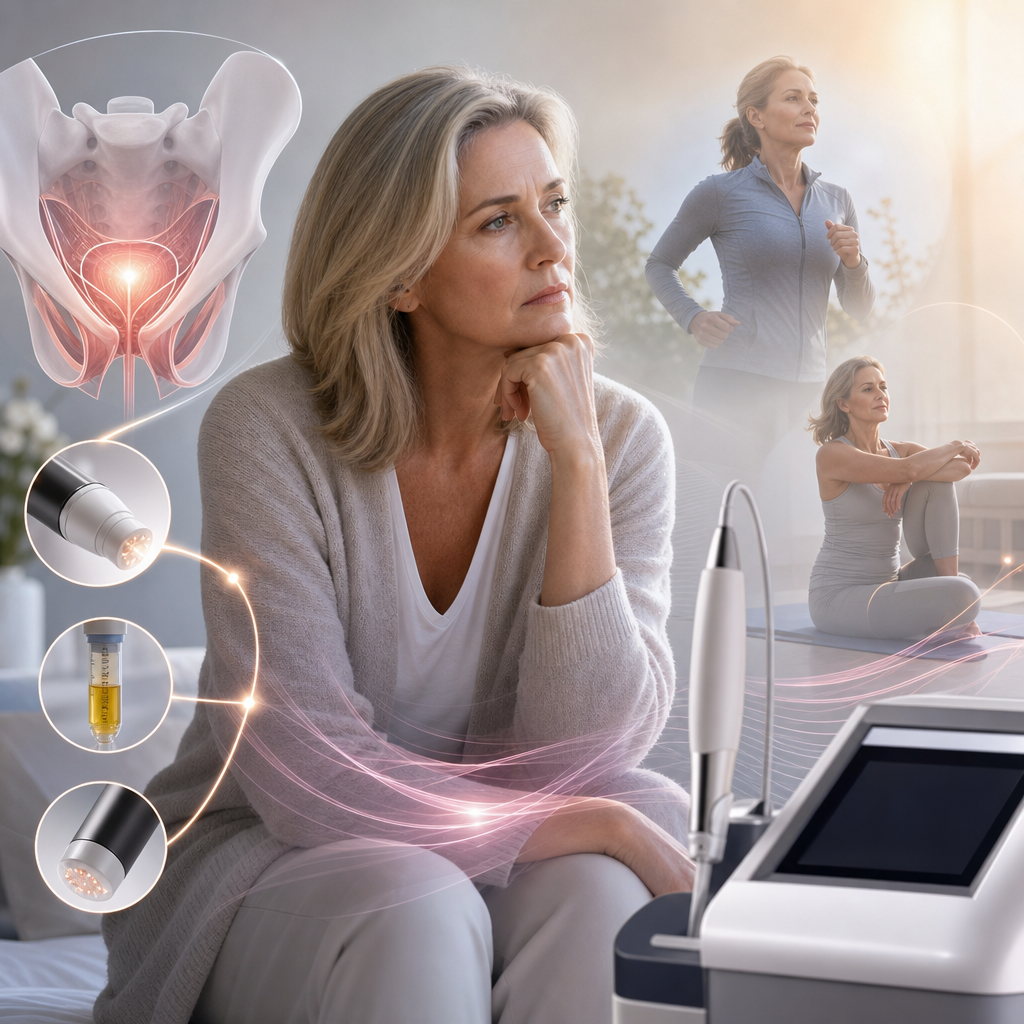
Urinary incontinence is far more than an inconvenience. It’s a condition that silently reshapes daily life, limiting activities you once took for granted. Whether it’s a light leak during exercise, sudden urges that interrupt your workday, or unpredictable accidents that force you to plan around bathroom access, incontinence erodes confidence and freedom.
Many of our patients report avoiding social gatherings, canceling fitness classes, or withdrawing from intimate moments with partners. The emotional toll is real: shame, anxiety, and isolation often accompany the physical symptoms. What makes this particularly challenging is that traditional solutions like absorbent products or pharmaceutical management address symptoms without targeting the underlying tissue weakness or loss of elasticity that causes the problem.
At Éternité Medical Aesthetics & Longevity Centers, we recognize that urinary incontinence is a medical concern deserving advanced, effective treatment. Our approach restores function and dignity through regenerative and radiofrequency therapies designed to strengthen vaginal tissue and improve bladder support naturally.
Understanding the Root Causes of Urinary Leakage
Urinary incontinence develops from several interconnected factors. Stress incontinence, the most common form, occurs when physical pressure (from coughing, sneezing, exercise, or laughing) exceeds the bladder’s holding capacity due to weakened pelvic floor muscles and loss of urethral support. Urge incontinence happens when the bladder detects fullness but the sphincter mechanism fails to maintain closure effectively.
Both conditions share a common denominator: tissue laxity and reduced collagen density in the vaginal wall, urethra, and surrounding support structures. Childbirth, hormonal shifts during menopause, aging, chronic straining, and even intense exercise over time can deplete collagen and elastin, compromising the structural integrity of these delicate tissues.
Additionally, decreased blood flow and reduced nerve sensitivity in the vaginal and urethral tissues diminish sensation and muscle response. This is why lifestyle modifications alone often fall short. Pelvic floor physical therapy can help, but it doesn’t reverse the underlying tissue degeneration. Modern regenerative medicine now offers solutions that do.
Limitations of Traditional Incontinence Management
Pelvic floor exercises (Kegel exercises) provide modest benefit for mild incontinence but require consistent effort and show limited results once tissue atrophy is significant. Medications like anticholinergics can help with urge symptoms but carry side effects including dry mouth, constipation, and cognitive effects, especially with long-term use.
Absorbent products and protective garments manage leakage externally but perpetuate the cycle of management without healing. They offer no tissue restoration, create ongoing expense, and do nothing to address the root cause. Surgical options like traditional slings and mid-urethral procedures carry risks including infection, mesh complications, and prolonged recovery times of 4 to 6 weeks or longer.
What’s missing from these conventional approaches is tissue regeneration. Until recently, women faced a choice between managing symptoms indefinitely or undergoing invasive surgery. Fortunately, advances in regenerative medicine and radiofrequency technology now offer a middle path: non-surgical treatments that stimulate collagen remodeling, restore elasticity, and strengthen support structures.
How Radiofrequency Energy Restores Vaginal Support
Radiofrequency (RF) energy delivers controlled heat to the deeper layers of vaginal tissue, triggering a cascade of biological responses. The heat stimulates fibroblast activity, prompting these collagen-producing cells to synthesize new, organized collagen and elastin fibers. Over time, this remodeling tightens tissue, restores elasticity, and reinforces the structural framework that supports the urethra and bladder neck.
The mechanism is both immediate and progressive. During treatment, RF energy causes thermal contraction of existing collagen, producing a tightening effect that patients notice right away. Over the following weeks and months, neocollagenesis (new collagen formation) continues, strengthening support structures and improving bladder neck positioning. This dual action makes RF therapy particularly effective for stress incontinence.
Crucially, RF treatments are non-ablative when properly calibrated, meaning they don’t damage the surface epithelium or require downtime. The energy penetrates to the dermis and submucosal layers where structural support is generated. We monitor tissue temperature precisely to ensure therapeutic benefit without adverse effects. The result is sustainable improvement in urinary control without the risks and recovery demands of surgery.
The Science Behind PRP Intimate Wellness Therapy
Platelet-rich plasma (PRP) therapy harnesses your body’s own healing machinery. We extract a small blood sample, separate the plasma fraction enriched with platelets, and reintroduce it to targeted tissues. Platelets release bioactive proteins and growth factors including vascular endothelial growth factor (VEGF), fibroblast growth factor (FGF), and platelet-derived growth factor (PDGF).
These growth factors accomplish several therapeutic goals simultaneously. They increase vascularization, improving blood flow and oxygen delivery to vaginal tissues. They stimulate collagen synthesis and tissue remodeling. They reduce inflammation and enhance nerve regeneration, restoring sensation and neuromotor function that weakens with age and pelvic trauma.
For urinary incontinence, PRP works by strengthening vaginal support tissues and improving the tone and sensitivity of the urethral sphincter. Many patients report improved sensation during intimacy and better conscious control over pelvic floor engagement. Because PRP is autologous (derived from your own blood), there’s no risk of allergic reaction or rejection. The approach aligns with our philosophy of leveraging your body’s regenerative capacity rather than imposing foreign materials.
Votiva Vaginal Rejuvenation: Our RF-Based Solution
Votiva Vaginal Rejuvenation represents a refinement of radiofrequency technology specifically engineered for intimate tissues. This fractional RF system delivers energy through multiple channels, ensuring uniform heating and precise depth control. The hand pieces are designed to treat both internal vaginal structures and external tissues, addressing incontinence from multiple angles.
The Votiva protocol involves a series of sessions, typically three to four treatments spaced four to six weeks apart. Each session takes approximately 30 minutes and requires no anesthesia. The gentle heat is well tolerated, and most patients describe the experience as warm rather than uncomfortable. We customize energy settings based on your tissue characteristics and incontinence severity.
What sets Votiva apart is its dual-mode capability: fractional RF for deep collagen remodeling and a separate mode for gentle surface tissue conditioning. This allows us to simultaneously strengthen support structures and improve tissue quality. Improvement often begins within a few weeks, with cumulative benefit building over three to four months as new collagen integrates into the tissue matrix. Many patients achieve 70 to 90 percent improvement in leakage frequency and volume.
The O-Shot: Regenerative Platelet Therapy for Incontinence
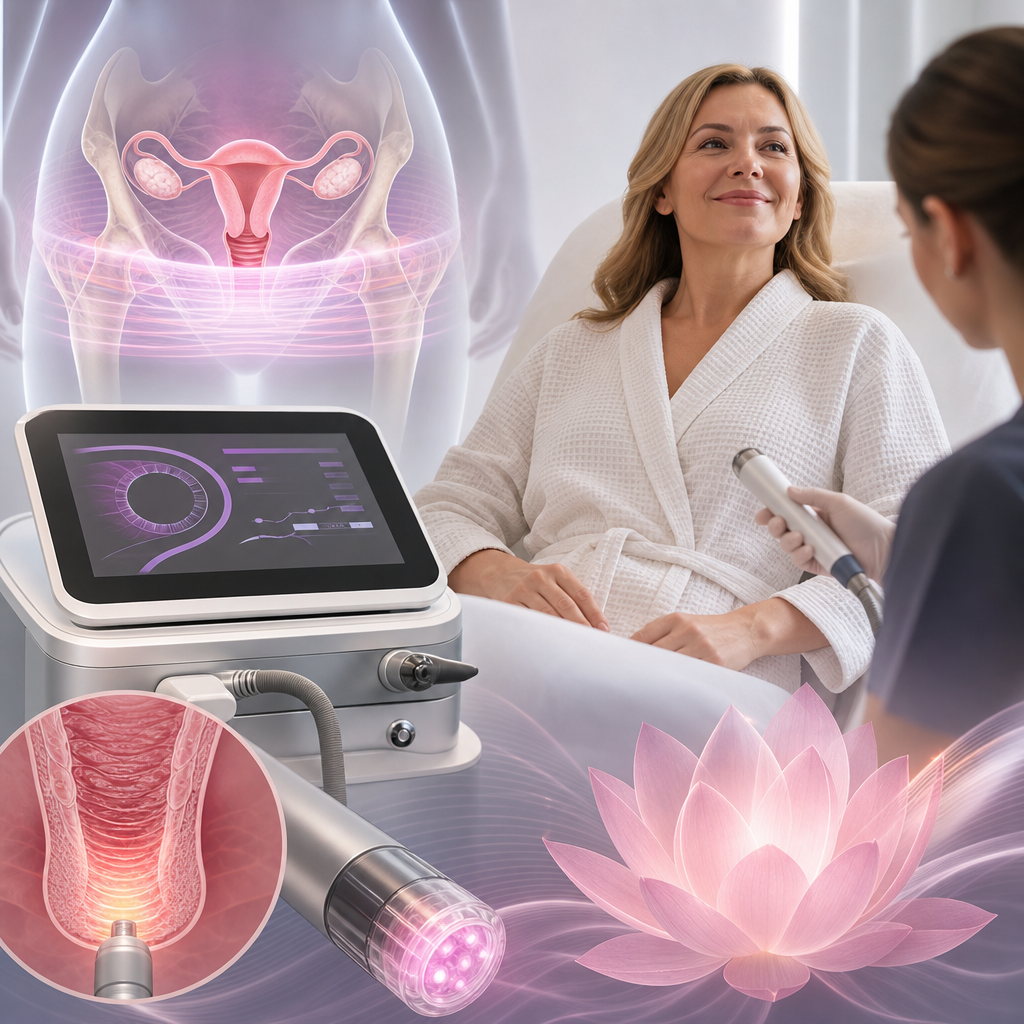
The O-Shot combines PRP injection with topical anesthesia for a minimally invasive regenerative approach. During the procedure, we inject PRP directly into the urethral sponge and clitoral complex, areas rich in nerve endings and highly responsive to growth factor stimulation. The injection sites target the anatomical structures responsible for bladder control and tissue support.
The mechanism for incontinence relief involves multiple pathways. Growth factors stimulate regeneration of the urethral sphincter mechanism, improving closure pressure and bladder neck support. Enhanced vascularization increases oxygen delivery to tissues already stressed by age or childbirth. Nerve regeneration restores sensory feedback, allowing better conscious and unconscious control of pelvic floor function.
Results typically emerge over four to eight weeks as growth factors complete their tissue-regenerative work. Many patients report noticeable reduction in urgency and stress-related leakage. The treatment pairs exceptionally well with Votiva, as the combination addresses tissue weakness through complementary mechanisms: RF stimulates collagen remodeling while PRP accelerates healing and adds growth factor support. We often recommend combining both therapies for maximum efficacy, especially in moderate to severe cases.
What to Expect During Your Treatment Session
Our consultation begins with a thorough intake and medical history. We assess your incontinence type, frequency, and impact on daily life. A pelvic examination helps us evaluate tissue quality, elasticity, and tone. We discuss realistic expectations and develop a customized treatment plan, whether that involves Votiva, the O-Shot, or a combined approach.
For Votiva sessions, you’ll change into a comfortable gown and lie in a reclined position. Our provider applies a conductive gel to the treatment area, then uses the hand piece to deliver fractional RF energy in controlled passes. You’ll feel warmth and gentle vibration but no pain. For the O-Shot, topical numbing cream is applied first, and the PRP injection itself takes seconds with minimal discomfort.
Both procedures require no downtime. You can return to normal activities immediately, though we recommend avoiding heavy exercise and sexual activity for 48 hours post-treatment to allow initial healing. You’ll receive detailed aftercare instructions and can reach our team by phone or email if questions arise. Most patients describe the experience as straightforward and notably less intimidating than anticipated.
Recovery, Results, and Timeline for Improvement
Unlike surgical procedures, RF and PRP treatments cause no tissue damage, so recovery is uncomplicated. Some patients experience mild warmth or slight erythema (redness) for a few hours, which resolves naturally. You can shower normally, wear regular clothing, and resume work or social activities the same day.
Improvement follows a predictable timeline. Initial tightening from RF energy often becomes noticeable within one to two weeks. More substantial improvements in incontinence control typically emerge by four to eight weeks as collagen remodeling progresses. The full benefit accumulates by three to four months, after which results remain stable for 12 to 18 months or longer, depending on your age and tissue characteristics.
After your initial treatment series, many patients choose maintenance sessions annually to preserve results and continue collagen stimulation as part of a longevity protocol. This prevents the gradual tissue decline that would otherwise resume with time. We track your progress through follow-up assessments and adjust recommendations based on your individual response. Long-term studies show sustained improvement in urinary control, with many patients reporting persistent benefit years after completing their initial series.
Why Our New Jersey Patients Choose Éternité

Éternité Medical Aesthetics & Longevity Centers combines medical expertise with a luxury wellness environment. Our providers hold advanced certifications in regenerative aesthetics and are deeply trained in pelvic floor anatomy and physiology. We understand that intimate health requires exceptional clinical knowledge combined with genuine compassion.
Our New Jersey location in New Providence serves Union County, Summit, Union, Short Hills, Springfield, Berkeley Heights, Madison, Westfield, Morristown, Watchung, Scotch Plains, Basking Ridge, Warren, Far Hills, Mendham, and Plainfield. We’ve built a practice specifically designed for patients who value both clinical excellence and discretion. Your privacy is paramount, and our staff maintains the highest standards of confidentiality.
Beyond incontinence treatment, we offer comprehensive wellness services including hormone optimization, IV therapy, and anti-aging protocols. This integrative approach allows us to address incontinence within the context of your overall health. Many patients find that hormonal balance, improved circulation, and tissue-regenerative therapies work synergistically to enhance results. Our commitment to your wellbeing extends far beyond a single procedure.
Begin Your Journey to Continence and Confidence Today
Urinary incontinence doesn’t have to be a permanent part of your life. Modern regenerative medicine offers effective, non-surgical solutions that address the tissue changes underlying your symptoms. Whether Votiva RF therapy, PRP injection, or a combined approach best suits your needs, our team will guide you toward meaningful improvement.
Contact Éternité Medical Aesthetics & Longevity Centers in New Providence, NJ today to schedule your confidential consultation. Let’s evaluate your incontinence, discuss your goals, and design a treatment plan tailored to restore your comfort and confidence. You deserve to live fully without the limitations incontinence imposes. We’re here to help you reclaim that freedom.
Contact Us Today For A Free Consultation
Frequently Asked Questions (FAQ)
What makes RF vaginal rejuvenation more effective than traditional incontinence treatments?
We use radiofrequency energy to stimulate collagen production and tighten the vaginal tissues that support your bladder, addressing the root cause of leakage rather than just managing symptoms. Traditional approaches like pelvic floor exercises and pessaries can help, but our advanced technology delivers precise, measurable tissue remodeling in a series of quick, comfortable sessions without surgery or downtime.
How quickly will I notice improvement in bladder control after treatment?
Most of our patients begin experiencing noticeable changes within 2 to 4 weeks as the collagen remodeling process takes effect, with continued improvement over 3 to 6 months. We recommend a series of treatments spaced several weeks apart to achieve optimal results, and many women report significant confidence and quality of life improvements long before completing their full protocol.
Can I combine the O-Shot with vaginal RF treatments for better results?
Yes, we often integrate both therapies into a comprehensive intimate wellness plan tailored to your specific needs. The O-Shot uses platelet-rich plasma to enhance tissue regeneration and sensitivity, while our RF treatments provide structural support and tightening, so combining them addresses incontinence from multiple angles and can accelerate your results.